Katie Whipple
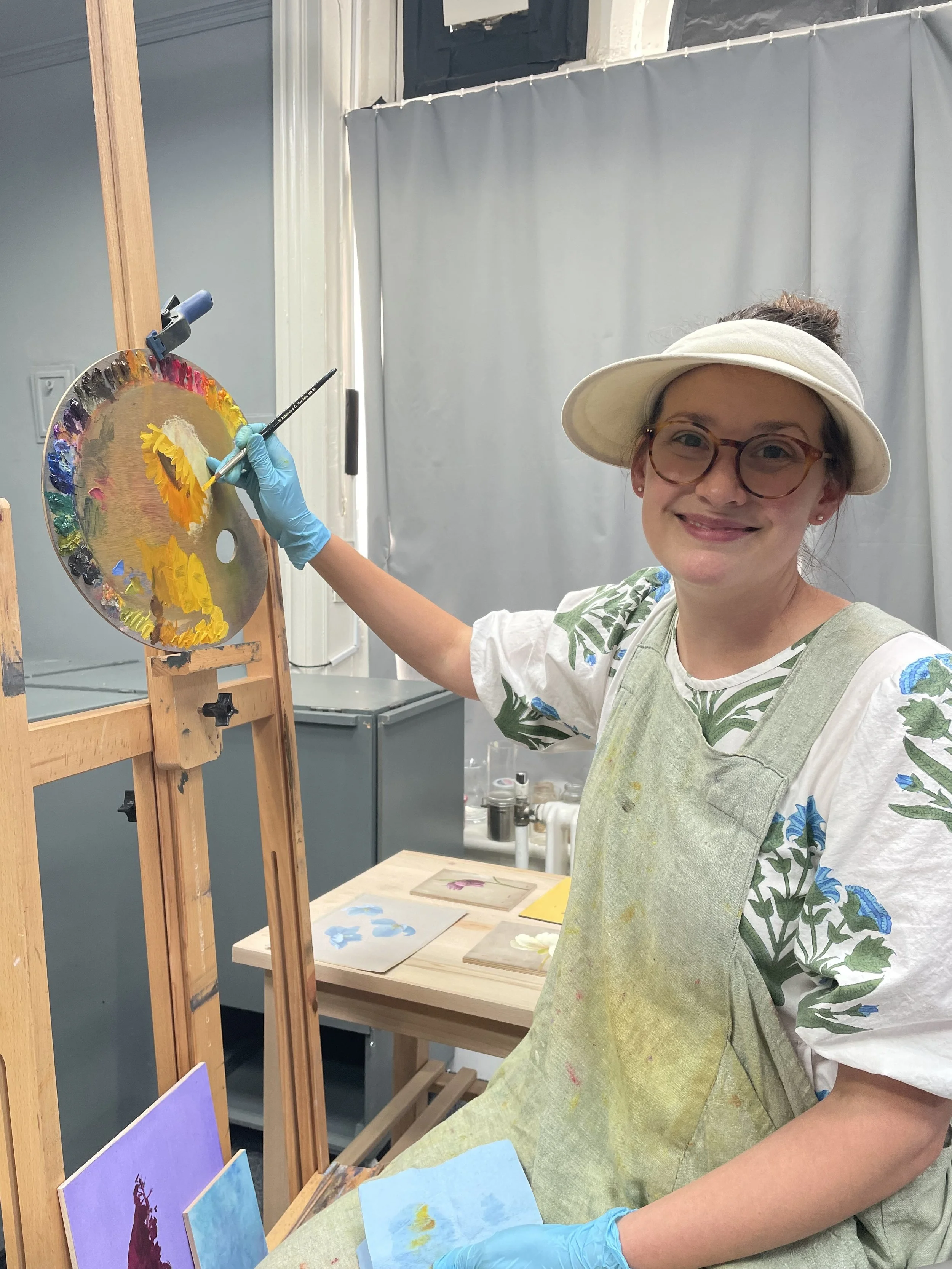
Katie Whipple is an American contemporary painter celebrated for her expressive floral compositions and richly textured use of color. Her work captures the beauty, movement, and fleeting nature of flowers through bold brushwork and luminous palettes, blending realism with an energetic, painterly style. Rather than aiming for strict botanical precision, Whipple focuses on atmosphere, emotion, and the sensory experience of nature.

Her floral paintings are known for their dynamic compositions and layered surfaces, where petals, light, and color seem to dissolve into one another with a sense of motion and spontaneity. Influenced by both classical still-life traditions and modern impressionistic techniques, she combines strong observational skill with expressive freedom, giving her paintings a fresh and contemporary feel.

In addition to florals, Whipple also creates portraits and interiors, but her flower paintings have become particularly admired for their warmth, vibrancy, and emotional immediacy. Her work has been exhibited widely and is appreciated by collectors for its combination of technical sophistication and joyful visual energy.

Through her distinctive approach to color and texture, Katie Whipple continues to build a reputation as a contemporary painter who transforms everyday natural subjects into vivid, emotionally resonant works of art.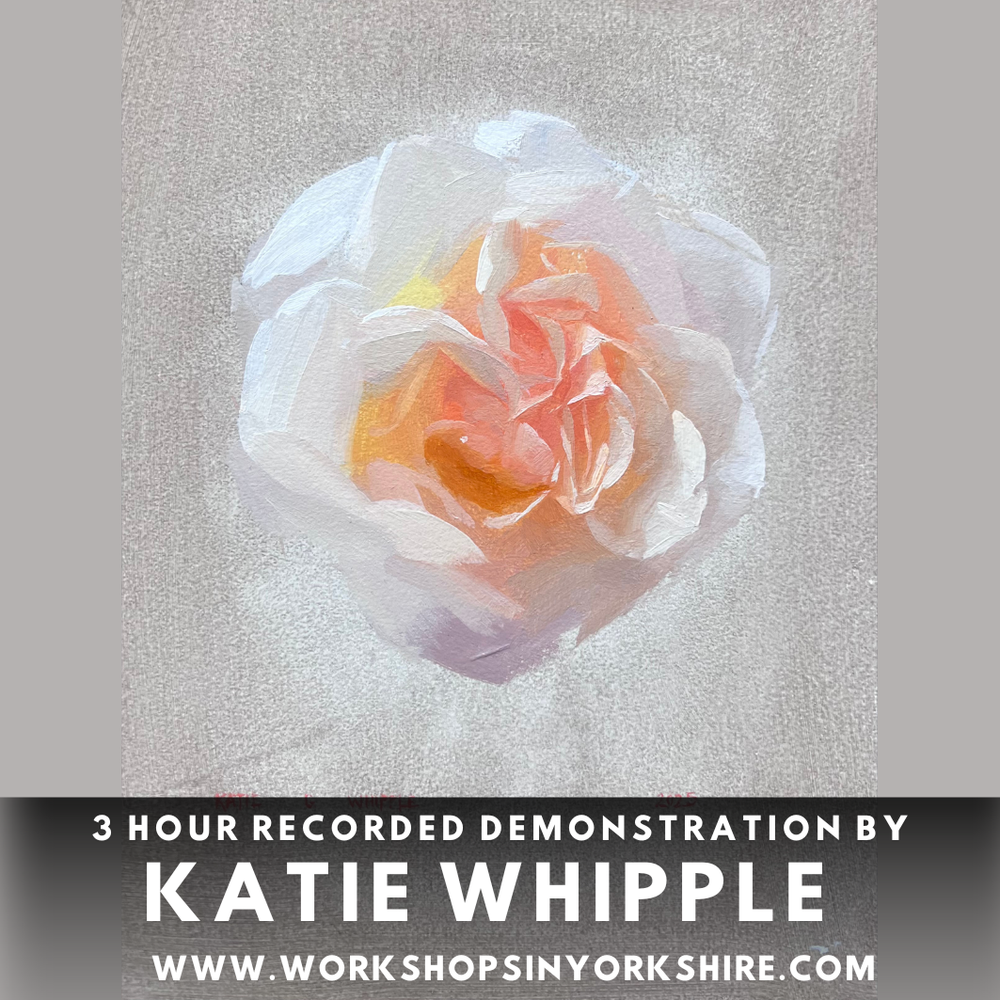
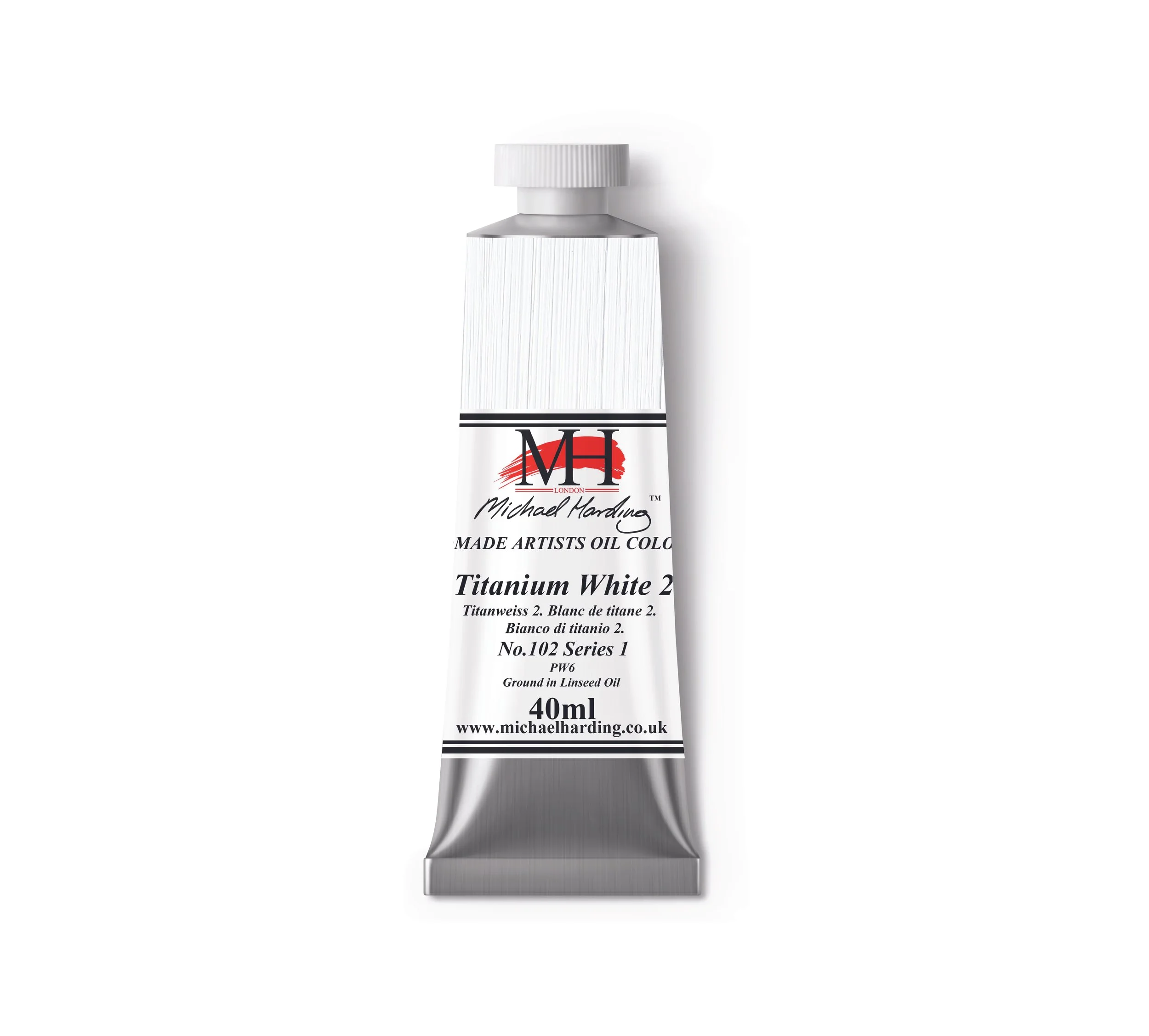
Ⓥ VEGAN
Inorganic – This paint is ground with linseed oil to form a sturdy, strong paint film with impeccably high covering power. Michael Harding also offer this beautiful colour ground in safflower oil. Check out TW1 for this. Additionally, we offer Refined Linseed Stand Oil and Refined Pale Linseed Oil mediums because linseed oil produces the strongest of paint films, thus helping to ensure the longevity of your oil painting.

Ⓥ VEGAN
Organic – Permanent Orange is a powerful, organic, fruity red-orange that is a tremendous addition to the range as a mid-hue orange.
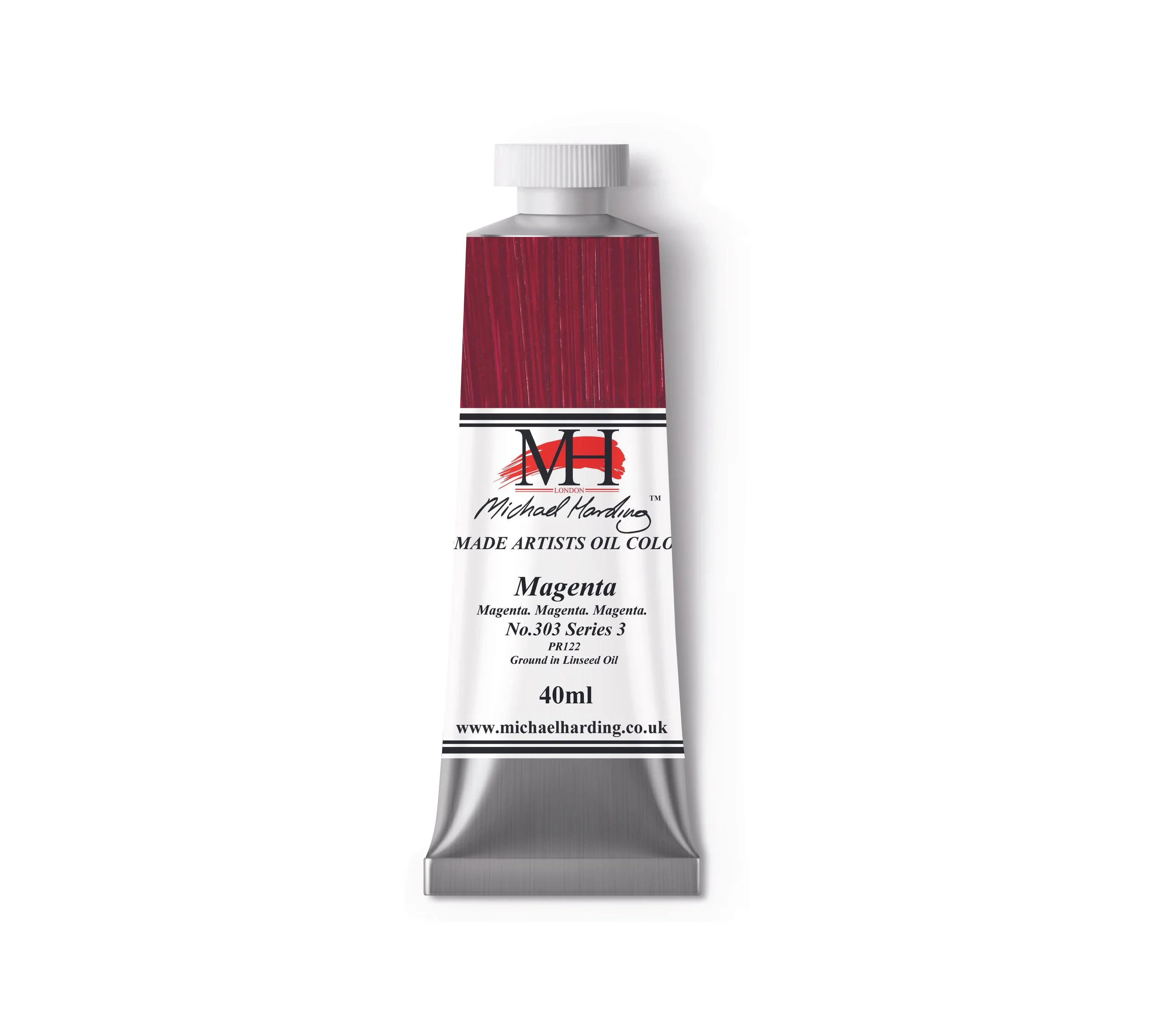
Ⓥ VEGAN
Organic – Magenta is a lightfast organic pigment with strong bluish overtones that shine through as if it is used as a glaze. When made into hues, it presents a wonderful range of decadent, strong, cool pinks evocative of rich satins. In mixes with Yellow Lakes, the results are ranges of strikingly warm, gingery oranges, or mixed with transparent oxide red, it mimics the unique shades of alizarin. To make gorgeous purples, mix Magenta with Ultramarine Blue.

Ⓥ VEGAN
Inorganic – This Iron Oxide has been used as a wood dye, and I realised that its capacity to enrich the grain of hardwood made it a wonderful candidate for paint making. Michael’s Transparent Red Oxide is an Iron Oxide manufactured to such a small pigment particle size that like its yellow counterpart, it possesses Lake-like characteristics. No. 220 has terrific tint power that produces wonderful results in mixes with yellows and brings gravity to mid-red tones. Mix it with phthalocyanine blue for an interesting surprise!

Ⓥ VEGAN
Inorganic and Organic – Amethyst is a mixture of three well-known colours that come together to create an extraordinary shade of violet, particularly for the exotic artist’s palette or artists who regard themselves as ‘colourists’. This colour has been known to evoke warmth and pleasure. Artists use Amethyst in portraits, landscapes, and non-figurative works. For years, artists have wanted more from their violets, so I’ve developed and offer this potent, vivid, transparent shade!

Ⓥ VEGAN
Inorganic – No. 113 is an obviously beautiful mid-blue. The discovery in the 1820s of a Sodium Sulphosilicate compound, which had appeared as a mysterious blue deposit on soda-ash furnaces, was a liberating moment for financially challenged artists everywhere. Up to then the only available version of this compound was the often-unobtainable Lapis Lazuli ore, mined in Afghanistan. Ultramarine has a high tint power, and our chosen shade produces strong green shade blue hues and makes wonderful violets with Magenta and the red Lake colours. It is also useful in greens and greys. The only chemical weakness is a recorded sensitivity to atmospherically borne acids, which can bleach it out. Ultramarine Blue is one of the more difficult paints to make, as it forms an intractable runny syrup when first ground into oil, which must then be stabilized with a small amount of wax.

Ⓥ VEGAN
Organic – Bright Yellow Lake is an arylide organic lake pigment. It has an incredibly high oil content and transparency, with an enormous tint power that shoots through mixes with a pervasive range of bottle green undertones. Beginners should handle this paint with care when adding it to other paints. It can heighten the Phthalo Lakes without making them opaque, and when it is made itself opaque with the addition of white, the results are almost luminous.

Ⓥ VEGAN
Organic – Napthol Red is a well-established, organic pigment that can be used transparently or opaquely, according to choice. In an unmixed state, it is a pure and slightly fiery red with high tint power and a range of yellowy-orange undertones. These undertones become noticeable when brushed and produce much brighter and warmer pinks than are attainable with the Cadmium Reds. When mixed with white, Napthol Red will appear almost fluorescent.

Ⓥ VEGAN
Inorganic – Indian Red is a deeper and cooler blue-red shade of synthetic Iron Oxide. Its colourific density creates hues with conspicuously purplish undertones, which some painters value for rendering flesh tones in interior light.
Ⓥ VEGAN
Inorganic – This Iron Oxide has been used as a wood dye, and I realised that its capacity to enrich the grain of hardwood made it a wonderful candidate for paint making. Michael’s Transparent Red Oxide is an Iron Oxide manufactured to such a small pigment particle size that like its yellow counterpart, it possesses Lake-like characteristics. No. 220 has terrific tint power that produces wonderful results in mixes with yellows and brings gravity to mid-red tones. Mix it with phthalocyanine blue for an interesting surprise!

Ⓥ VEGAN
Inorganic – Manganese Ammonium Pyrophosphate is a bold, heavy Violet that was first made in Germany in 1868 as one of the mid-19th century wave of synthetic inorganic metal salts that prompted a change in artists’ palettes. Manganese Violet has mild, reddish overtones that do not cut through mixes and that some find useful when making reflex or shadowy greys. Its average tint power allows it to be added without greatly lowering the tonality of the result.

Ⓥ VEGAN
Organic Pigment – Green Gold is a pigment Michael has admired for many years, although it’s essentially a modern colour. As a standalone pigment it brings your painting a unique green that has its own elegance. However, when mixed, it’s ‘weird’! When you first look at it as a single colour, it’s interesting. But when Green Gold is mixed with other transparent colours, such as Alizarin Claret or Magenta, it does extraordinary things. You’ll wonder where the ‘third’ colour came from because it will seem so magical. Green Gold’s bewitching qualities give it a high tint power, and because it has only a single organic pigment, it’s both lightfast and transparent. And because it’s transparent, it possesses wonderful glazing properties and power.

Ⓥ VEGAN
Organic, Natural Earth – French Yellow Ochre is an iron-based, inorganic earth pigment. Its curing speed is, of course, fast. French Yellow Ochre can be described as a semi-transparent oil paint that is gritty by nature. Ochre is a common pigment choice for artists dating back to the Middle Stone Age. Ochre is a natural earth pigment containing hydrated iron oxide. Michael obtains his high-quality ochre pigment from the oldest source in France. His formulation of pigment is ground in linseed oil. They’ve added French Yellow Ochre to our range of ochres because of its earth properties, providing the artist with a glowing, natural yellow. Although the beautiful tones of our French Yellow Ochre will be appreciated by all styles of painters, the landscape and portrait artists will especially enjoy this paint!
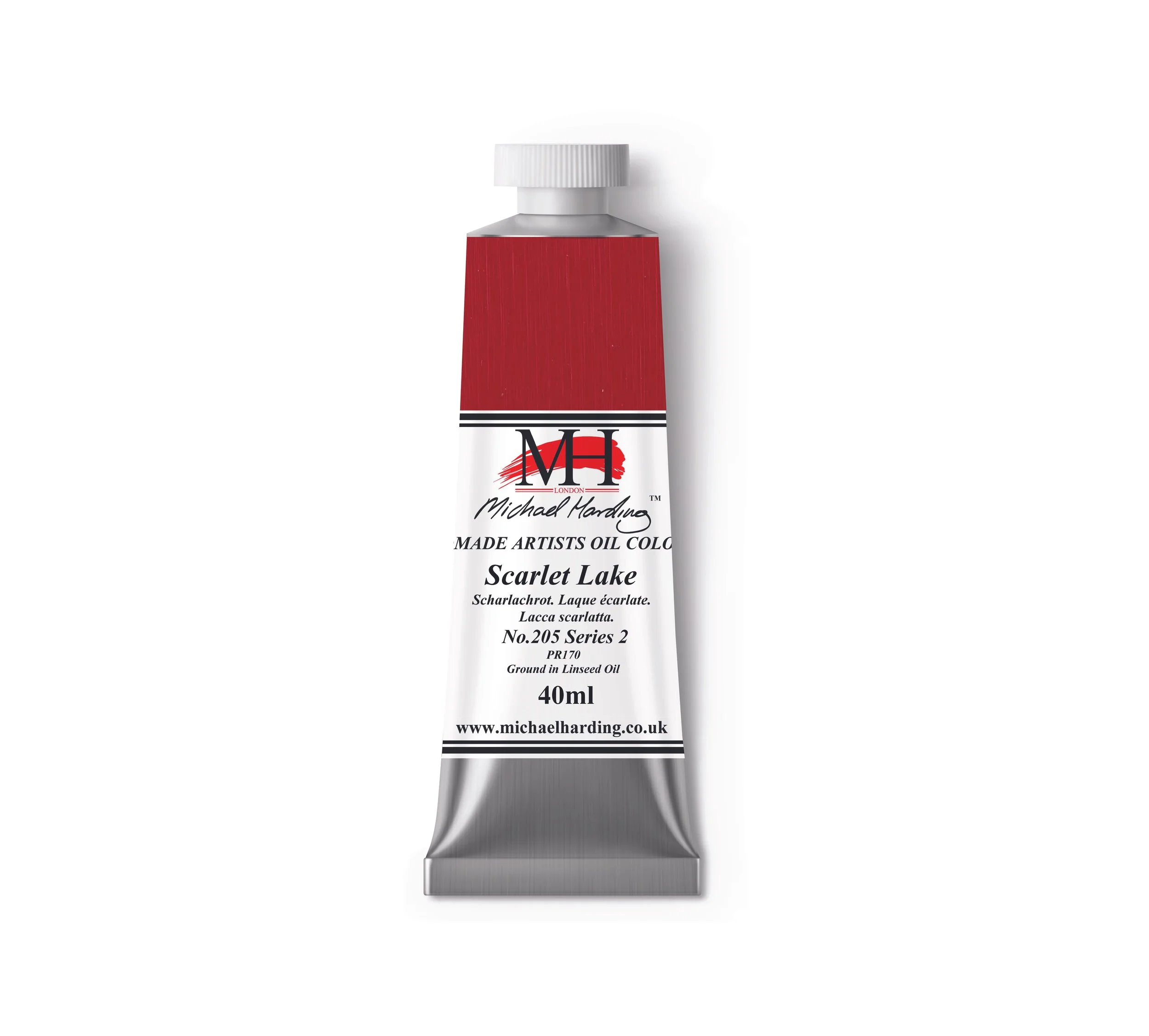
Ⓥ VEGAN
Organic Pigment – Scarlet Lake belongs to the family of Naphthol Red pigments. This Lake is organic, warm, and possesses high tinting power.

Ⓥ VEGAN
Inorganic, Natural Earth – Raw Sienna is powerful to use as a ground tone and for underpainting. Its origins date back to the 17th century, and it’s one of the indispensable Earth Iron Oxides! As the name suggests, the best grade comes from central Italy, where I acquire my pigment.

Ⓥ VEGAN
Inorganic – This is a version of Burnt Umber that has heavier and more red-brown undertones than the raw umber variant. This is the colour in its presentation from the last two centuries, invaluable for underpainting and showing a range of sandy pinks in hues.

Ⓥ VEGAN
Inorganic – Viridian is about the fastest curing colour in my entire range, along with Stack Lead White. This hydrated variant of Chromium Hydroxide, introduced in the mid-19th century, is a valued support colour used for influencing greys in underpainting. The vivid blue undertones apparent in thin layers are soon eclipsed in thicker applications. Landscapists and some portraitists still prefer it to the more brutal power of the Phthalo Greens. When combined with reds, an interesting range of blue-greys results. Placing it as local colour in the proximity of vermilion can also produce some interesting complementary effects.

Ⓥ VEGAN
Diarylide Yellow is a synthetic organic Lake that replaces uric acid, which was made by warming the urine of Indian cows fed on mango leaves. This modern, organic equivalent matches the beauty of the original colour, used for centuries in Mughal miniatures, but it has greater tint power and reliability. When brushed thinly over hued backgrounds, it presents a vibrant and warm mustard yellow. Please note that our Indian Yellow is not made with animal waste.
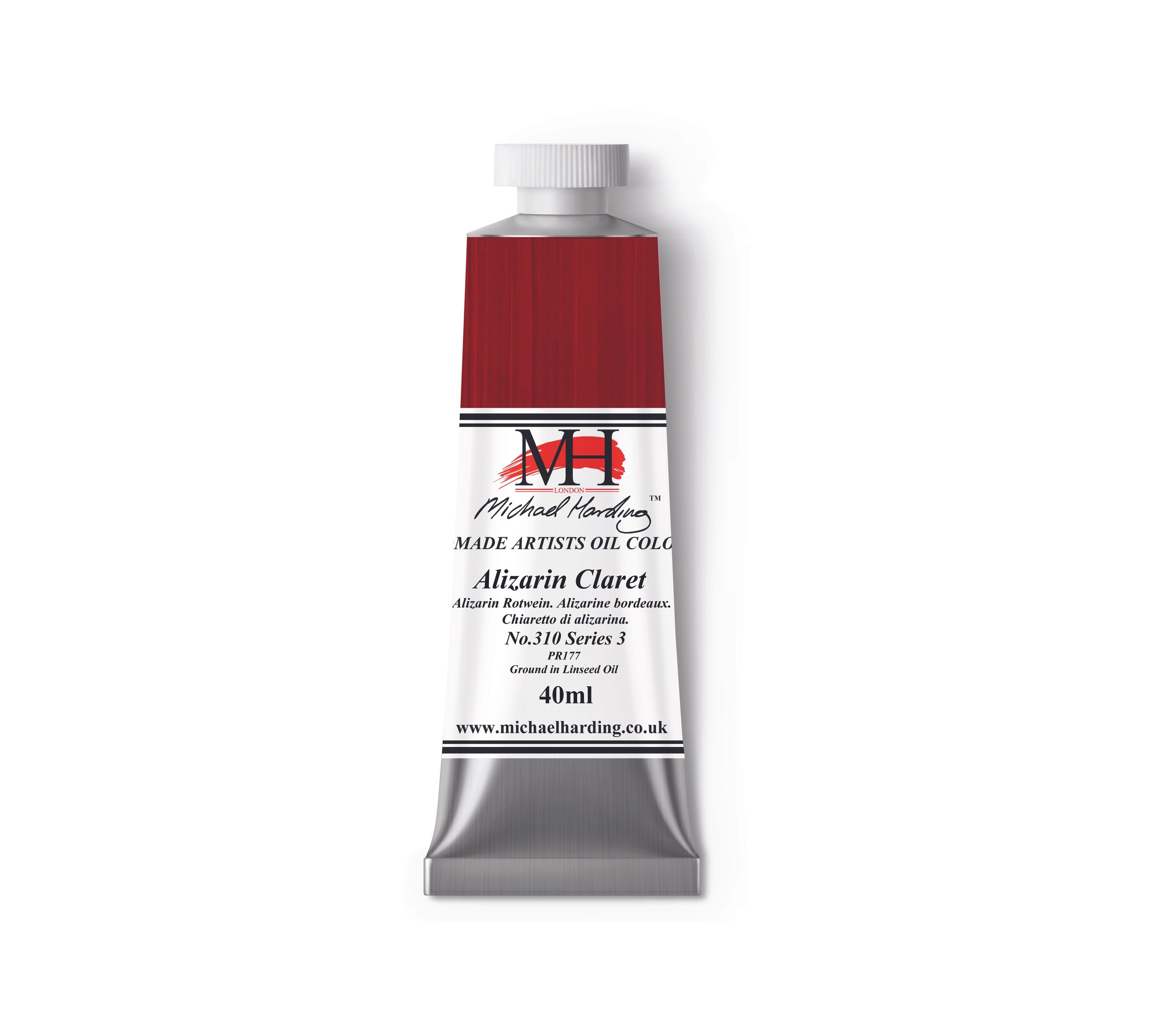
Ⓥ VEGAN
Organic – Alizarin Claret has a slightly lighter mass tone than that of Alizarin Crimson, and yet it has greater resistance to UV light than Alizarin Crimson. I specifically formulated this beautiful, full-bodied colour for those artists who are reluctant to use Alizarin Crimson. With its versatility and beautry, Alizarin Claret is perfect for portraitures, landscapes, and non-figurative works, and it’s a delight for mixing with other transparent colours.

Ⓥ VEGAN
Organic, Natural Earth – Raw Umber is one of the fundamental Earths used as an imprimatura pigment to draw out compositions as a ground, as many Rubens sketches prove. Depending on the degree of transparency, it exhibits greenish undertones.

Organic, Natural Earth – An impure, amorphous Carbon in Calcium Phosphate, Ivory Black is no longer made from burnt ivory scraps but from charred animal bones. It is denser in shade and cooler than Lamp Black, with stronger tint power. Ivory Black, the blackest of the blacks, is the most frequently used black in the range.

Ⓥ VEGAN
Inorganic and Organic Pigments –Adored by the landscape painter, Pale Violet adds vibrancy to any sky. Those confusing, hard to express violet shadows we all see in clouds are now easily achievable with this colour. Pale Violet is a wonderful addition to our range of colours. It’s made from three stable, reliable, and lightfast pigments. Although these pigments are available in pure pigment form in Michael’s range, artists always tell me they can’t achieve quite the same vibrancy when mixing in their studios. Pale Violet also allows the portrait artist to achieve interesting shadow combinations—for example, as a complimentary colour to create vibrancy in greys. Pale Violet has an obvious place in still lifes and interiors. Modern artists will love it as well. Enjoy!
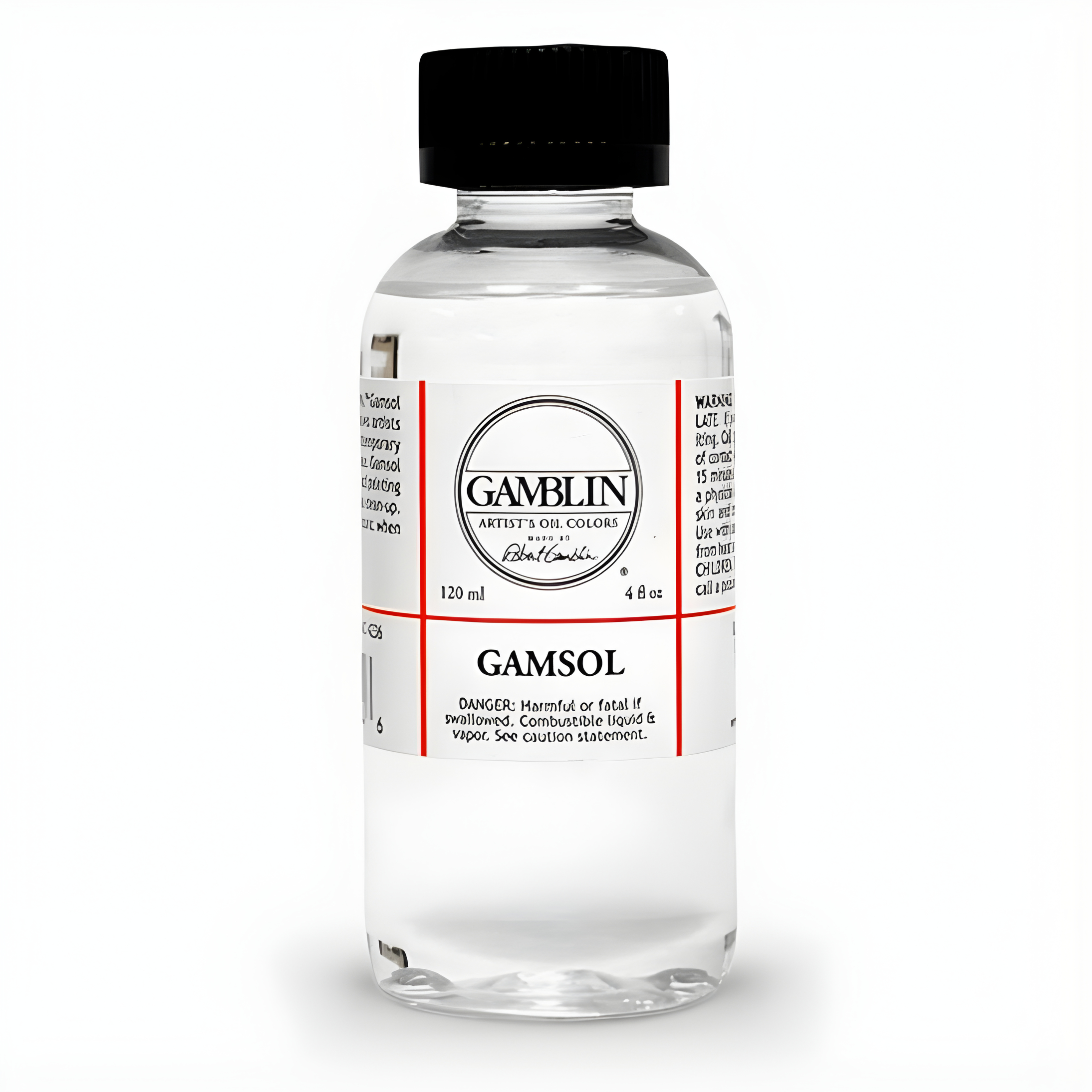
Gamsol is the safest solvent that allows oil painters to utilise all traditional painting techniques without compromise.
Primary Uses for Gamsol:
Thinning oil colours. A little goes a long way; stiff oil colours relax immediately when a little Gamsol is added. Be careful not to thin oil colours too much with solvent alone, this can compromise the ability of the paint to form a paint film.
Modifying painting mediums. Gamblin's Galkyd line of painting mediums is formulated with Gamsol, so they readily accept Gamsol as a thinning agent. Note: Gamsol should not be added to painting mediums made with natural resins (dammar, copal, mastic). They require strong solvents such as turpentine.
Studio clean up: brushes, palettes, palette knives, etc.
How does Gamsol achieve this level of performance and safety? Most solvents available to artists come from the industrial paint industry where solvent power and cheapness is prized. Gamsol is special: it is made for products and processes that come into more intimate contact with the body such as cosmetics, hand cleaners, and cleaning food service equipment.
Gamsol is a petroleum distillate but all the aromatic solvents have been refined out of it, less than .005% remains. Aromatic solvents are the most harmful types of petroleum solvents.
These facts are detailed in the MSDS for Gamsol, this document shows that it has an Exposure Limit Value higher than most solvents available to artists.
All of these factors have lead to Gamsol being used widely in oil painting classrooms; in those classes there are no solvent odours, only the wonderful smell of oil colours.
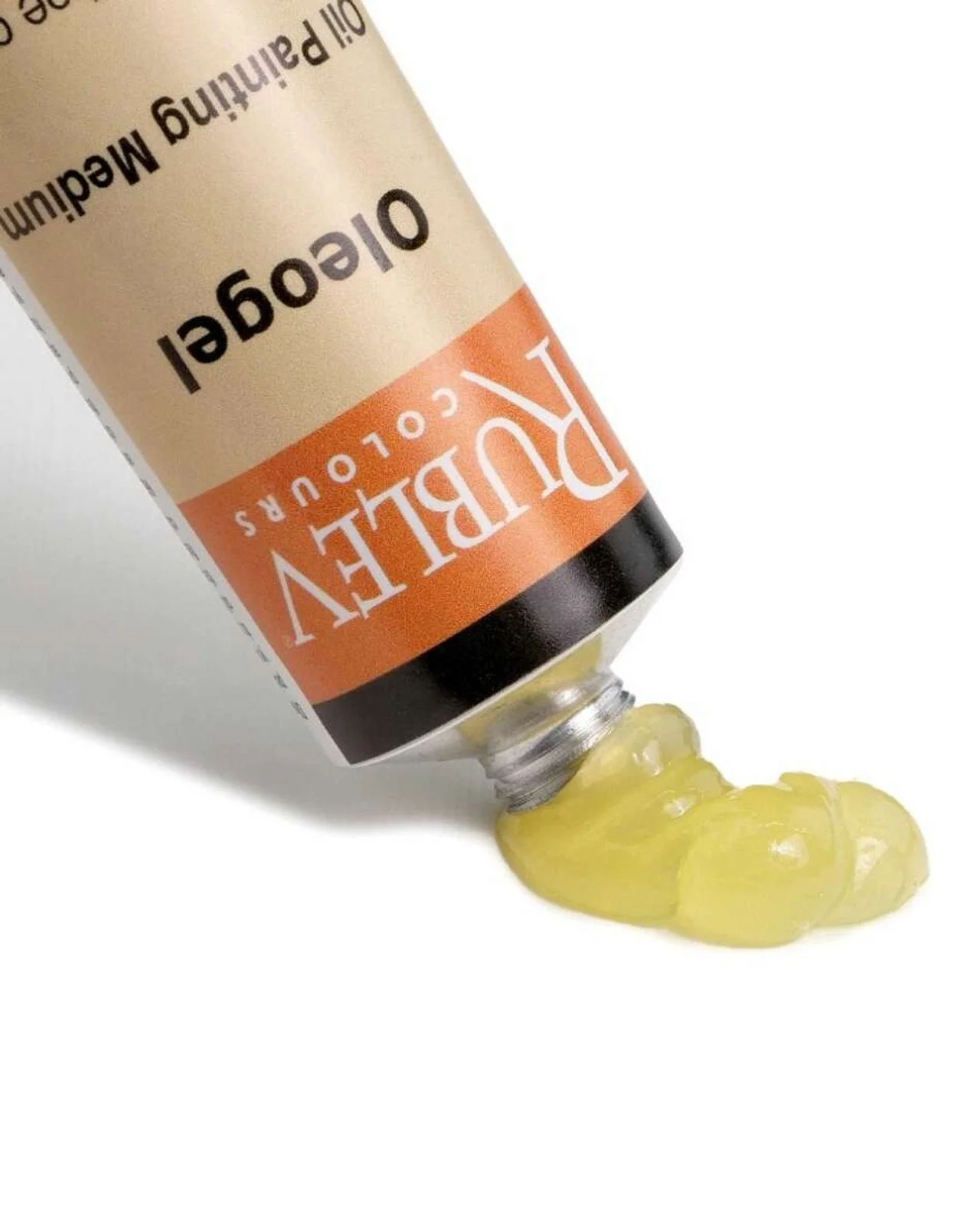
A genuine best seller!
Oleogel is a thixotropic painting medium made with linseed oil and pyrogenic silica. Thixotropic!? This means a substance which is relatively firm and as you work it, it becomes mores viscous and liquid like, much the same if you stamp up and down in the same place on wet sand on a beach.
Oleogel is a clear pale amber gel that adds transparency and thixotropic body to oil, resin-oil or alkyd paint. Add directly to your paint to give it transparency without thinning its consistency. Add pigments or extenders to thicken it for creating impasto effects that do not sink in.
Oleogel does not contain driers, so it is safe to use in oil painting without worry of cracking. When mixed with colours, Oleogel does not slow the drying time.
Oleogel adds transparency without losing the body of the paint.