Mediums & Oil Paints

Based in northern California, Natural Pigments manufactures and distributes rare and hard-to-find materials for fine artists and decorators. We specialize in supplying artists' materials that were used in historical painting since prehistoric times up to and including the nineteenth century.
Gel Oil Paint Mediums
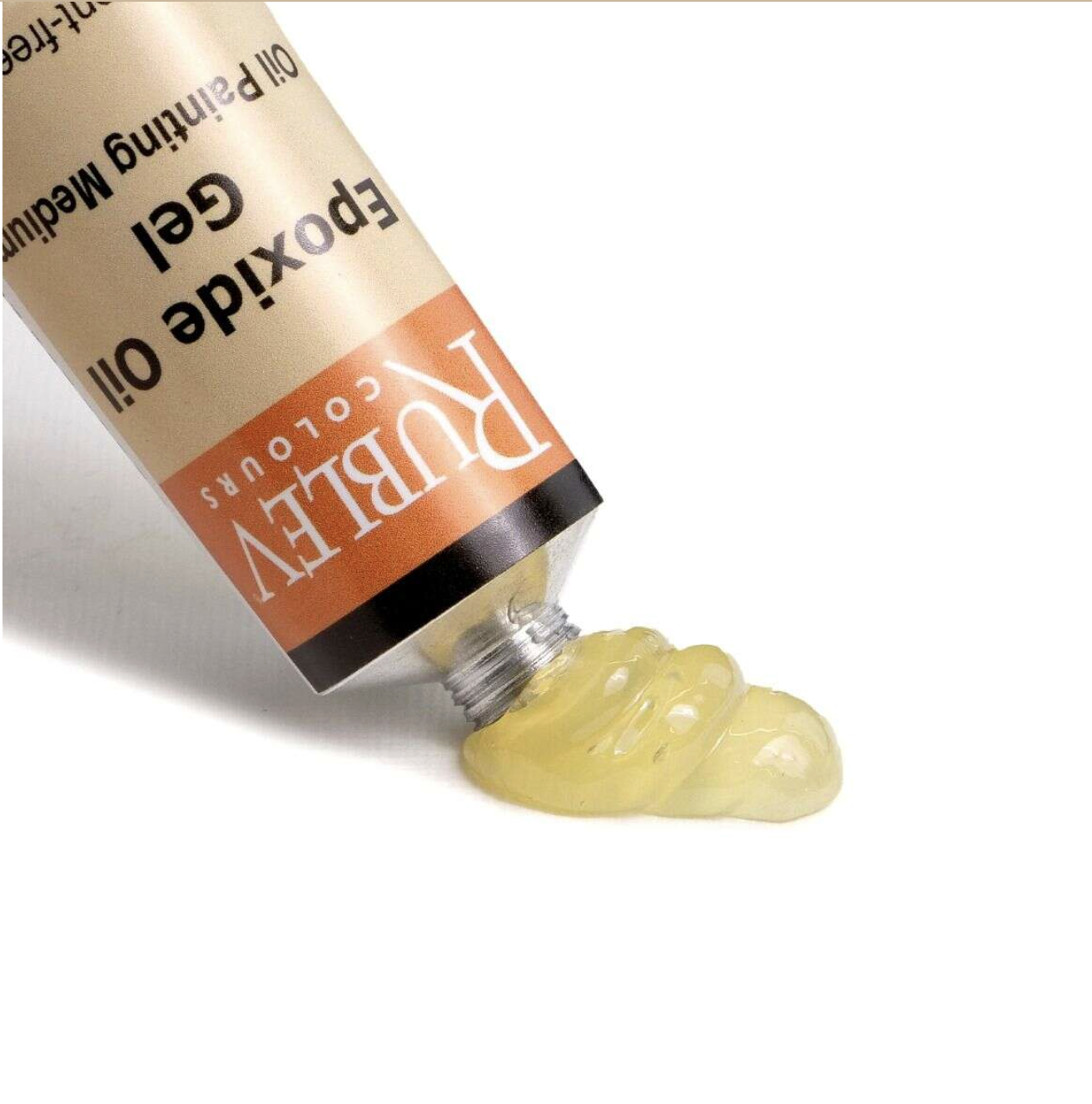
Epoxide Oil Gel is a thixotropic painting medium made with dicyclopentadiene copolymer linseed oil and pyrogenic silica. Epoxide Oil Gel is a translucent yellow gel that adds transparency and thixotropic body to oil, resin-oil or alkyd paint.
——
Epoxide Oil Gel is a thixotropic painting medium made with dicyclopentadiene copolymer linseed oil and pyrogenic silica. Epoxide Oil Gel is a translucent yellow gel that adds transparency and thixotropic body to oil, resin-oil or alkyd paint. Add directly to your paint to give it transparency without thinning its consistency. Add pigments or extenders to thicken it for creating impasto effects that do not sink in.
Epoxide Oil Gel does not contain driers or solvents, so it is safe to use in oil painting without worry of cracking. When mixed with oil colors, Epoxide Oil Gel will decrease the drying time. Epoxide Oil Gel is tacky, so we do not recommend adding more than 20 to 30% to your paint.
Epoxide Oil Gel adds transparency to whites without losing the body of the paint
Epoxide Oil Gel in the center, Lead White on the left and a mixture of Epoxide Oil Gel and Lead White on the right. Lead White is stiff, plastic and short, but when mixed with Epoxide Oil Gel the mixture is semi-transparent, soft, yet sculptural.
——
Epoxide Oil Gel increases transparency without flow out and leveling
Rublev Colours French Raw Sienna at left and a mixture of Epoxide Oil Gel and Raw Sienna on the right. Below each is a brush out of the above examples. Rublev Colours French Raw Sienna is long, yet holds strokes well. When Epoxide Oil Gel is added to Raw Sienna it increases transparency without causing the flow out and leveling of brushstrokes.
Directions
Mix directly into your paint right on the palette.
To make your own paint with Epoxide Oil Gel, add directly to pigment powder until a stiff paste is obtained (almost the consistency of putty). Grind the paste with a muller on a flat surface before storing in collapsible tube. Some of its thixotropic property will be temporarily lost when grinding Epoxide Oil Gel with a muller, but should be restored when allowed to stand.
Health and Safety
There are no acute or known chronic health hazards associated with the anticipated use of this product (most chemicals are not fully tested for chronic toxicity). Always protect yourself against potentially unknown chronic hazards of this and other chemical products by keeping them out of your body. Do this by avoiding ingestion, excessive skin contact, and inhalation of spraying mists, sanding dusts and vapors from heating. Conforms to ASTM D 4236.
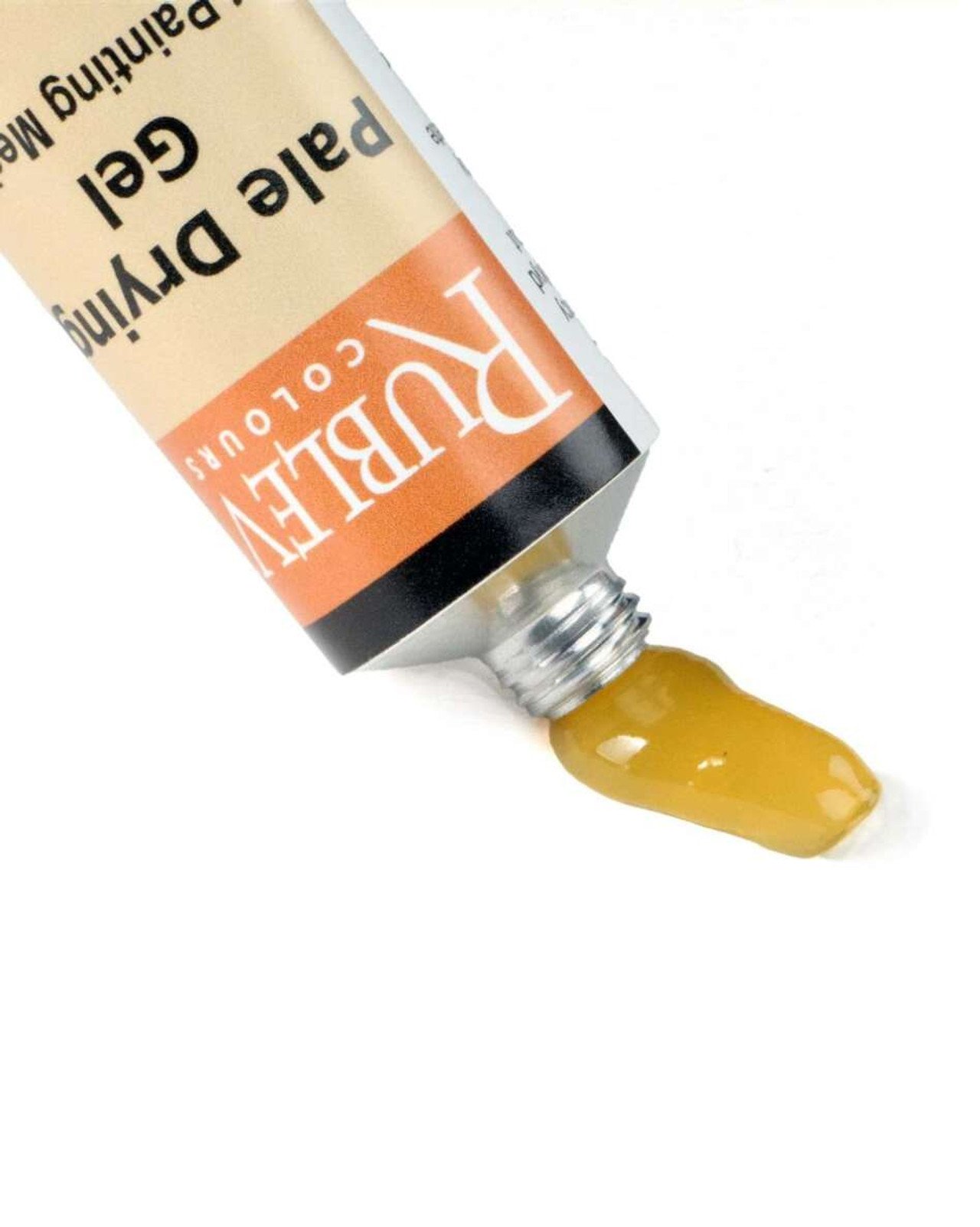
Pale Drying Gel is a firm oil gel medium made with linseed oil and fumed silica. Add to hasten drying of oil colors for creating transparency for glazes and faster-drying paint layers. Contains manganese driers, so use it sparingly to avoid drying cracks in paint layers. Add directly to your paint to give it transparency without thinning its consistency. Add to pigments or extenders to thicken the gel to create impasto effects that do not sink in.
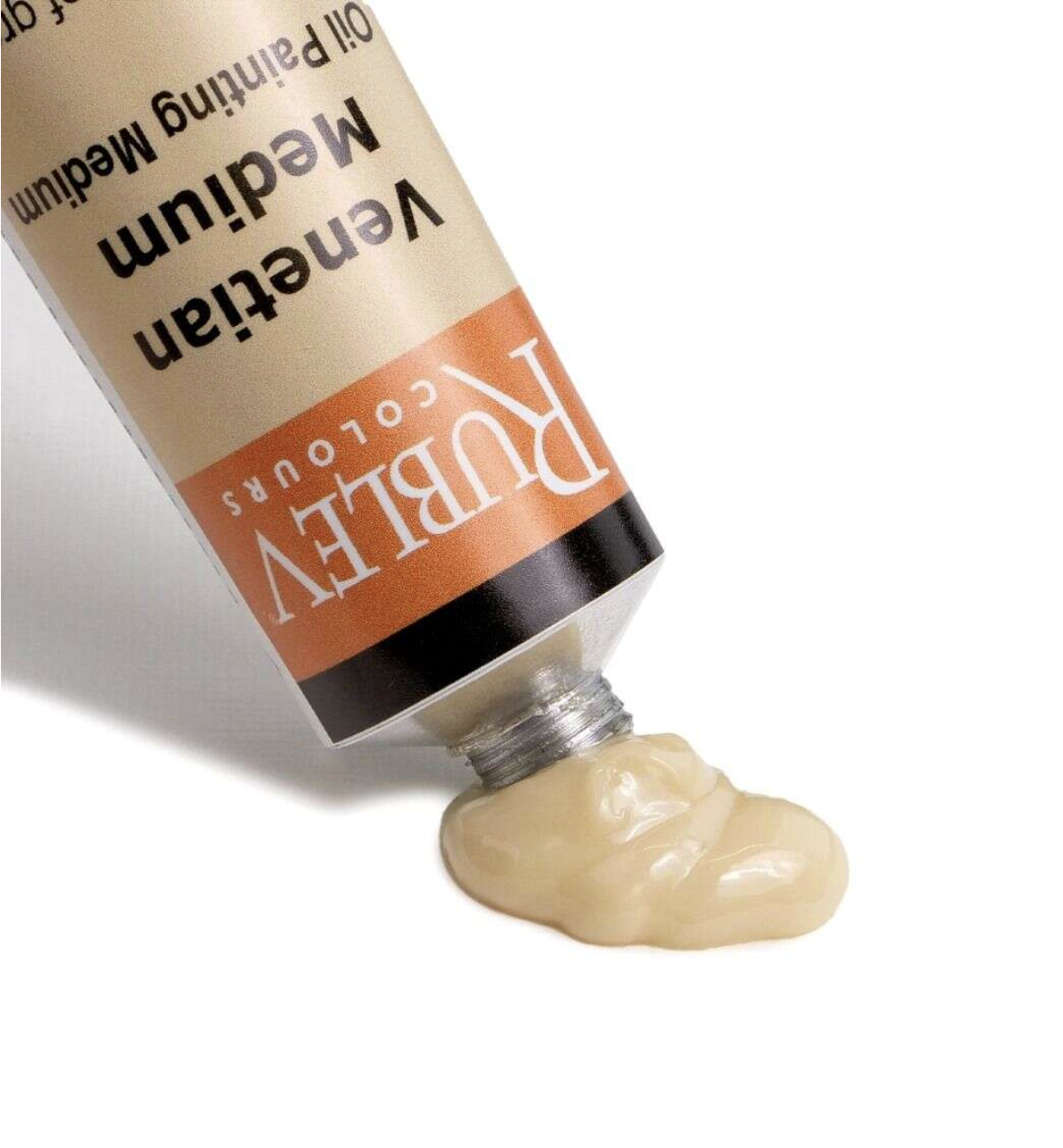
Venetian Medium is based on research that 16th century Venetian painters added powdered glass to their paint. Contains leaded crystal glass powder, pale bodied linseed oil and turpentine, with small amounts of wax and lead.
——
Use Venetian Medium as a glazing medium that is fast drying and offers the glaze brilliance due to the crystal glass particles. Spread thinly onto the surface and paint directly into it as a couch or add directly to paint nut. Smooths the edges of brush or knife strokes. Venetian Medium is fast setting and dries to a satin finish.
Directions
Spread thinly onto the surface and paint directly into it or mix directly into paint on the palette to give colors a flowing consistency that holds brush strokes yet dries to a satin finish. Use to “oil out” or as a painting couch by rubbing a thin layer onto completely dried paint. Gives paint a longer, flowing consistency.
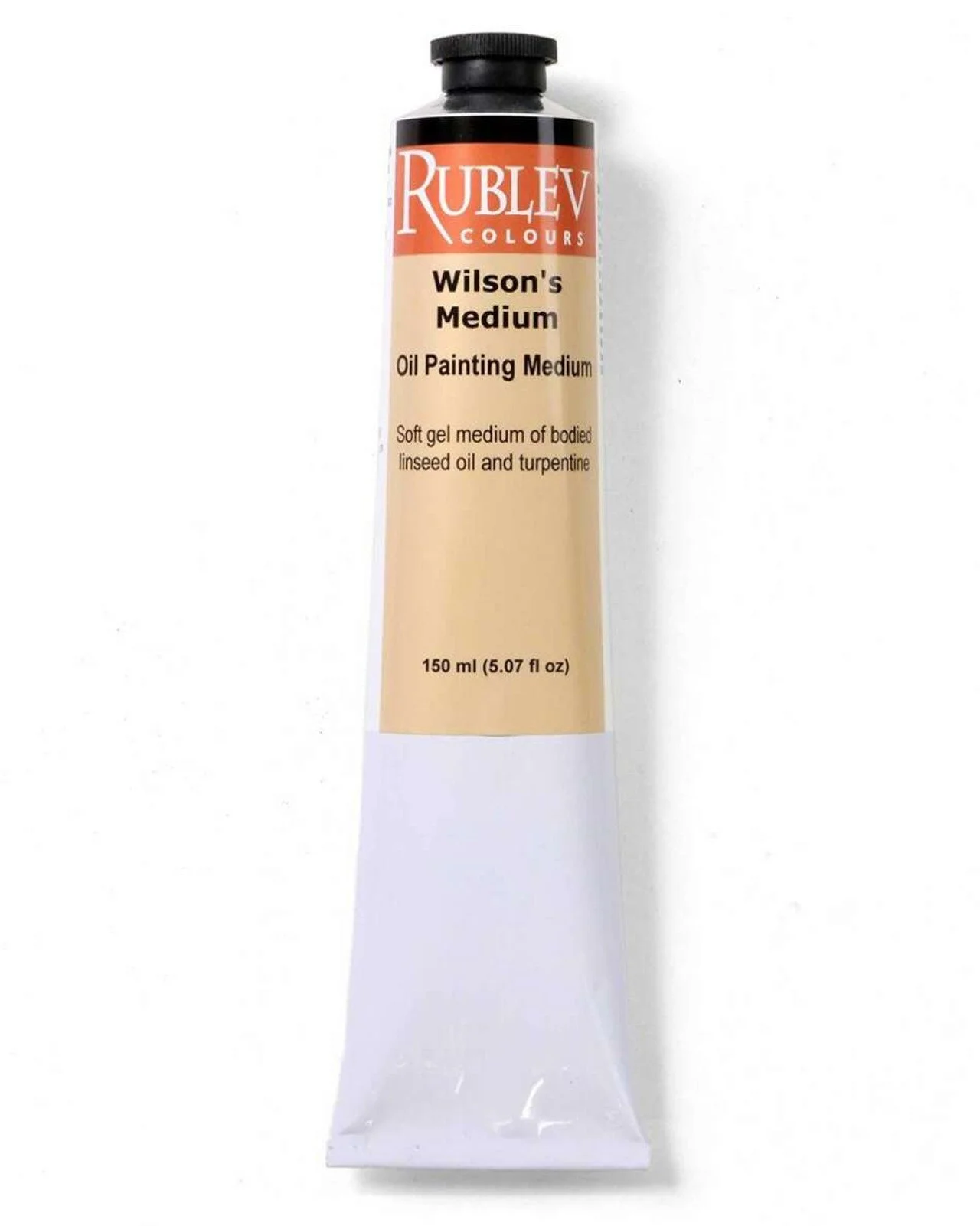
Wilson's Medium is based on the 18th century medium developed by Richard Wilson, British landscape painter and, according to Field, also used by Joshua Reynolds. No driers or resins added.

Italian Varnish is not a picture varnish but rather a gel oil painting medium.
Italian Varnish was first mentioned by Jean-François-Léonor Mérimée in his 1839 book, The art of painting in oil and in fresco, as a “strong oil prepared in Italy from a very remote period, and which possesses the double-advantage of drying well, and preventing the flowing about of the most liquid glazing.” Italian Varnish is made using linseed oil, litharge (lead monoxide), wax and a small amount of gum turpentine, ground as fine as possible.
It is an amber gel medium that performs similarly to Maroger medium, except instead of mastic, this medium incorporates wax, which is ideal for those artists who prefer a thicker painting consistency and faster drying time.
Italian Varnish sets quickly, while providing translucency and body to oil colors when mixed with them in glazes. It gives a somewhat fluffy consistency to paint, making possible many different ways of using this subtle technique. In addition to the soft sheen of the medium, the artist now also has the means of more rapid execution. Artists can mix the Italian Varnish into light pigments (Lead White, Lead-Tin Yellow, Naples Yellow, Yellow Ocher, etc.) to give these colors more body and a thicker consistency.
It can help to build up the lights and adds translucency and impasto for the brightest passages of a painting.
A genuine best seller!
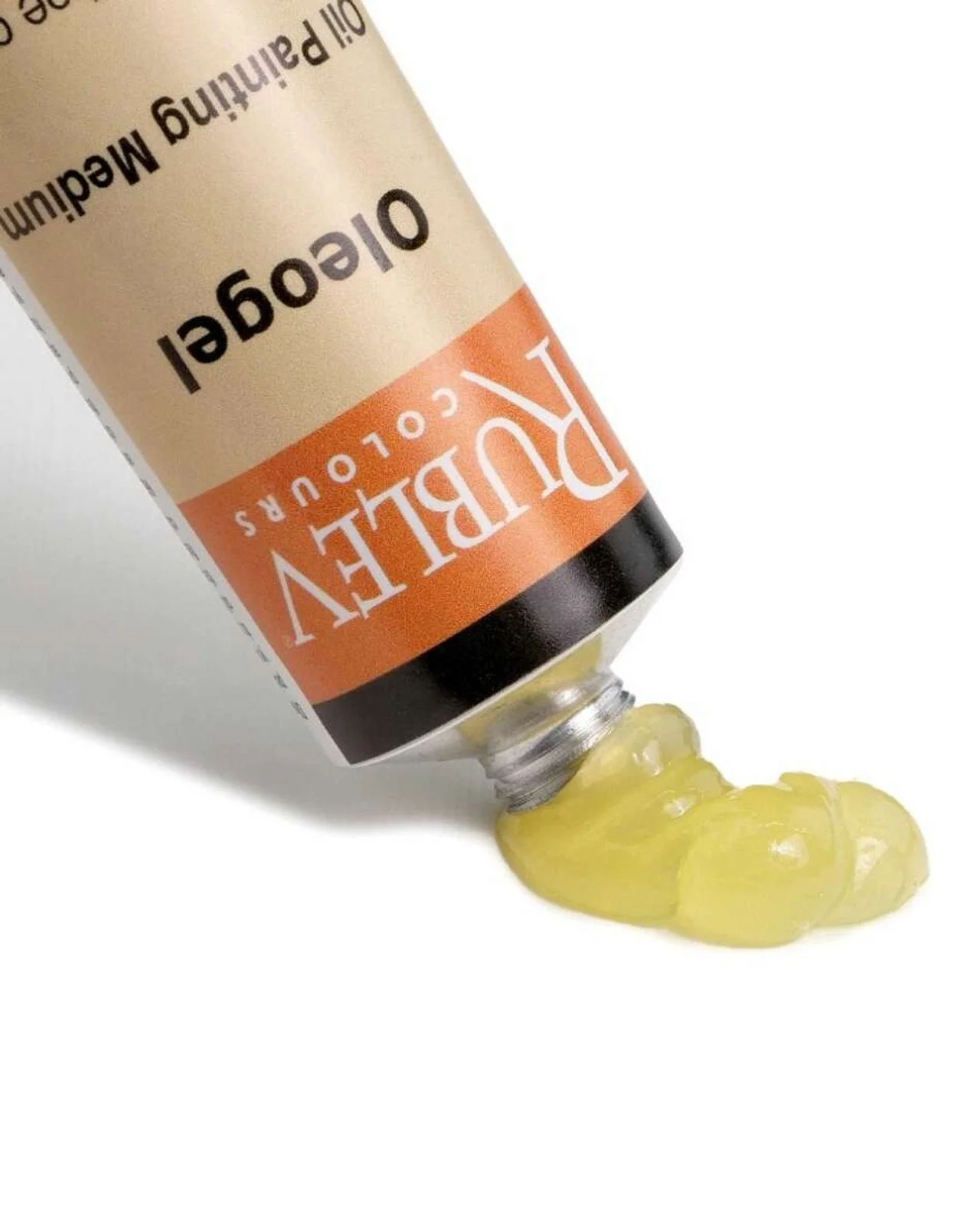
Oleogel is a thixotropic painting medium made with linseed oil and pyrogenic silica. Thixotropic!? This means a substance which is relatively firm and as you work it, it becomes mores viscous and liquid like, much the same if you stamp up and down in the same place on wet sand on a beach.
Oleogel is a clear pale amber gel that adds transparency and thixotropic body to oil, resin-oil or alkyd paint. Add directly to your paint to give it transparency without thinning its consistency. Add pigments or extenders to thicken it for creating impasto effects that do not sink in.
Oleogel does not contain driers, so it is safe to use in oil painting without worry of cracking. When mixed with colours, Oleogel does not slow the drying time.
Oleogel adds transparency without losing the body of the paint.
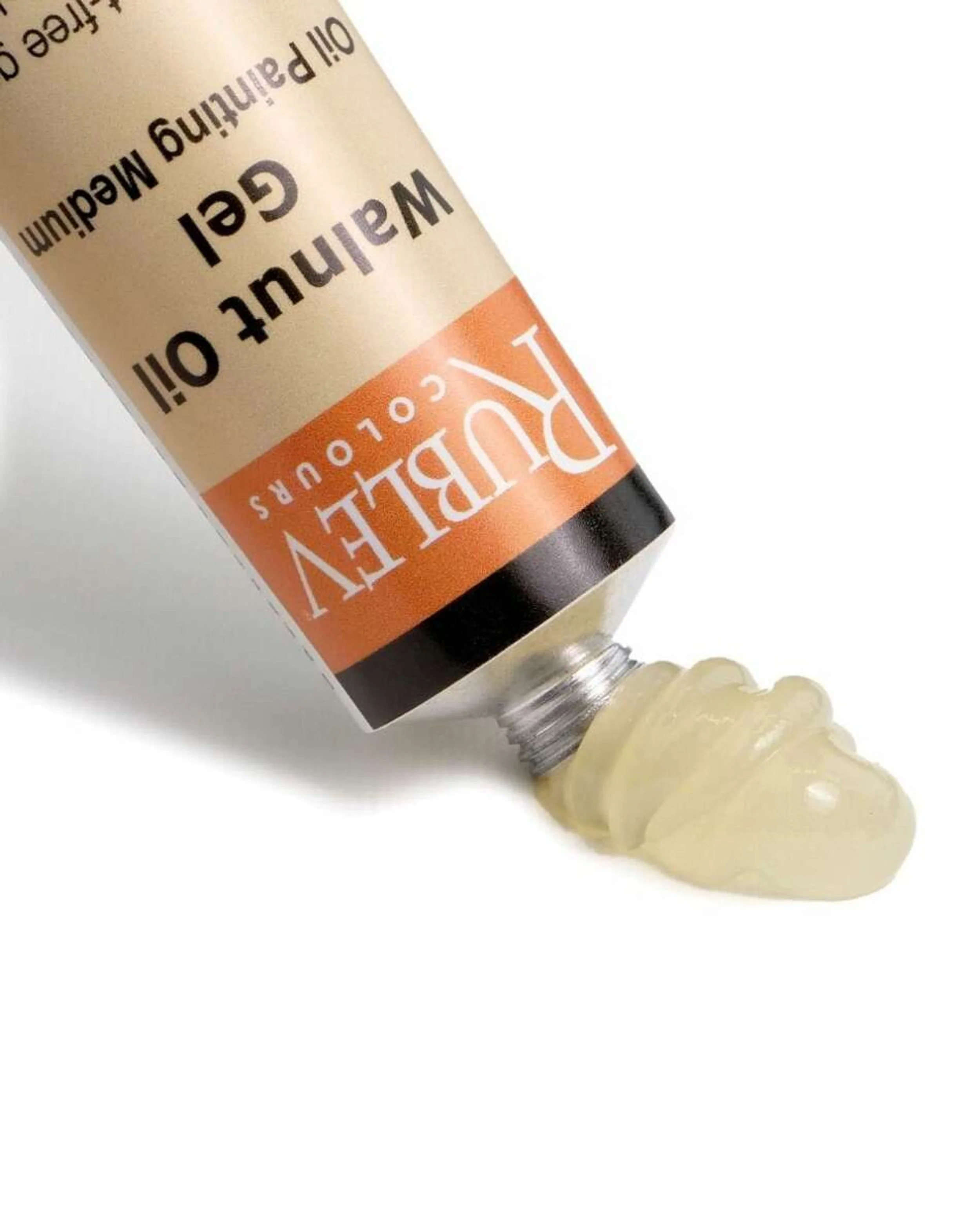
Essentially a Walnut oil based Oleogel.
Walnut Oil Gel is a thixotropic (meaning the more it is worked the more fluid it becomes) painting medium made with walnut oil and pyrogenic silica. lt is a clear pale amber gel that adds transparency and thixotropic body to paint. Add pigments or extenders to thicken it for creating impasto effects that do not sink in. It will increase the drying time of oil paint.
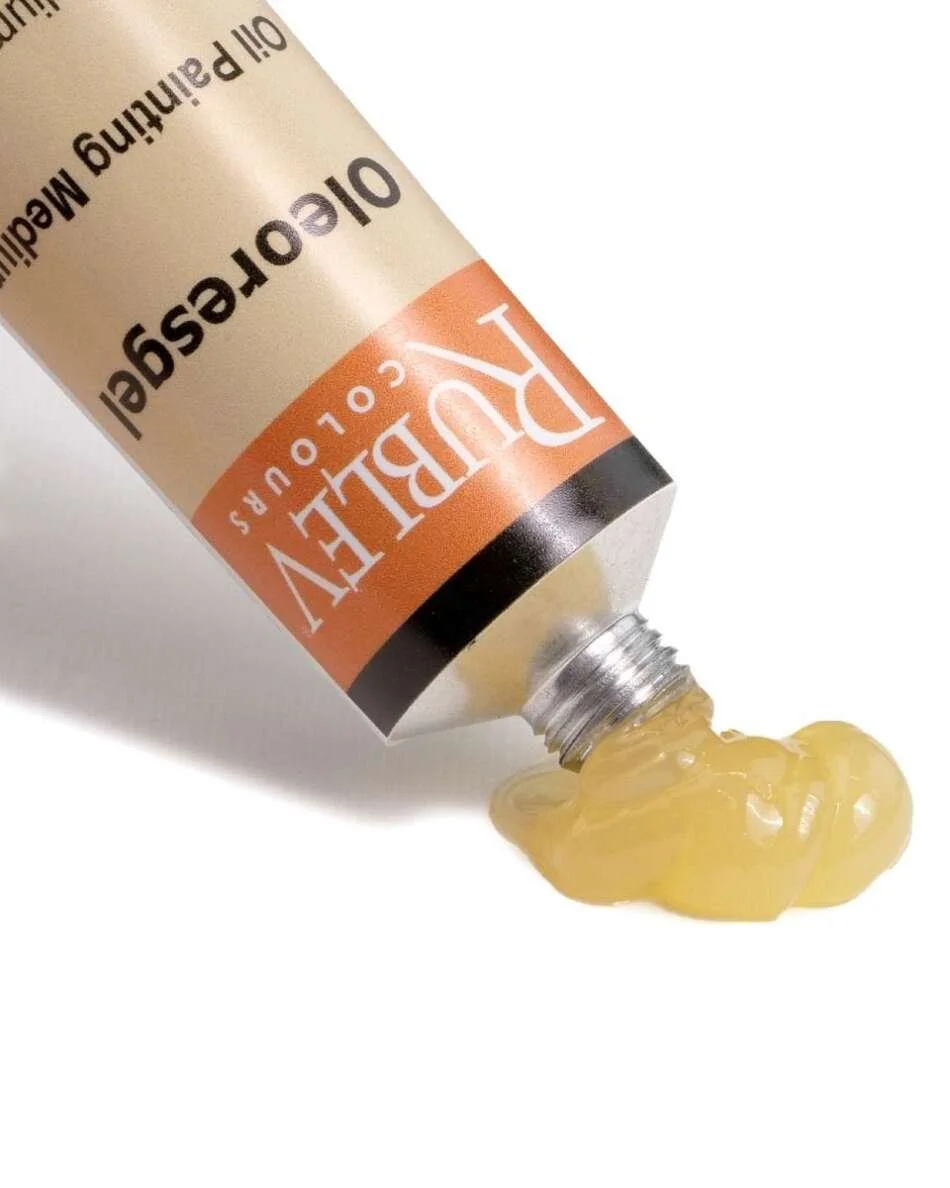
Oleoresgel is a firm thixotropic gel made with bodied linseed oil, alkyd resin and fumed silica. Add to thicken colors for creating impasto effects that do not sink. Contains no driers, so it is safe to use in oil painting without worry of cracking.
Rublev Colours Artist Oils
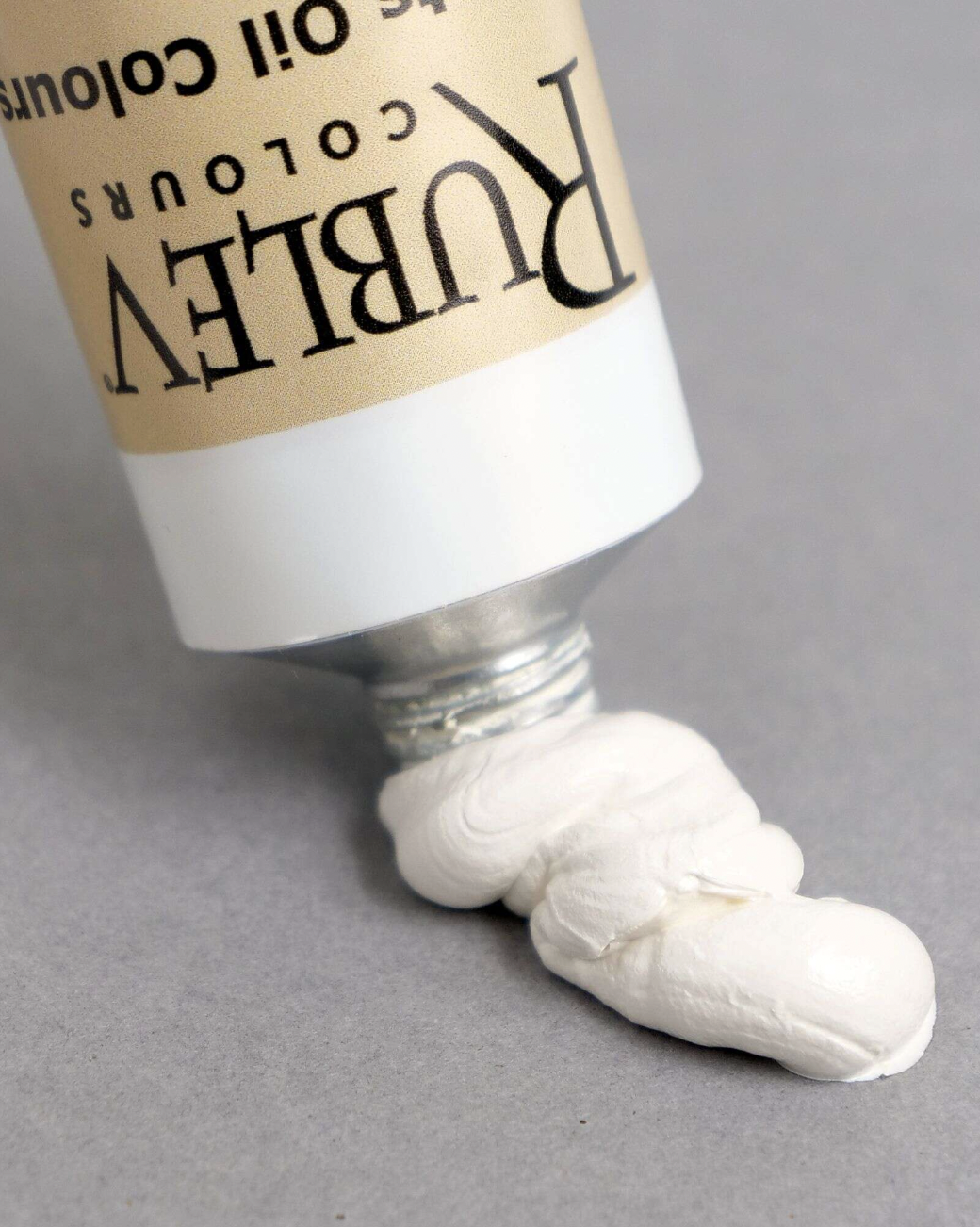
Rublev Colours Lead White #1 (also known as flake white or Cremnitz white) is an opaque white that is smooth and long. It is the most common white found on the old masters' palette.
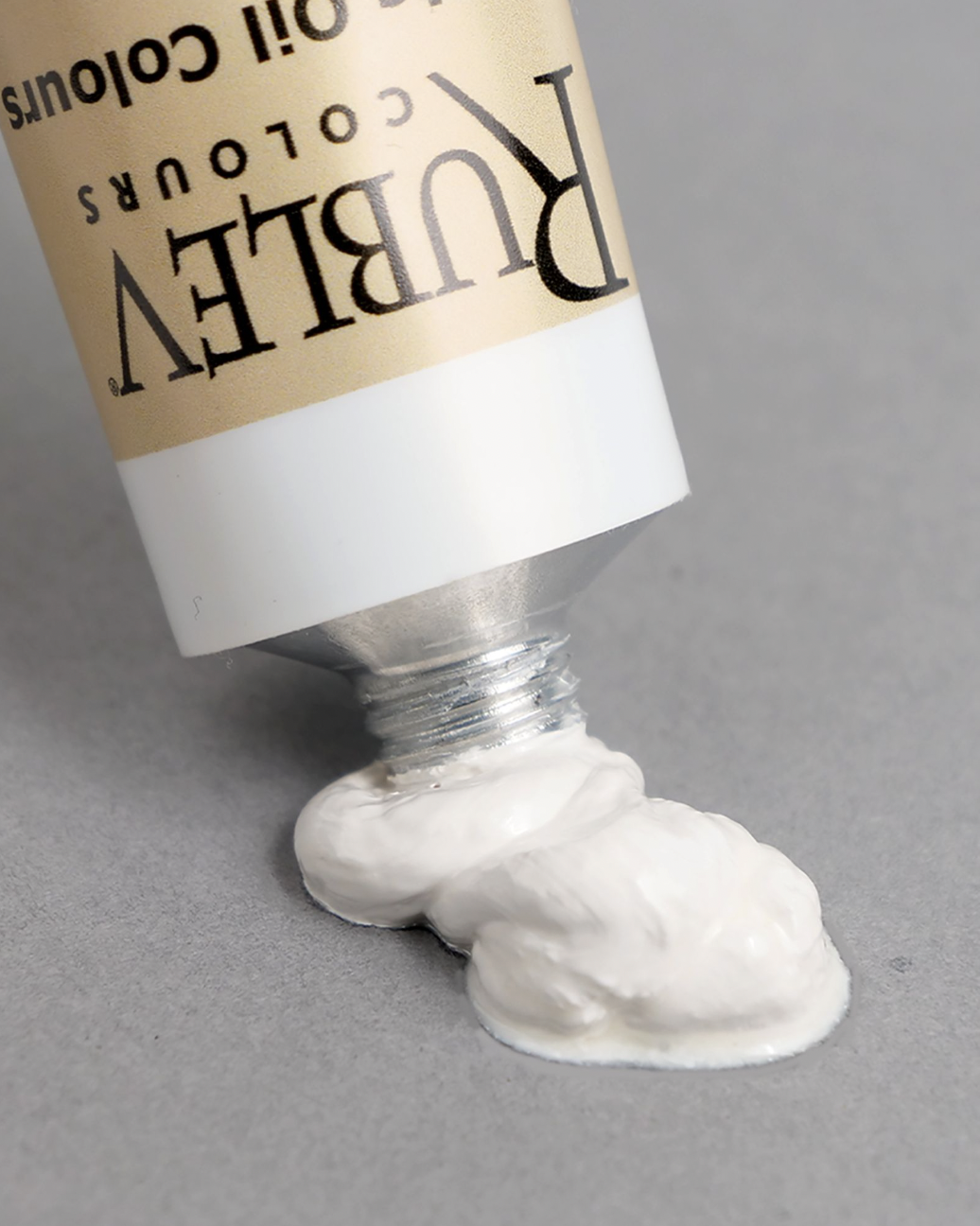
Rublev Colours Lead White #2 in filtered, pale walnut oil is an opaque white that is soft and slightly ropey. Lead White #2 is a brighter white than our first flake white (also known as Cremnitz white) because of the paler walnut oil.
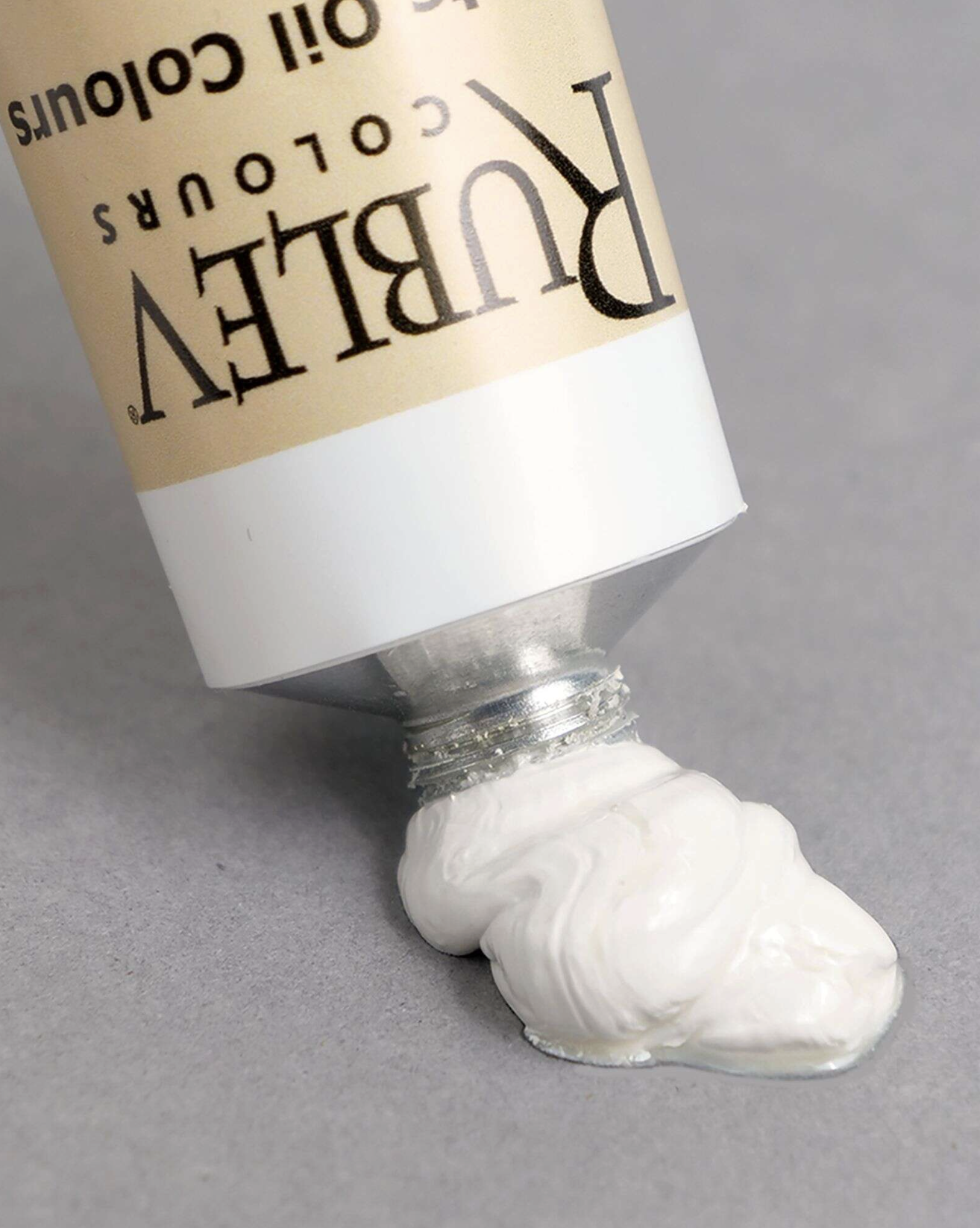
Flemish White is an opaque white pigment mixture based primarily on lead sulfate ground in linseed oil. This warm white is opaque, but not as much as titanium white, so it won't kill colors in mixtures with it.
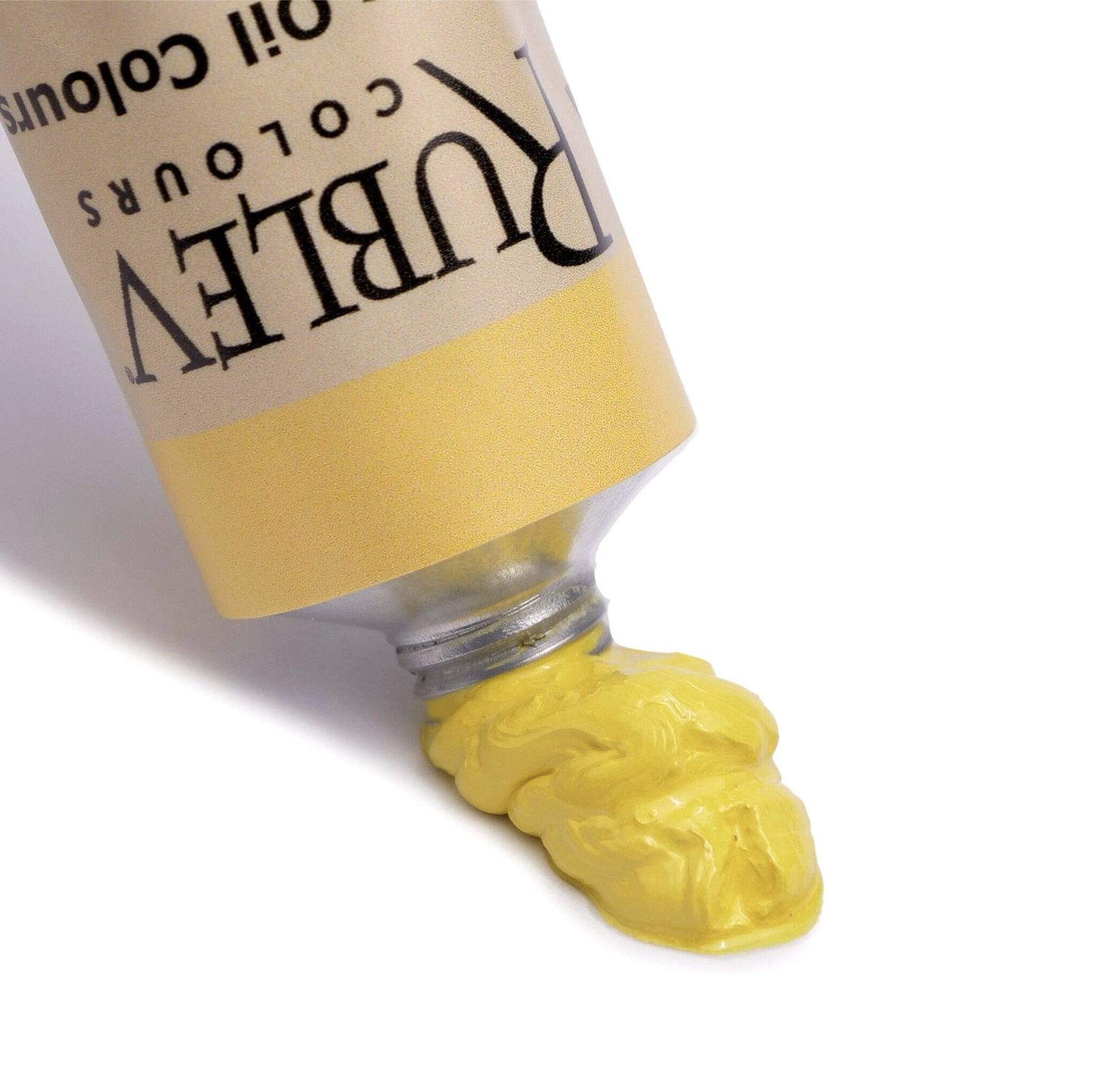
Naples Yellow (Lead Antimonate) is an opaque, bright yellow, fine-grained pigment with medium tinting strength. This is genuine lead antimonate yellow made according to historical recipes and ground in linseed oil.
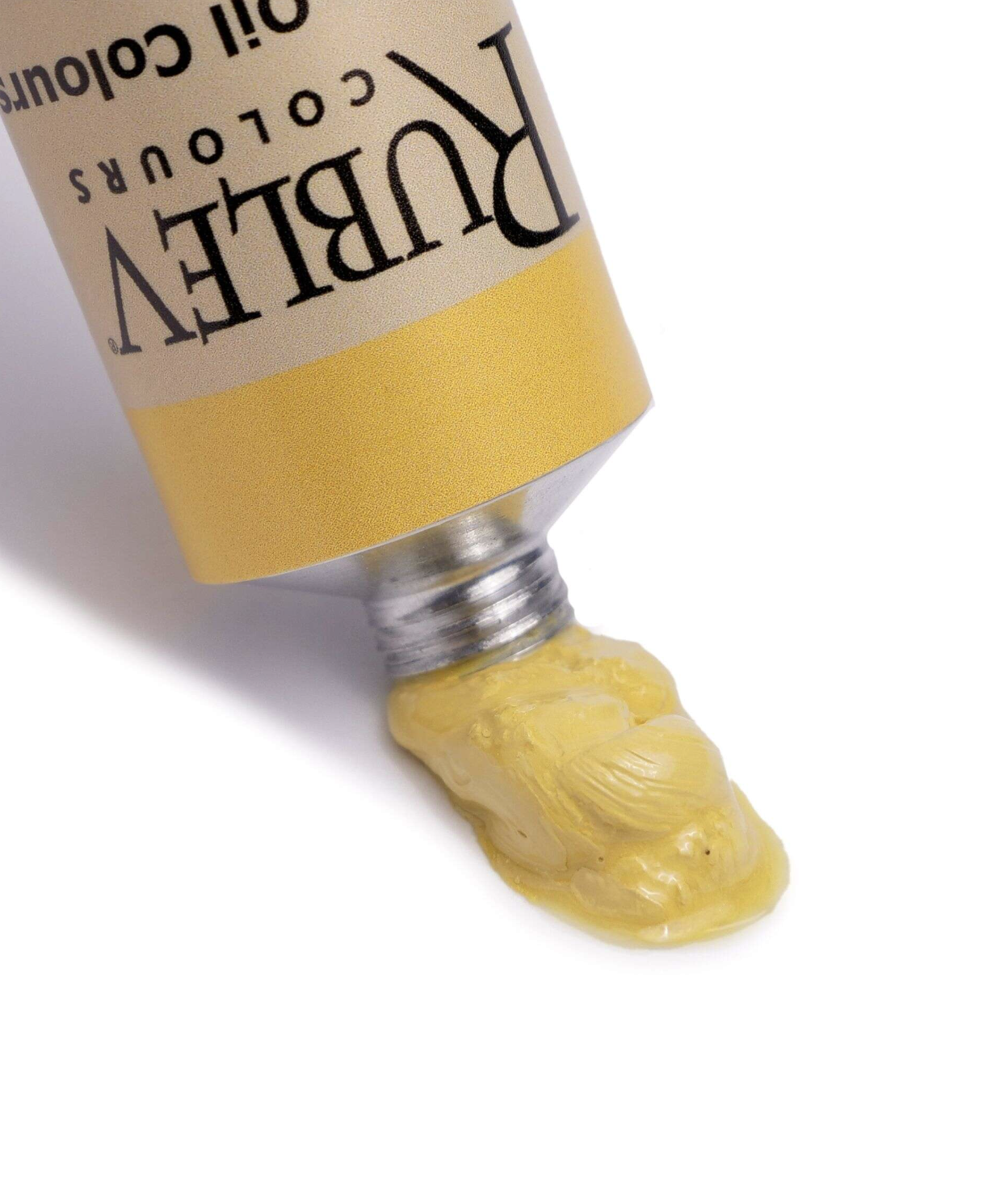
Rublev Colours Lead-Tin Yellow Dark (Type II) is a semi-opaque ocherous yellow, fine-grained with medium tinting strength. Our lead-tin yellow is made according to historical recipes.
Although lead-tin yellow frequently occurs in European painting before the eighteenth century, it is not mentioned in older literature on painting techniques. It has been identified in Rembrandt’s work, such as Belshazzar’s Feast (1636/1638). It is called massicot in northern European manuscripts, but identified as giallolino or giallorino in Italian manuscripts, as noted by Merrifield. Lead-tin yellow has not been rated for lightfastness by the ASTM, but independent studies have shown that it is permanent in most vehicles and can be used with all other pigments without alteration.
Color Swatch Note: The color swatch was created with a thick application of color (left side) and a tint (right side) made with equal parts of color and titanium white, applied to acrylic-primed cotton canvas.
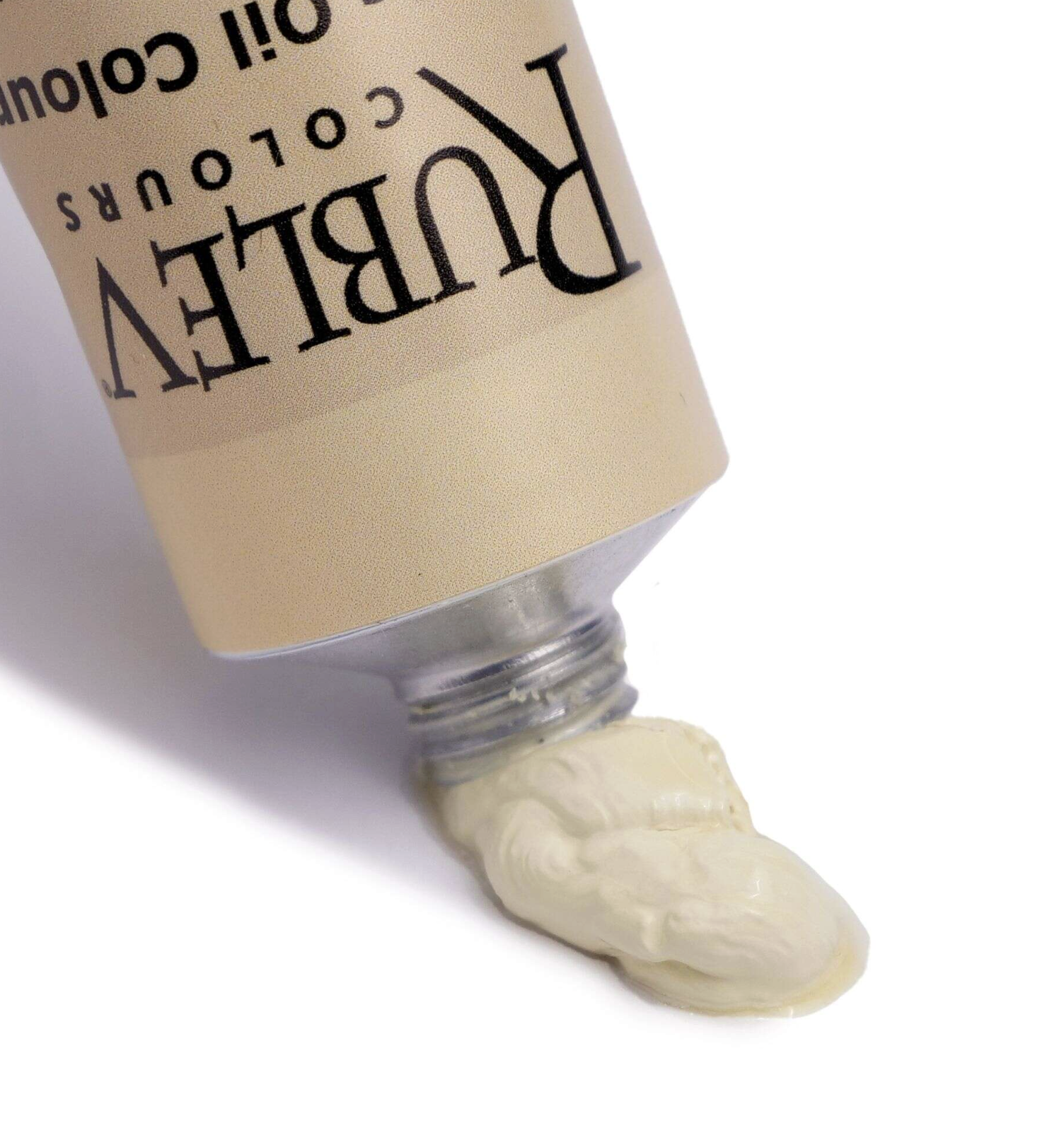
Lead-Tin Yellow Light is semi-opaque, pale yellow, fine-grained, and medium tinting strength. Our lead-tin yellow light is made according to historical recipes. Although lead-tin yellow frequently occurs in European painting before the eighteenth century, it is not mentioned in older literature on painting techniques. It has been identified in Rembrandt’s works.
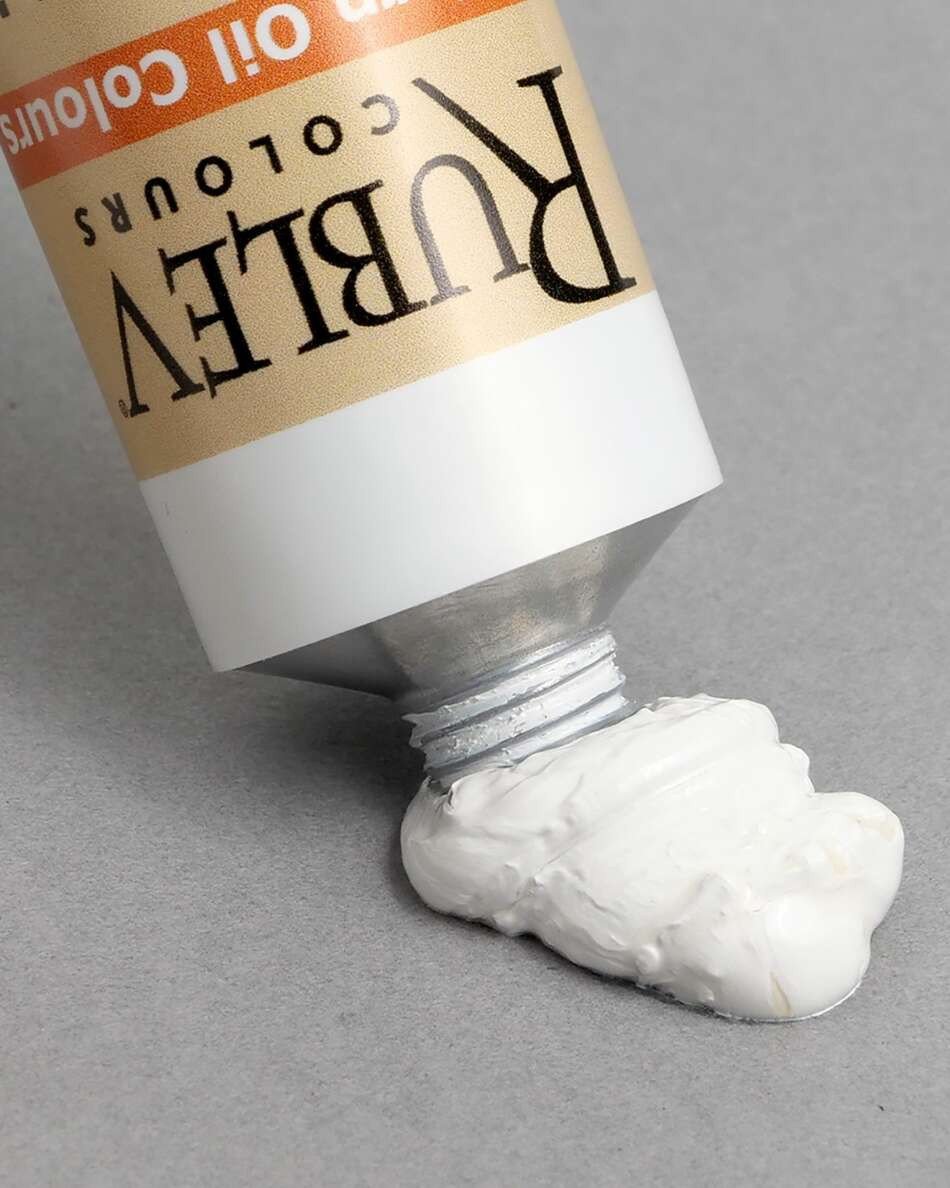
Titanium White is the most opaque white available today. Rublev Colours Titanium White Artist Oil is made without any additives or fillers typically found in other titanium whites today. It possesses extreme hiding power.
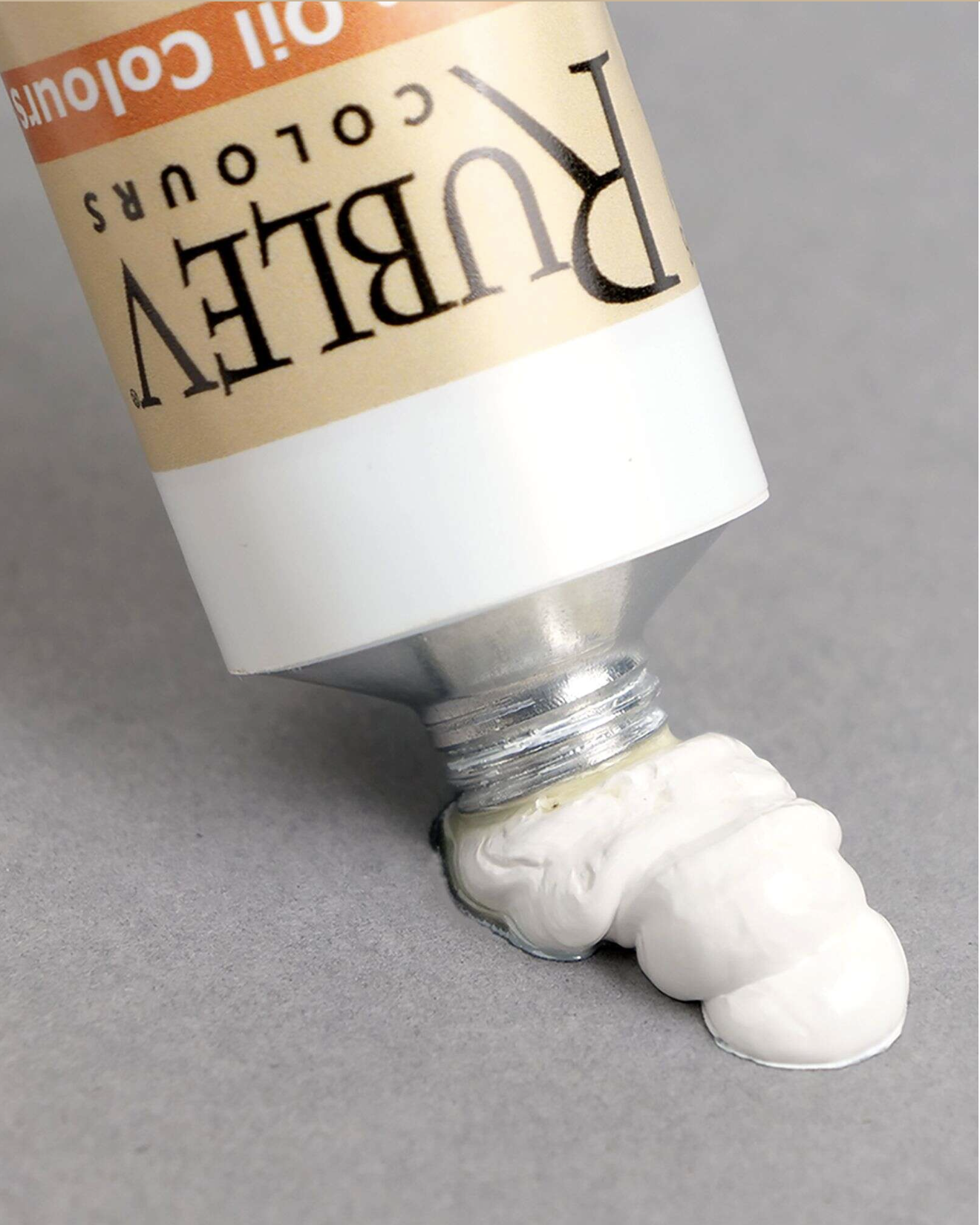
Lead-Titanium White combines the excellent filming properties of lead white with the high opacity of titanium white in one oil paint. The paint is unusually smooth with a slightly ropey consistency.

French Burnt Sienna oil paint is semi-transparent reddish-brown, has good tinting strength, is fine-grained, and brushes “long” in the direction of the brush stroke. Our French sienna is from deposits in the Luberon Mountains.

Semi-opaque, deep yellowish brown with good tint strength, fine-grained, and, like most Rublev Colours Artist Oils, brushes "long" in the direction of the brush stroke.
Fluid Oil Paint Mediums
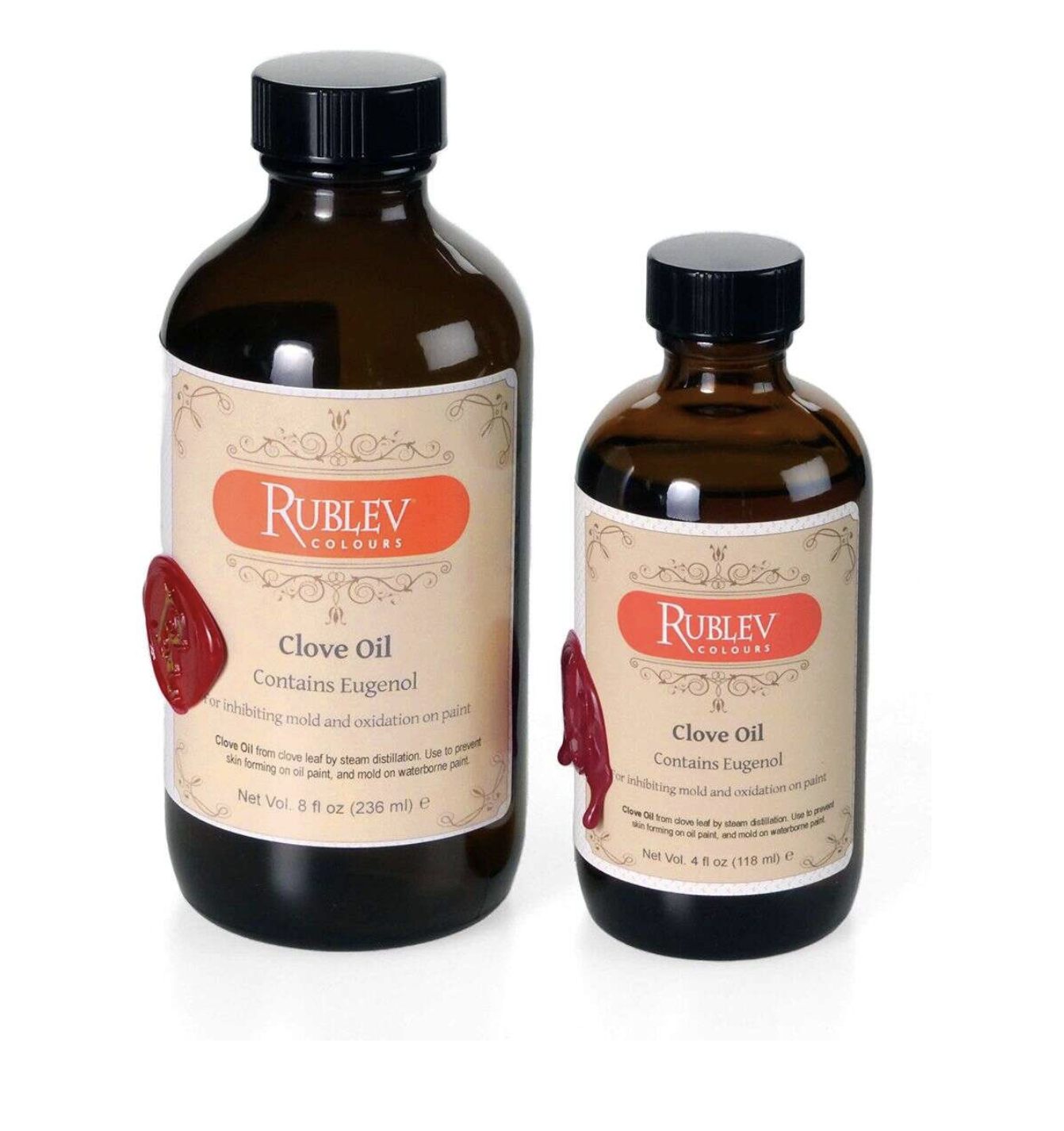
Clove Oil from the leaf of the plant by steam distillation. Use to prevent skin forming on oil paint. Add to egg tempera, emulsions and glues to prevent mold and bacteria. Clove oil is composed primarily of eugenol.
——
Clove oil is a pale yellow to dark brown oil derived from the clove tree cultivated in the Moluccas or Spice Islands (now Maluka of Indonesia), Madagascar, Zanzibar, and the Philippines. The principal component of clove oil is eugenol. It is very slightly soluble in water and soluble in organic solvents. It has a spicy aroma and the taste of cloves. It is used in perfumes, flavorings, essential oils, and dentistry (as a local antiseptic and analgesic).
Our clove oil is obtained by redistillation of crude clove leaf oil obtained initially by steam distillation of the dried leaves from cultivated non-GMO clove trees. The oil is pure and natural, and unadulterated. Raw materials and processed oil were never irradiated. The oil was never tested on animals. Analysis of the clove oil shows that the main component of the oil is eugenol, with a concentration of 85%. Eugenol is a natural antioxidant that prevents or slows the rate of oxidation of vegetable oils.
Uses in Painting
Painters use clove oil to slow the drying time of oil paints substantially. Although some artists recommend adding a drop of clove oil per inch of paint squeezed from the tube, we do not recommend its use in this manner. Although some claim that it darkens paint, using clove oil as a drying retarder in oil paint is greatly discouraged as its addition tends to weaken the dried paint film substantially. One way to effectively use clove oil to preserve oil paint fresh on the palette is to add a few drops to a cotton ball and place the palette along with the cotton ball containing the clove oil in a sealable container, such as a Sta-Wet palette.
A drop or two of clove oil can also suppress the odor of turpentine, and even this small amount can give a pleasant odor.
Clove oil is also used as a preservative in water-based painting mediums, such as casein, egg tempera, glue (distemper), and watercolor. Add a drop to 100 ml (3.3 ounces) of the paint medium, for example, to preserve the paint.
Origin and History
The Latin word clavus means nail shaped, which refers to the bud of the clove tree since the shaft and head of the clove bud resembles a nail. The clove tree (Syzgium aromaticum or Eugenia caryophyllata) is a tropical evergreen tree believed to be indigenous to the Moluccas. The people of the Moluccas used to plant a clove tree to celebrate the birth of a child and would wear a necklace of cloves to protect them from evil spirits and illness. As early as 200 BCE, envoys from Java to the Han-dynasty court of China brought cloves with them to China. The Chinese used it to relieve toothaches and as a breath freshener, especially during audiences with the emperor. Clove was much used by the Greeks, Romans, and Chinese for its medicinal value. Clove has antiseptic properties and was used to prevent contagious diseases like the Plague. During the Middle Ages, cloves were used in Europe to preserve, flavor, and garnish food. From the 8th century, cloves became increasingly popular in Europe, and along with nutmeg, the importation of this coveted spice helped the enterprising Venetians become extraordinarily wealthy. The lure of cloves and nutmeg attracted the Portuguese to the Spice Islands in 1514; they were followed by the Dutch in 1605, who retained control over the trade until late in the 18th century, at which time the exotic spices of the Moluccas were starting to be grown elsewhere in the world. Clove cultivation was almost entirely confined to Indonesia. In the early 17th century, the Dutch eradicated cloves on all islands except Amboina and Ternate to create scarcity and sustain high prices. In the latter half of the 18th century, the French smuggled cloves from the East Indies to Indian Ocean islands and the New World, breaking the Dutch monopoly.
Cloves were among the most precious items in Europe in the 16th and 17th centuries and were worth more than their weight in gold. An illustration of their value can be seen in Magellan’s fateful circumnavigation of the world (1519–1522), which started with five ships and over 250 men. Although only one ship and 18 men returned to Spain, its cargo of about 50 tons of cloves and nutmeg was considered to have made the expedition a financial success.
Today, cloves are still used as a spice in perfumes, mulled wines and liqueurs, aromatherapy, medicinal and dental products, and stuck in an orange as pomade, an insect repellant.
Source
Clove products can be divided into three: clove buds used whole and as a ground spice and are also the raw material for clove bud oil and oleoresin; clove stem oil; and clove leaf oil, used principally as a source of eugenol. Essential oils from the clove tree are divided into bud, leaf, and stem oils. Cloves contain 14 to 20 percent essential oil, the principal component of which is the aromatic oil eugenol (70-90%). Still, odor and flavor differ significantly due to the varying proportions of minor and trace components.
Clove is a small, reddish-brown flower bud of the tropical evergreen tree Syzygium aromaticum of the family Myrtaceae (also Caryophyllus aromaticus, Eugenia caryophyllata, E. aromatica) and is believed to be indigenous to the Moluccas. The clove tree grows to about 8 to 12 meters in height. Its gland-dotted leaves are small, simple, and opposite. The trees are usually propagated from seeds that are planted in shaded areas. Flowering begins about the fifth year; a tree may yield up to 75 pounds (34 kg) of dried buds annually. Just before the flowers open, the rose-peach buds are hand-picked in late summer and again in winter and then sun-dried, turning a deep red-brown. Cloves vary in length from about 1/2 to 3/4 inches (13 to 19 mm). Although native to southeast Asia, it is cultivated worldwide, especially in the Molucca Islands, Madagascar, the Philippines, Zanzibar, and Mauritius, as well as in Ternate, Tidore, and a couple of other of the northern Spice Islands in Indonesia. The island of Zanzibar, part of Tanzania, is the world’s largest producer of cloves. Madagascar and Indonesia are smaller producers. The major oil-producing countries are Madagascar and Indonesia.
Extraction
Cloves are intensely pungent owing to eugenol, which is extracted by steam distillation to yield clove oil. The leaf oil contains 12% caryophyllene and 90% eugenol as significant components. Unrectified Madagascan oil has a sharp, slightly crude medicinal (eugenol), often phenolic aroma without any of the sweet smoothness of the rectified material. Clove leaf oil is frequently refined and redistilled to remove the constituents that produce the crude odor and discoloration. The process of steam distillation begins when the distiller inserts the chosen plant material, or charge, into a chamber. The plant material is supported on a perforated grid. The water level in the chamber is below the grid, and at low pressure, wet steam rises through the plant material. The most important aspect of this method is that the steam is maintained at a relatively low temperature and pressure. As the steam passes through the plant material, it ruptures the plant’s oil-bearing sacs and cavities and liberates its essence, which is carried away into the steam. The steam and essential oil then pass out of the chamber and through a coiled tube surrounded by cold water. Here the steam is cooled, and the condensated water and essential oil flow into a collection vessel. Since the essential oil is insoluble in water, it forms a layer above it, facilitating separation. Small quantities of odorous principles also remain in the water, forming fragrant water called a hydrolate.
Our clove oil is derived from a natural source, redistilled from crude clove oil extracted from the dried leaves of Eugenia caryophyllata, using steam distillation and redistilled for purity.
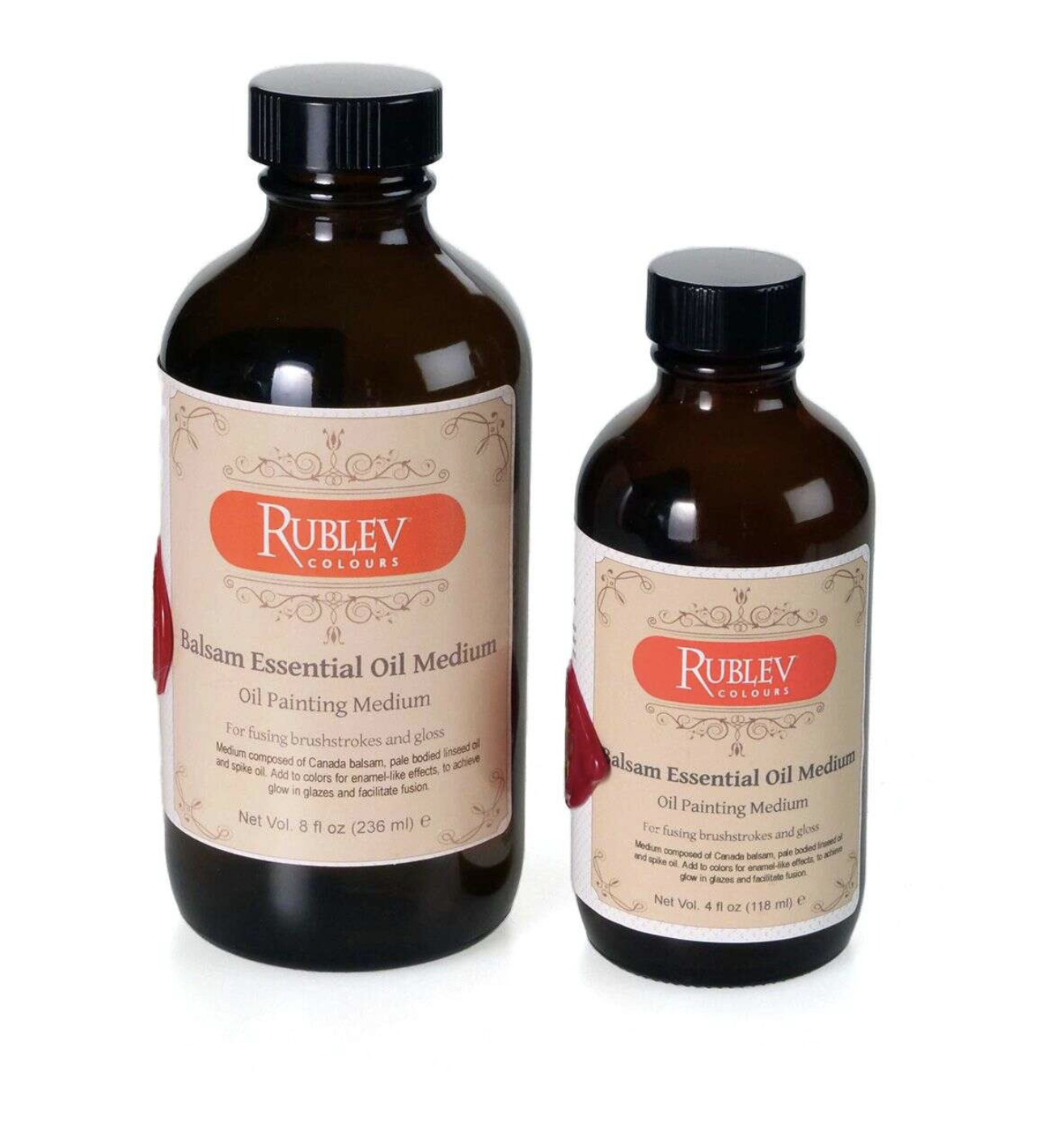
Rublev Colours Balsam Essential Oil Medium is composed of Canada balsam, pale bodied linseed oil and spike oil. Add to colors for enamel-like effects, to achieve glow in glazes and facilitate fusion.
——
How to Use
Add a small amount of Balsam Essential Oil Medium to your paint to make it brush out more easily. Balsam Essential Oil Medium can be thinned with spike oil or turpentine. Mixed directly into the paint on the palette, it gives colors a flowing consistency yet dries to a satin-to-gloss finish, depending upon the amount used. Balsam Essential Oil Medium smells wonderful.
Rublev Colours Balsam Essential Oil Medium is an excellent substitute for Ralph Mayer’s glazing medium described in his handbook, The Artist's Handbook of Materials and Techniques, which is a medium composed of stand oil, dammar varnish, and turpentine.
Ingredients
Balsam Essential Oil Medium is a 44% weight-to-volume solution of Canada balsam in bodied linseed oil and spike oil (written in scientific notation as 44% w/v). Canada balsam is a turpentine made from the resin of the balsam fir tree (Abies balsamea) that grows in boreal North America. The resin, dissolved in essential oils, is a viscous, sticky, yellowish liquid that becomes a transparent yellowish mass when the essential oils evaporate. Canada balsam becomes an amorphous solid upon drying. Since it does not crystallize with age, its optical properties do not deteriorate. Canada balsam is clearer and faster-drying than Venice turpentine.
Balsam Essential Oil Medium contains the palest-bodied linseed oil to provide greater leveling and flow out and better drying properties.
Balsam Essential Oil Medium contains spike oil. Our spike oil is an essential oil obtained by distillation of the flower spikes of the herb Lavandula x. intermedia ‘Grosso’ or other related species. It was commonly used as a solvent in oil painting by European old masters. For instance, Francisco Pacheco mentions the use of spike oil in his book Arte de la Pintura (1649). For more information on the spike oil in Balsam Essential Oil Medium, please read the article, Lavender Spike Oil: Source, Use and History in Painting.
Note: Always test the use of any medium in your application before using in your artwork. It is never recommended to exceed 20% by volume of mediums to paint in any application.
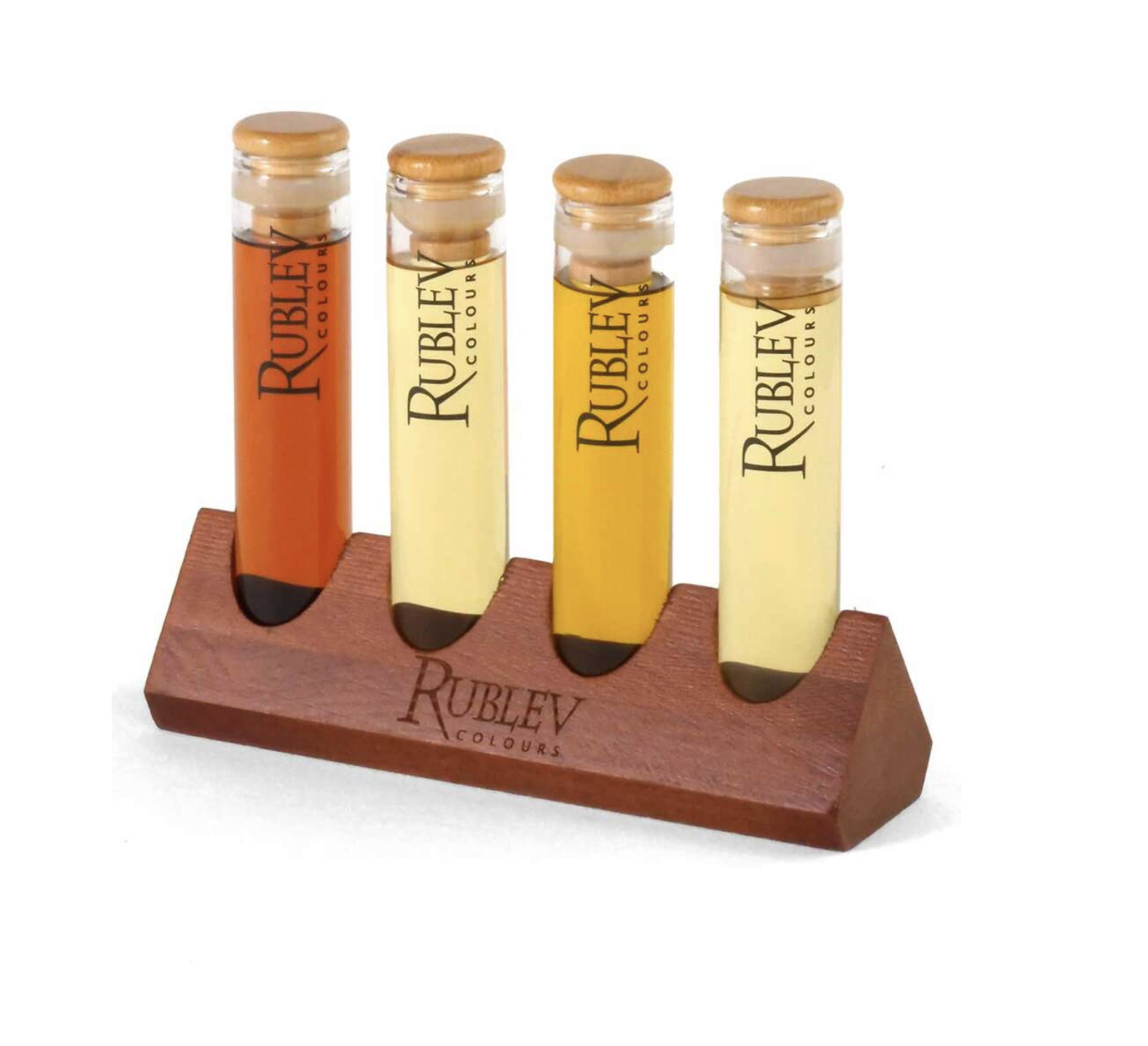
A tribute to the painter’s craft, the Linseed Alchemy set presents an array of linseed oils, each carefully chosen to bring distinct qualities to the artist’s paint. This collection celebrates the natural beauty and versatility of linseed oil, with each set evoking the delicate interplay of oil and pigment. This set of linseed oil is housed in artisanal glassware and a wood stand.
——
This versatile set of professional-grade drying oils blends tradition with innovation. It will allow artists to choose the right oil for their needs. A refined linseed oil set offering the clearest and lightest linseed oils in their class. This set is ideal for artists looking to maintain the purity of their colors while still achieving smooth, buttery brushstrokes. The Linseed Alchemy set includes the following linseed oils:
Cold-pressed linseed Oil is produced from the first pressing of flax seeds without using heat or chemicals. It can be used to grind colors, but washing and bleaching before use is sometimes best. It is sometimes recommended when grinding dry pigment to make oil paint because of its higher acidity than alkali-refined linseed oil. It is used as a medium with oil colors for thinning, lower gloss and transparency, and pronouncing brush marks.
Refined Aged Linseed Oil is a low-acid value drying oil pressed from North American flax seeds. It is an alkali refined oil with low acidity and a light color. Refined Aged Linseed Oil is as light and pure as industrially produced linseed oil can be. Use it to grind colors, thin oil colors, or prepare oleoresinous varnishes.
Pale Grinders Oil is refined, bleached, and dewaxed linseed oil and linseed oil fatty acids. It is exceptionally light in color and well-suited for grinding colors. Its high acidity gives it excellent pigment-wetting properties for making your own oil paint with dry pigments. High-acid value oils make it easier to wet pigments that are difficult to grind, such as lakes and lamp black, and are especially valuable for grinding reactive pigments, such as lead white.
Pale Drying Oil is yellow to dark amber in color and perfect for making oil paints dry faster. It is derived from processed linseed oil from selected flax seeds. The oil is heated in closed kettles with the scientific addition of driers. It meets ASTM D 260, Type 1, and Federal Specification TT-L-190 standards. Add small amounts to your oil paint to promote faster drying.
Paste Oil Paint Mediums
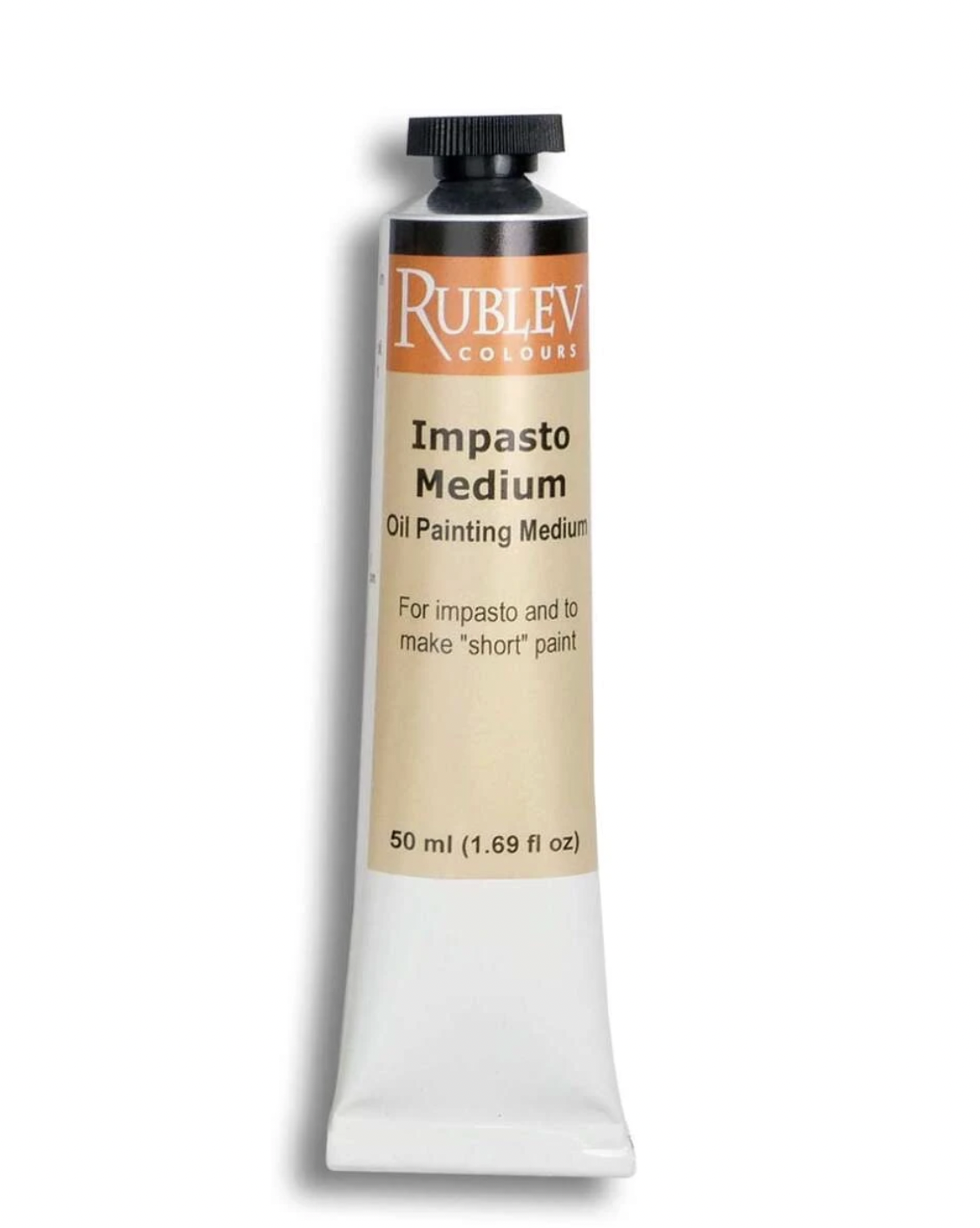
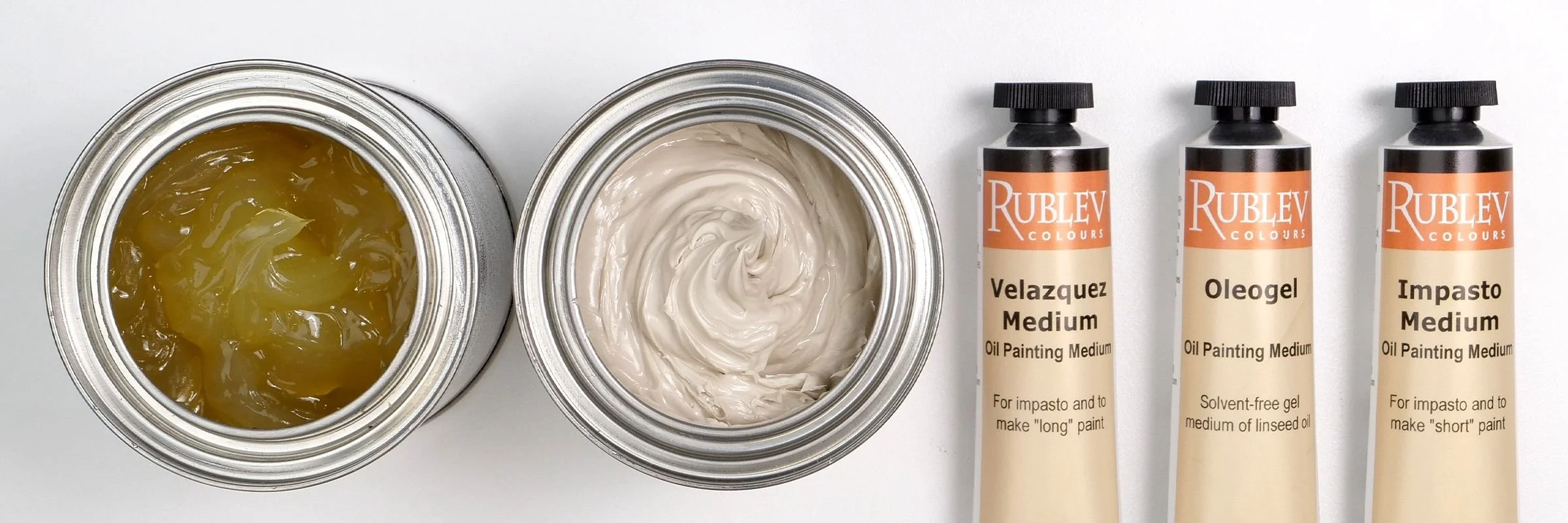
Impasto Medium is an oil painting medium of finely ground natural minerals, including calcite, barite, and talc, in pale linseed oil. Semi-transparent. Gives paint crisp consistency for impastos with fine detail. Thin with solvent or oil.
Impasto Medium is an oil painting medium of finely ground natural minerals, including calcite, barite, and talc, in pale linseed oil. Use it to extend paint without altering the consistency, making oil colors 'short' and buttery for impastos. Stiffer than Velázquez Medium, this putty-like medium makes colors slightly transparent while allowing you to build impastoed, thick paint applications. When added to oil paint, Impasto Medium does not alter its color temperature. It can be thinned with solvent or oil. Impasto Medium does not affect the drying time significantl,y depending on the proportion added to the paint.
Impasto Medium does not contain stearates, waxes, solvents, driers, or natural or synthetic resins, so it is safe to add to oil paint without worrying about cracking or delaminating.
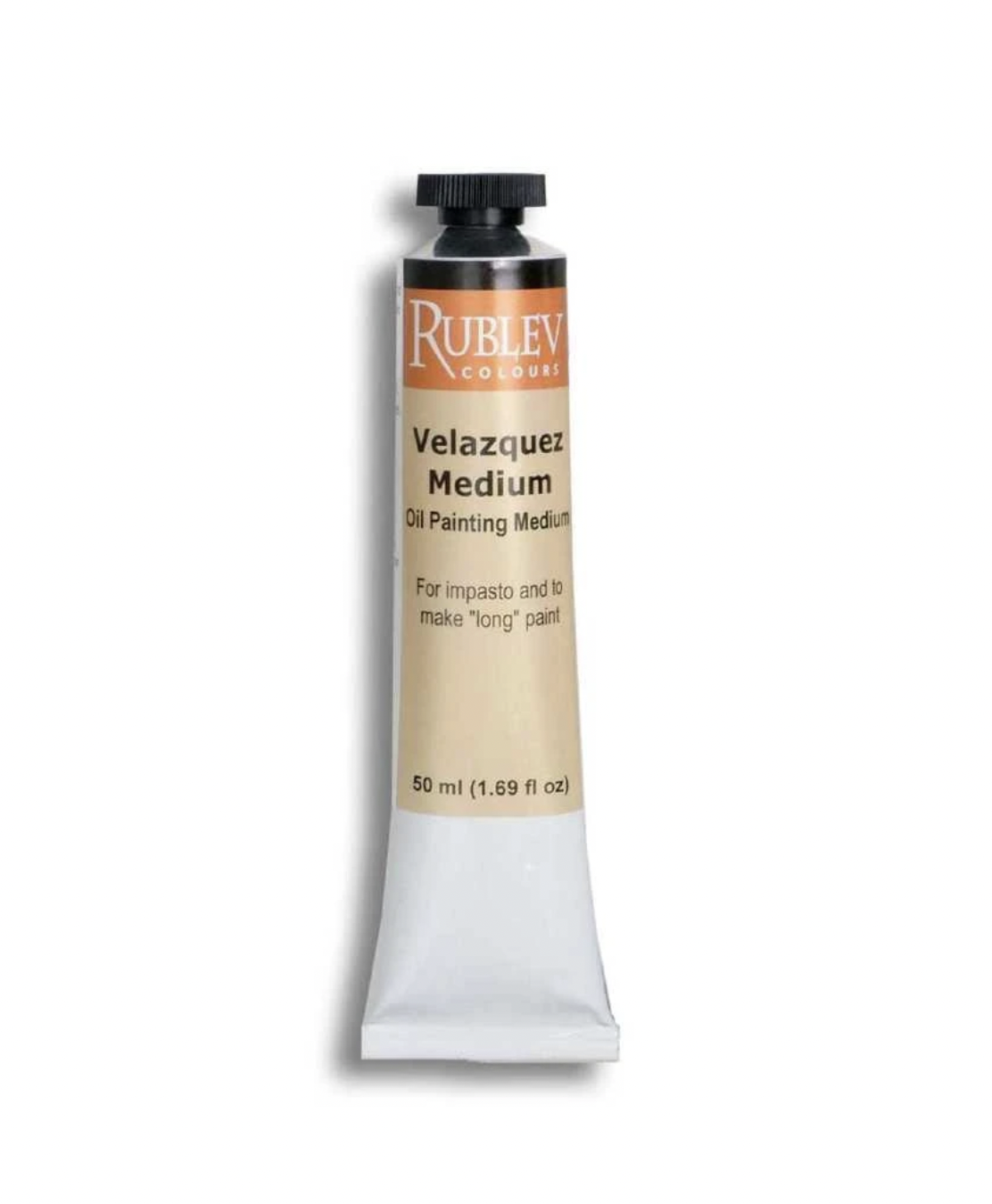
A paste medium of finely ground calcite in bodied linseed oil. Use to extend paint and form impastos while making paint longer. Softer than Impasto Medium, Velázquez Medium makes colors slightly transparent, allowing greater control over tints without whites. Can be thinned with solvent or oil. Solvent free.
Velázquez Medium does not contain stearates, solvents, driers, or natural or synthetic resins, so it is safe to add to oil paint without the worry of cracking or delaminating.
*Long refers to the consistency of paint that displays tall peaks when a palette knife is pressed to its surface and lifted. Long paint is also described as “ropy” and refers to a stringy quality, like honey. Paint that behaves in this way is said to have long rheology. Short rheology refers to paint that exhibits a more buttery consistency, typical of most commercial oil paint. Rheology studies how substances flow, such as liquids and soft solids, that flow rather than deform elastically.
Oil Paint Medium Sets
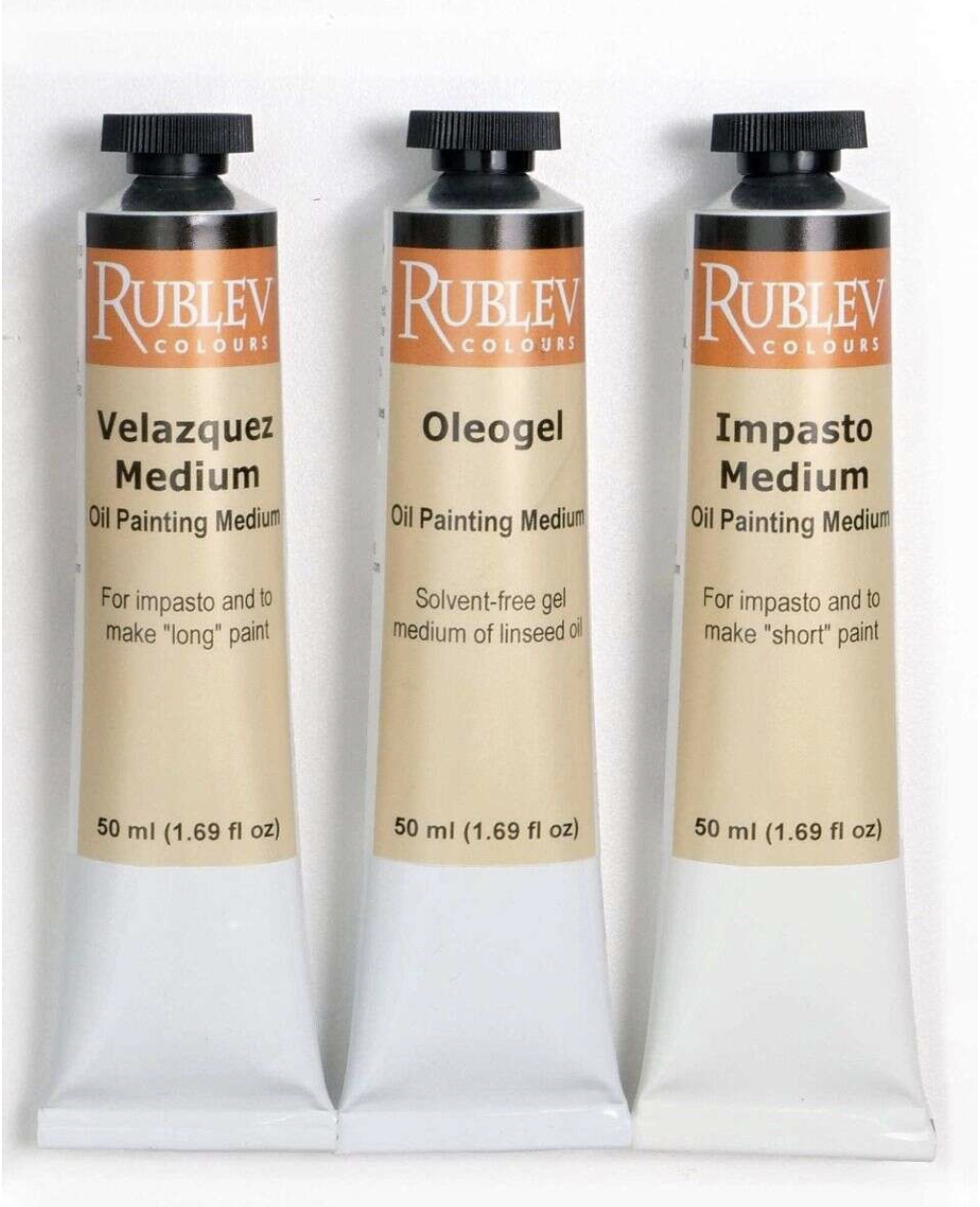
Rublev Colours Solvent-Free Oil Painting Medium Sampler allows you to try two paste mediums and one gel medium with different consistencies and drying times.
———
Impasto Medium is an oil painting medium of finely ground calcite, silica, and bentonite in pale linseed oil. Use it to extend paint without altering the consistency, making oil colors’ short’ and buttery for impastos.
Stiffer than Velázquez Medium, this putty-like medium makes colors slightly transparent while allowing you to build impasted, thick paint applications.
When added to oil paint, Impasto Medium does not alter the color temperature of the color. It can be thinned with solvent or oil. Depending upon the proportion added to the paint, Impasto Medium does not affect the drying time significantly and is not considered ‘fat’ according to the fat-over-lean rule.
Impasto Medium is semi-transparent and gives brushstrokes a crisp consistency for impastos with fine detail. Thin with solvent or oil.
———
Velázquez Medium is a flowing paste that makes colors slightly transparent while allowing you to build impasted, thick paint applications. When added to oil paint, it does not alter the color temperature. It can be thinned with solvent or oil. Depending upon the proportion added to the paint, it does not affect the drying time significantly and is not considered ‘fat’ according to the fat-over-lean rule.
Velázquez Medium is softer and ‘longer’ than Impasto Medium, which is ‘short’ or buttery. Velázquez Medium does not contain stearates, solvents, driers, or natural or synthetic resins, so it is safe to add to oil paint without the worry of cracking or delaminating.
———
Oleogel is a thixotropic painting medium made with linseed oil and pyrogenic silica. Oleogel is a clear pale amber gel that adds transparency and a thixotropic body to oil, resin-oil, or alkyd paint. Add directly to your paint to give it transparency without thinning its consistency. Add pigments or extenders to thicken it to create impasto effects that do not sink in.
Oleogel does not contain driers, so it is safe to use in oil painting without the worry of cracking. When mixed with colors, Oleogel does not slow the drying time.
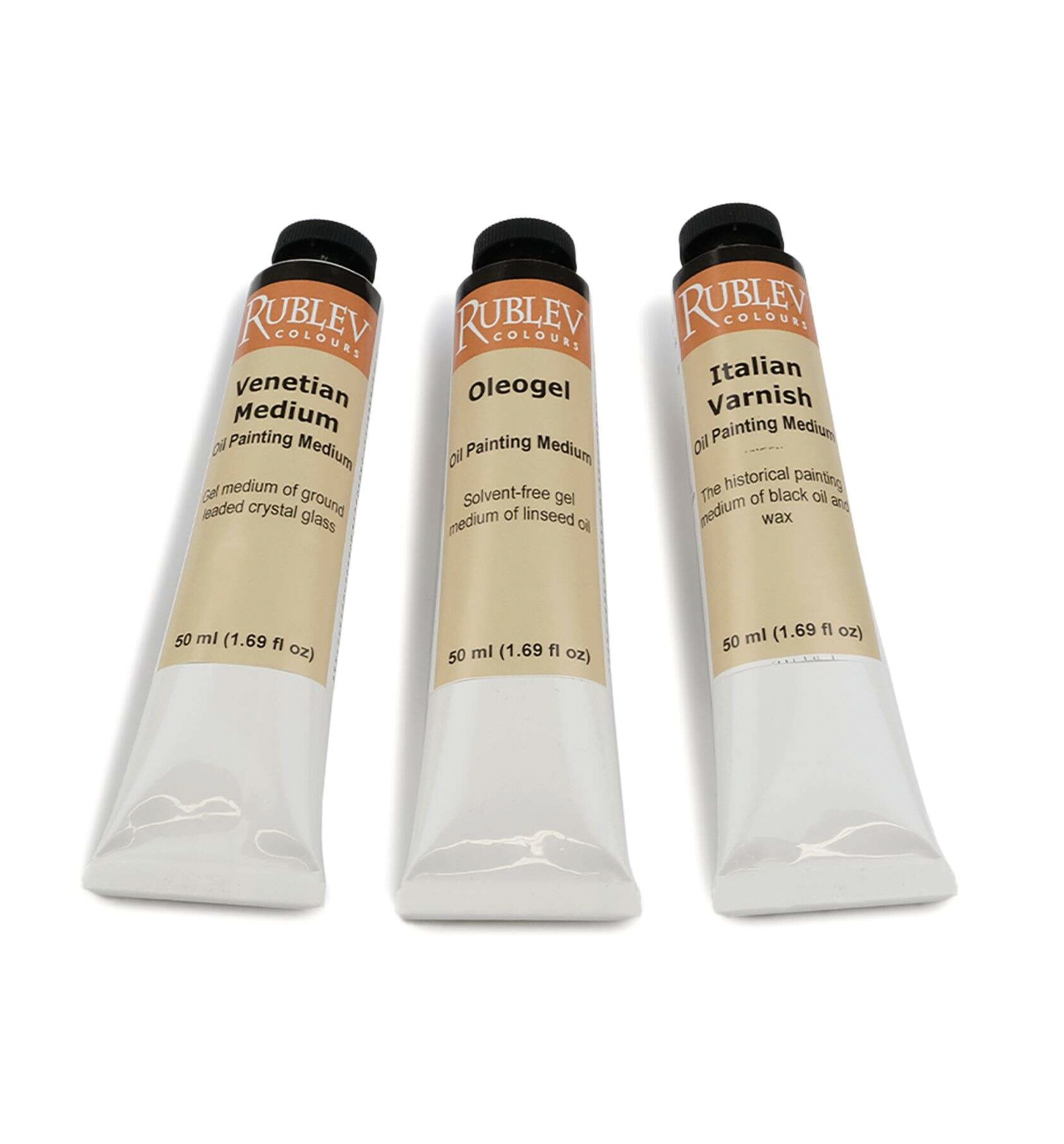
Our three best-selling oil painting gel mediums are included in this gift set. Oleogel, Venetian Medium, and Italian Varnish will give the artist in your life a chance to try just a few in our gel medium collection.
———
Oleogel is a thixotropic painting medium made with linseed oil and pyrogenic silica. Oleogel is a clear pale amber gel that adds transparency and a thixotropic body to oil, resin-oil, or alkyd paint. Oleogel does not contain driers, so it is safe to use in oil painting without the worry of cracking. When mixed with colors, Oleogel does not slow the drying time.
———
Venetian Medium is based on research that 16th-century Venetian painters added powdered glass to their paint. Contains leaded crystal glass powder, pale-bodied linseed oil, and turpentine, with small amounts of wax and lead.
———
Italian Varnish sets quickly while providing transparency and greater body to oil colors when mixed with them in glazes. It gives a lighter consistency to paint, making many different subtle techniques possible.