Michael Harding Oil Paints
Michael Harding Oil Paint Products
40th Anniversary · Est. 1981
40 New Oil Colours.
40 Years of Michael Harding.
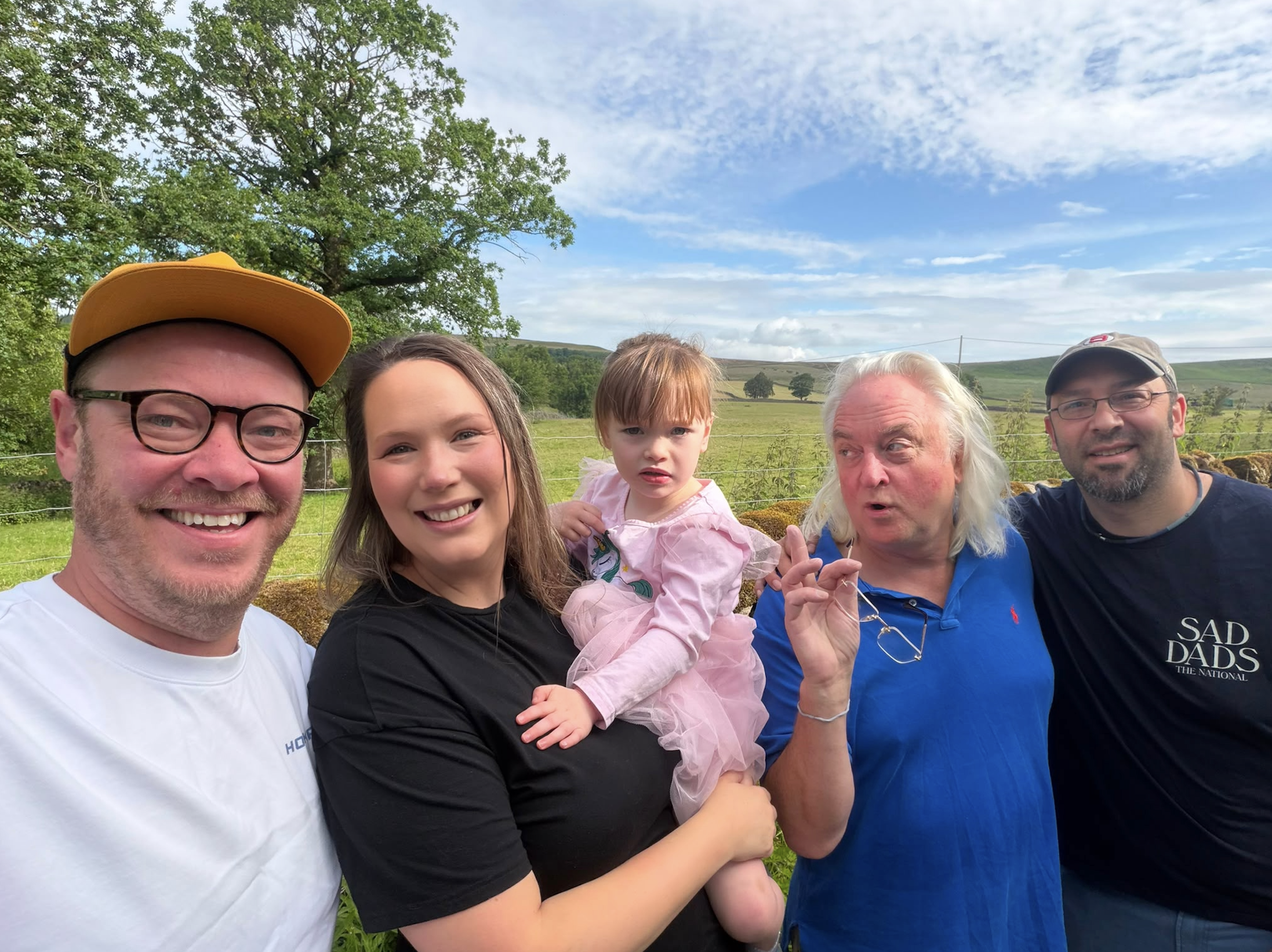
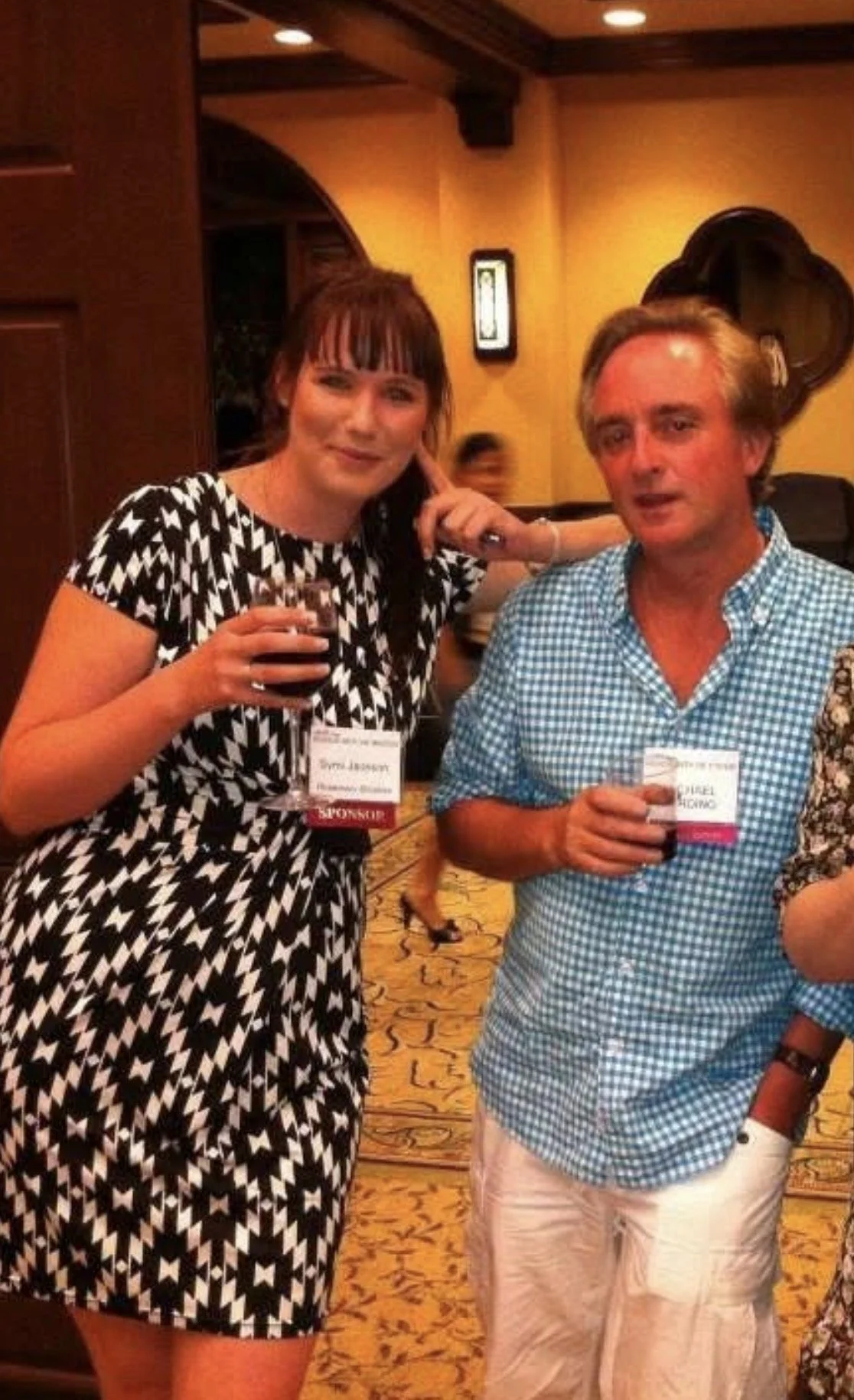
On a personal note, I’ve been lucky to have Michael & Karyn Harding in my life since 2012. I consider them both dear friends.
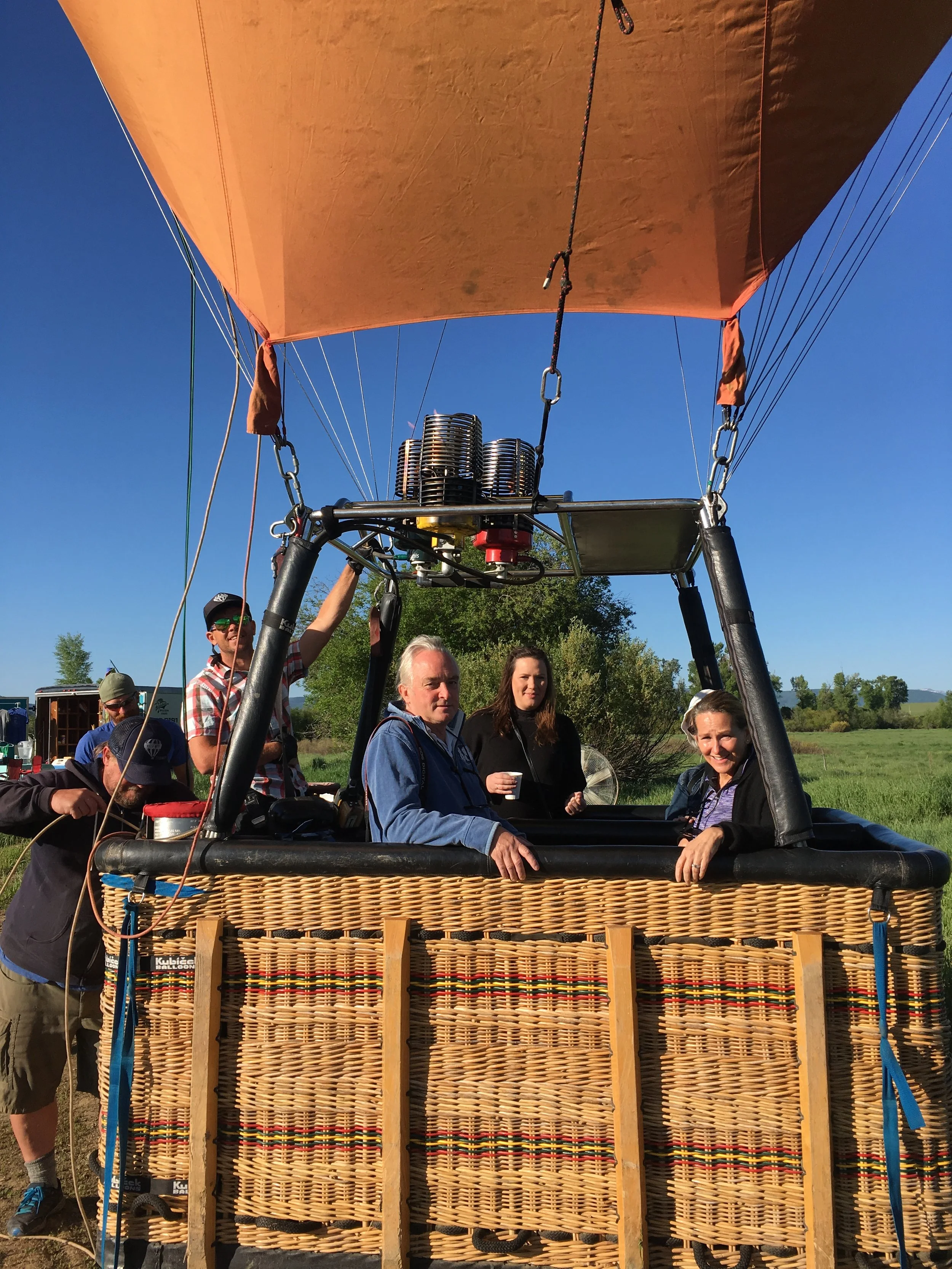
In 2026, Michael came to Yorkshire and gave a masterclass on colour during Todd Casey’s workshop. It was incredible.
New Brecon Beacons Colours
The final ten colours in our 40-colour anniversary release, marking 40 years of Michael Harding Paint. Named after the Brecon Beacons - the mountains that surround our workshop in Wales - this collection captures the deep blues, purples, and greens of the Welsh landscape.
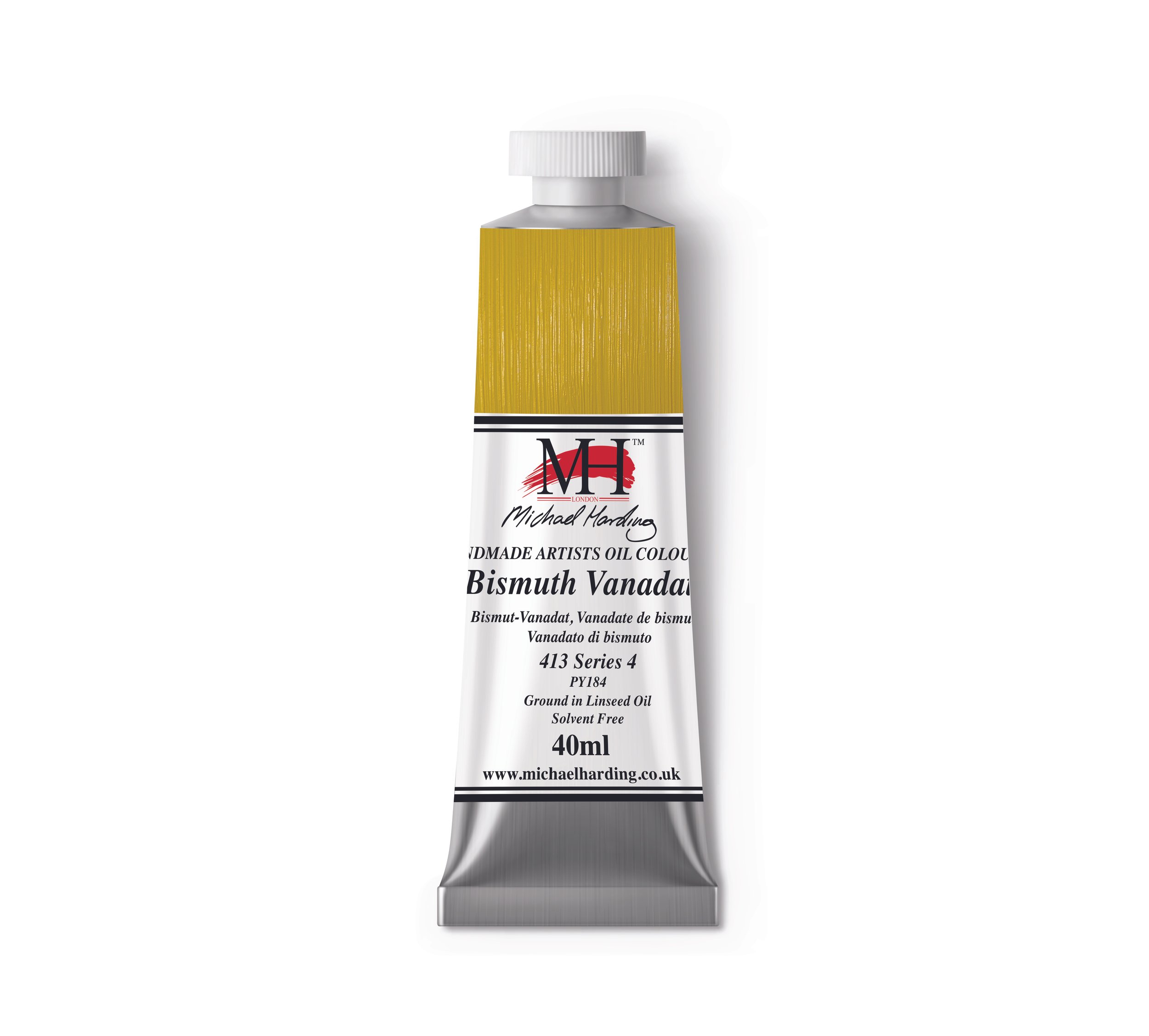
Ⓥ VEGAN A soft, yet vibrant and zesty addition to the range of yellows. Bismuth Vanadate possesses a brightness and freshness that brings remarkable energy to mixtures, while retaining the opacity and permanence demanded by professional painters.
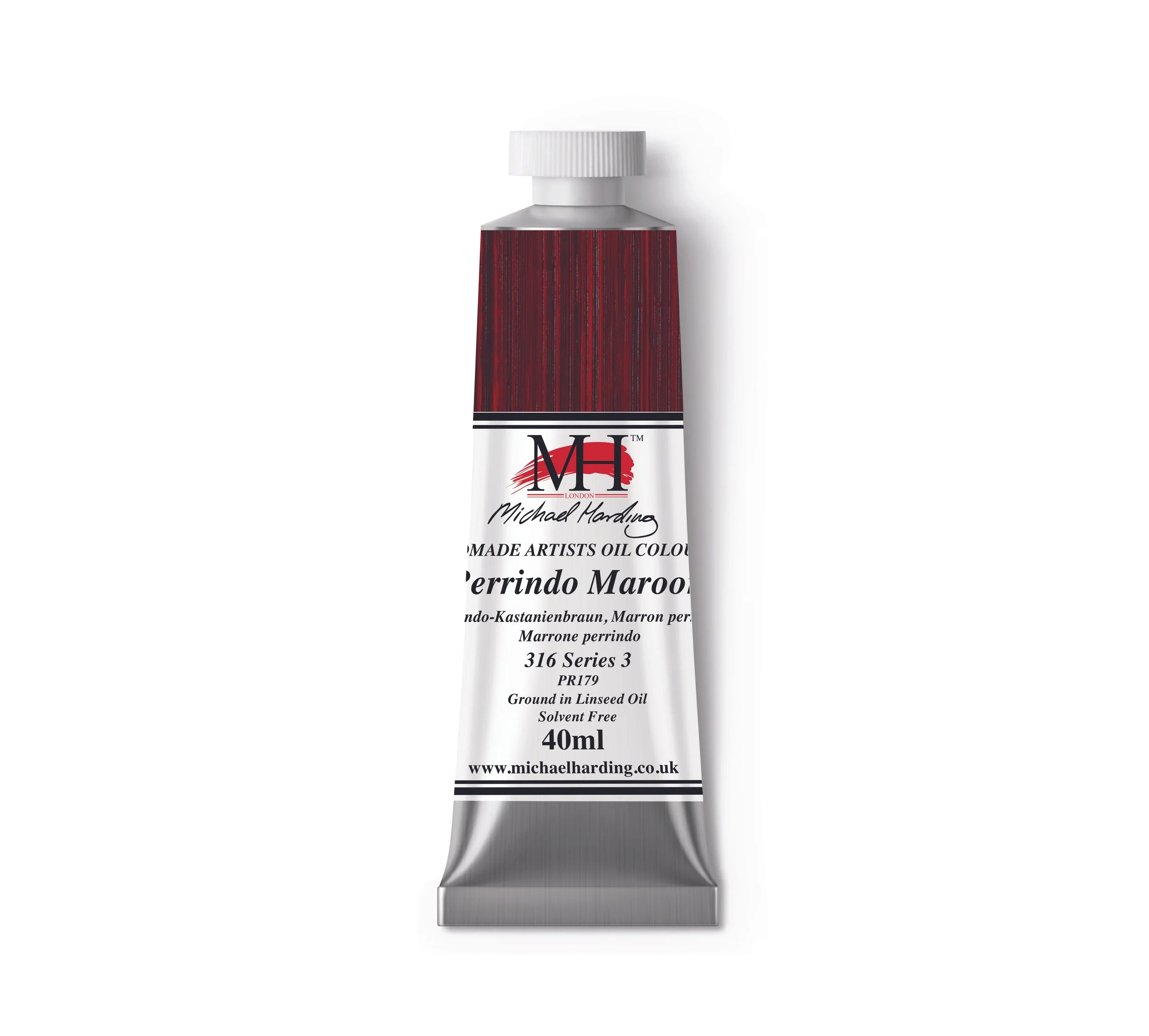
Ⓥ VEGAN A nice bloody red currant, fruity, deep fiery red. Perrindo Maroon offers a distinctive warmth and richness that makes it an intriguing alternative to colours from the Alizarin family. Transparent and characterful, it is particularly effective in florals, shadows and atmospheric passages.
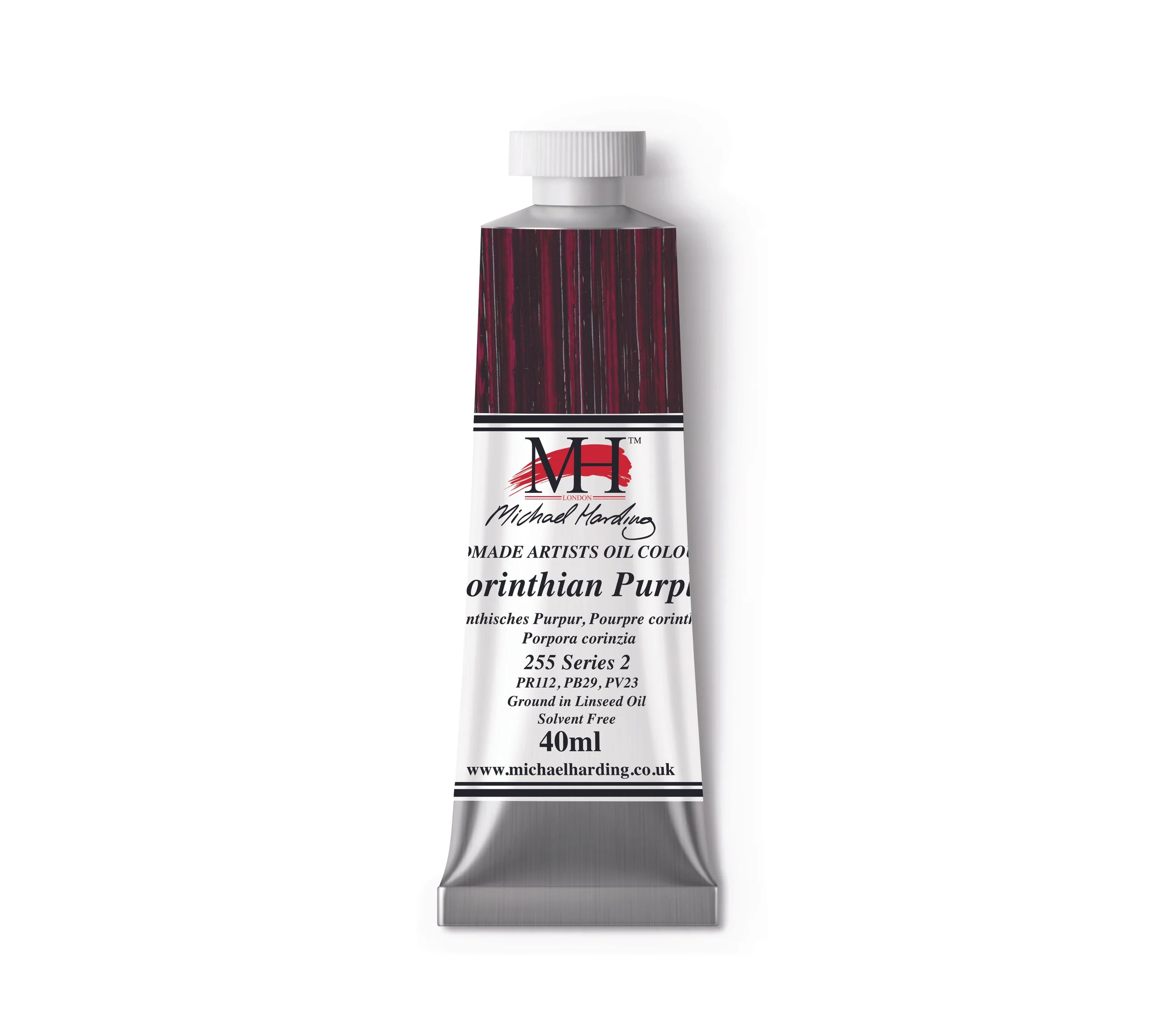
Ⓥ VEGAN A fantastic coming together of three wonderful pigments; a colour that is really going somewhere. The moment it touches the palette, ideas begin to emerge: evening light, nocturnes, deep shadows and atmosphere. It is one of those colours that immediately sparks the imagination and seems to suggest paintings of its own.
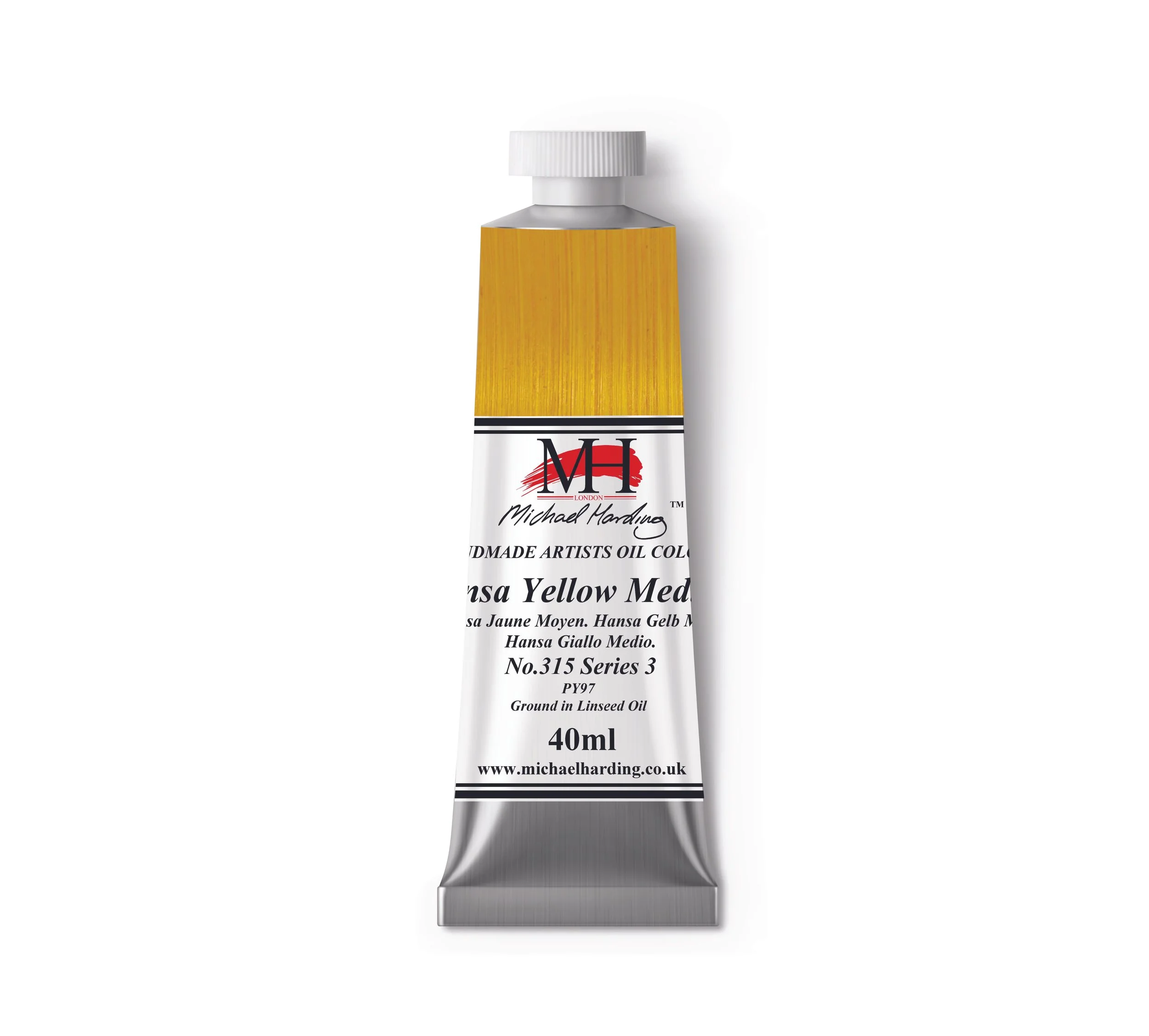
Ⓥ VEGAN Warm, yolky, transparent, essential and powerful. Hansa Yellow Medium possesses the clarity and strength that every painter looks for in a modern yellow. Ideal for vibrant still lifes, luminous landscapes and brilliant mixtures, it quickly earns a permanent place on the palette.
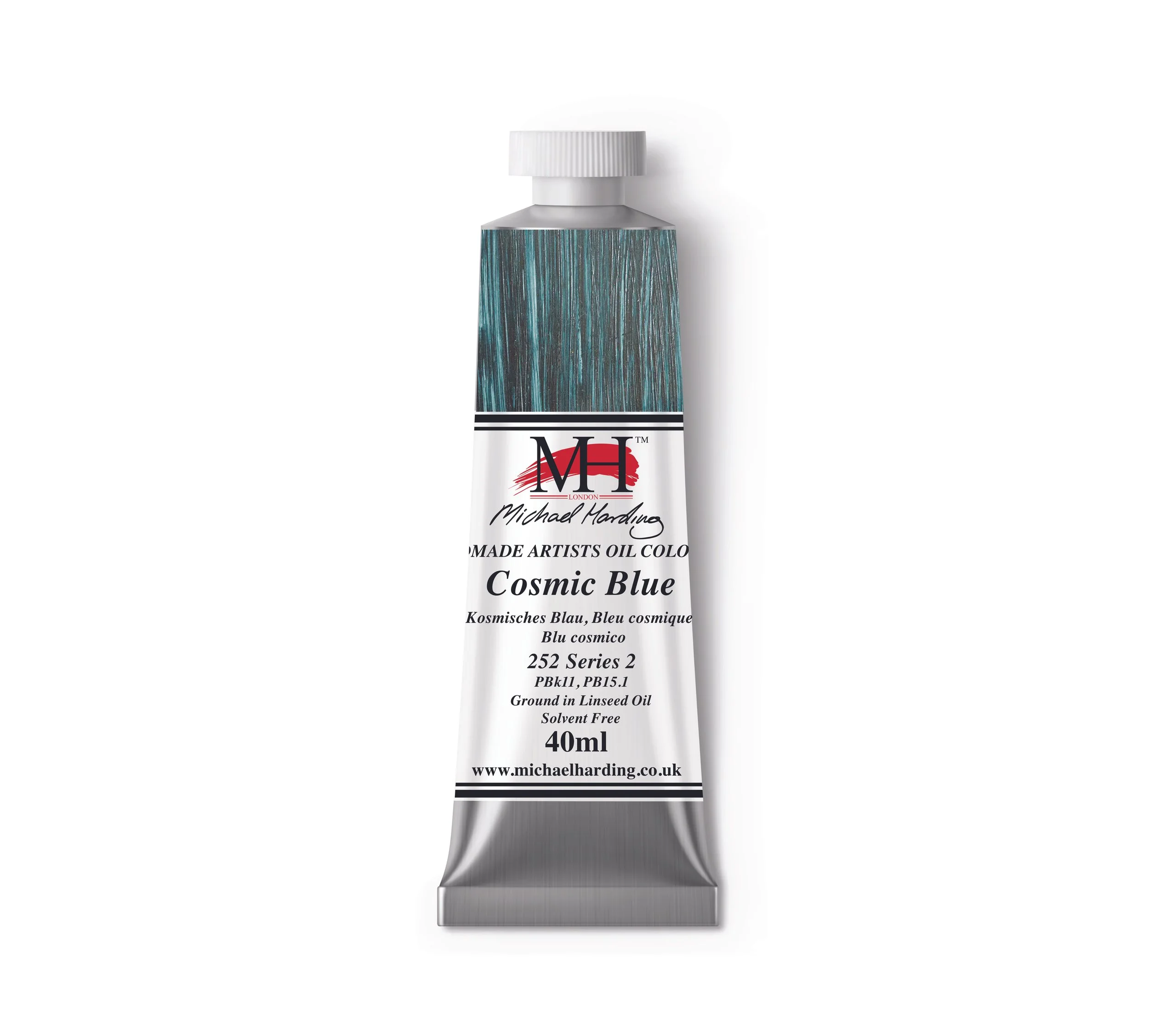
Ⓥ VEGAN Subtle, gem-like, yet icy. Hidden within a dark, shadowy black lies a remarkable sapphire-like blue that reveals itself gradually as it is worked. Cosmic Blue offers something quite different from the traditional blues, possessing depth, mystery and an unexpected luminosity. The universe can be yours.
Ⓥ VEGAN
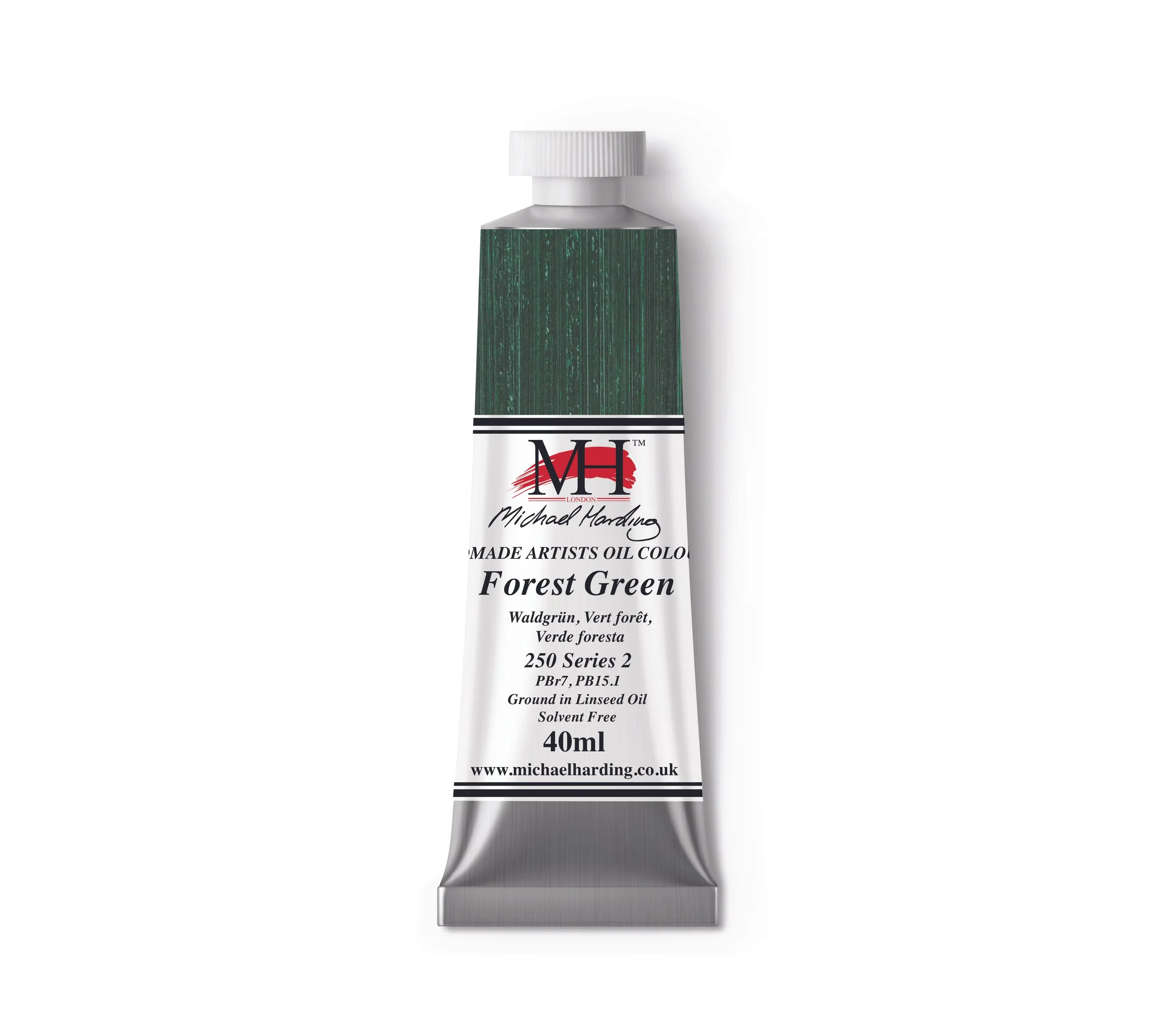
Another really sumptuous, verdant, sappy green, ideal not just for landscapes but any area where a green might be required. Forest Green has a natural richness and vitality that allows it to move effortlessly between foliage, shadow and reflected colour. Full of character, it feels as though it belongs in the landscape.
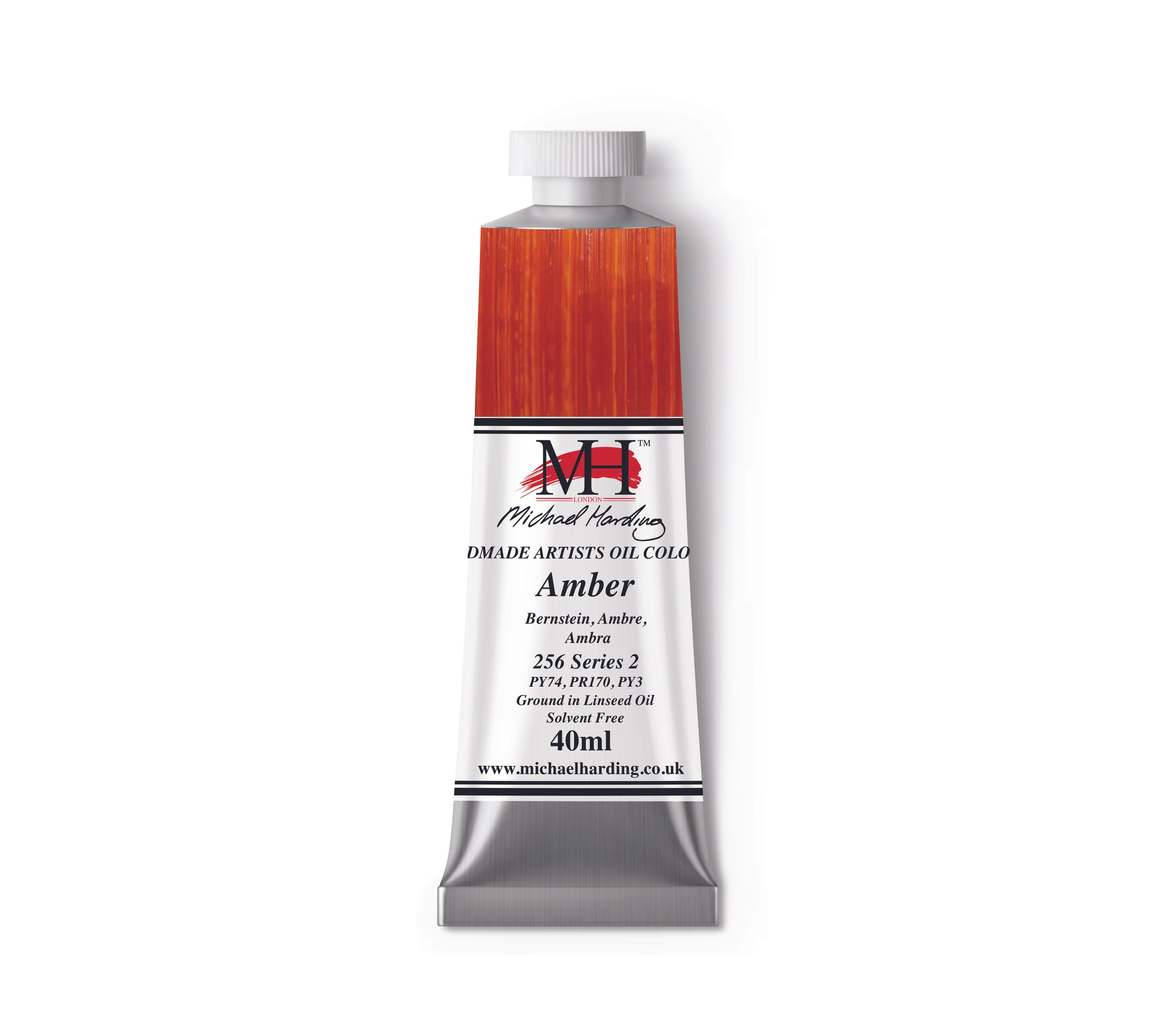
Ⓥ VEGAN Rich, glowing and beautifully warm, Amber sits somewhere between deep orange and burnt gold. It immediately makes me want to paint. There is something luminous about it, as though the colour radiates from within. Whether used in glazing, landscape painting or portraiture, Amber brings warmth, depth and a natural glow to every mixture. When I stare at it my imagination sees a tiger staring back….
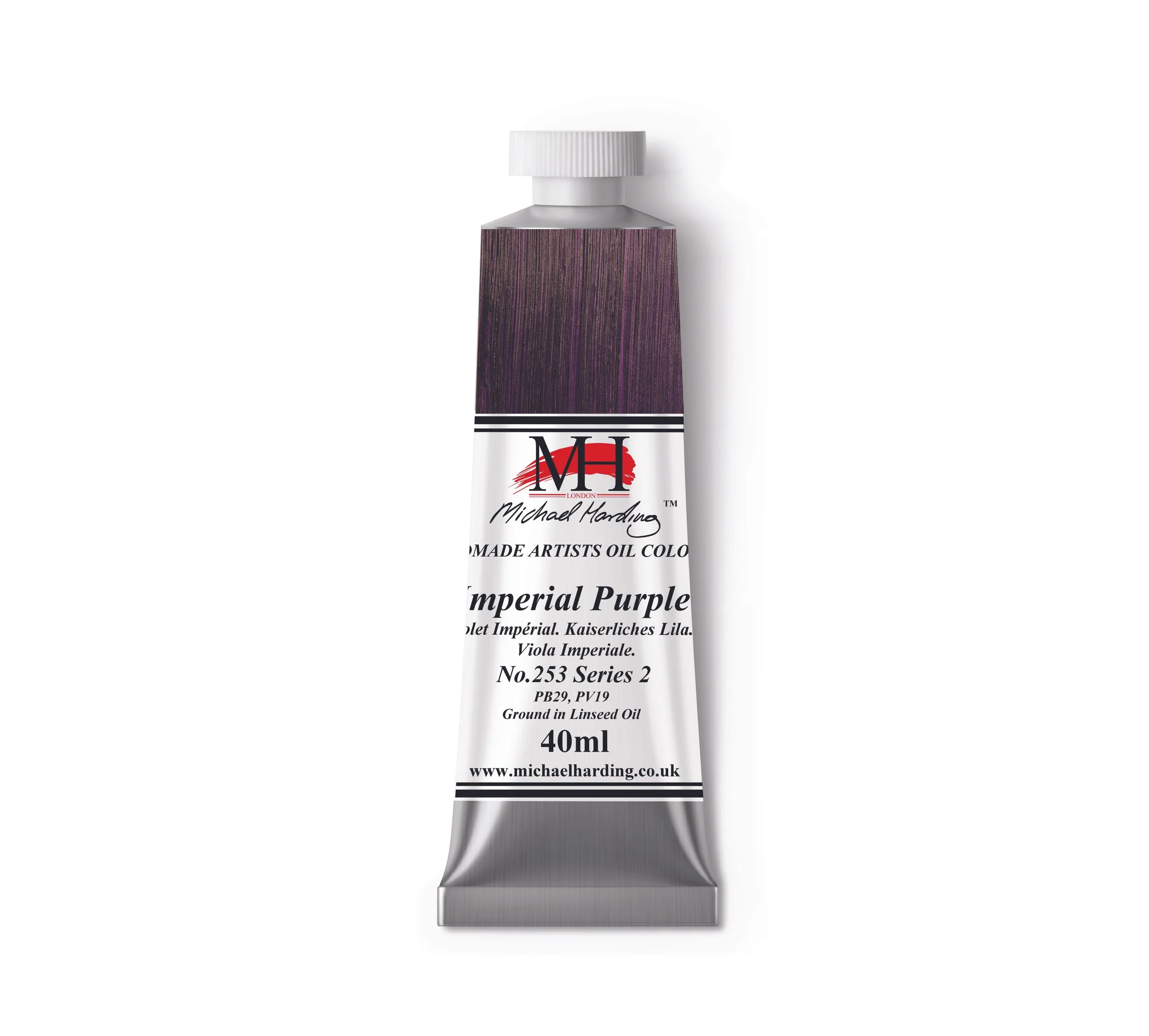
Ⓥ VEGAN Imperial Purple combines the depth of Ultramarine with the brilliance of Quinacridone Violet to create a colour of remarkable elegance and versatility. Transparent and atmospheric, it moves effortlessly from rich shadow to passages of vibrant colour, making it an invaluable addition to the painter's palette.
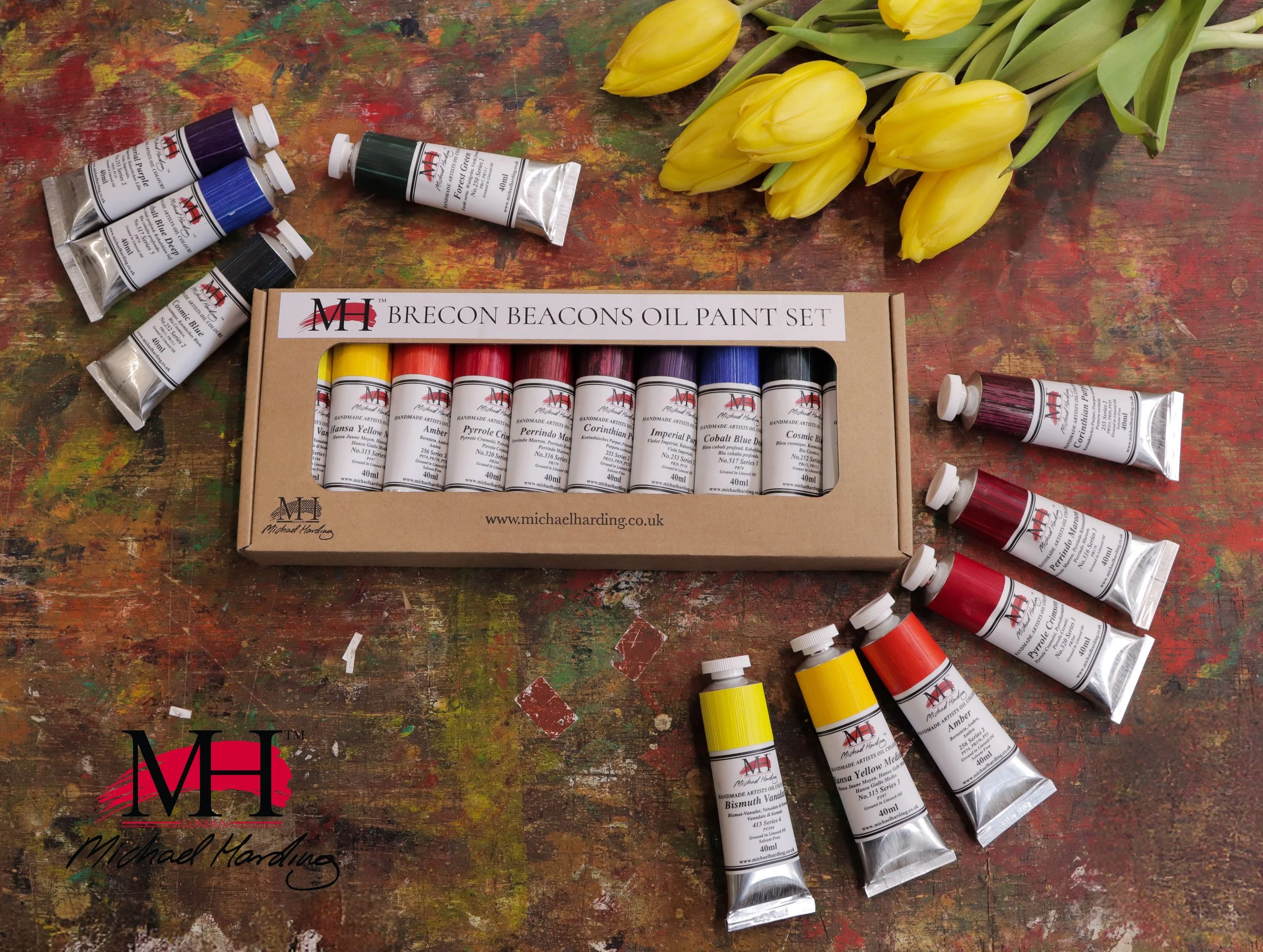
The fourth and final release of our 40th-anniversary celebration, inspired by the shifting hues of the Welsh mountain range. This set of ten new colours introduces expressive modern pigments - including Bismuth Vanadate, Amber, Pyrrole Crimson, Corinthian Purple, Cobalt Blue Deep and Cosmic Blue.
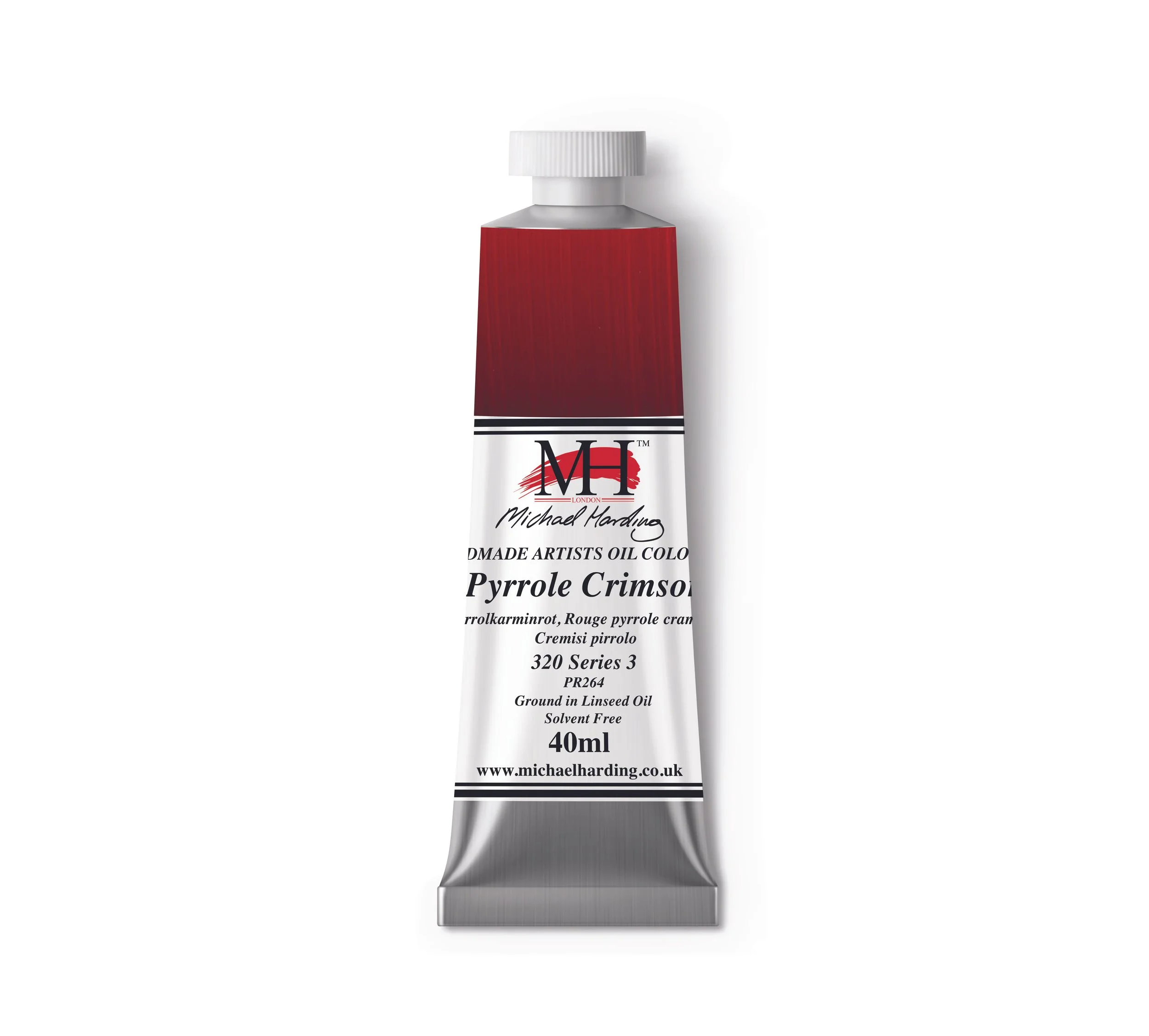
Ⓥ VEGAN A sharp bluey red, ideal for those tricky hues that can sometimes be difficult to achieve. Pyrrole Crimson offers a real special angle on the palette, bringing clarity, brilliance and intensity to mixtures. Particularly effective for dramatic skies and those crazy sunsets.
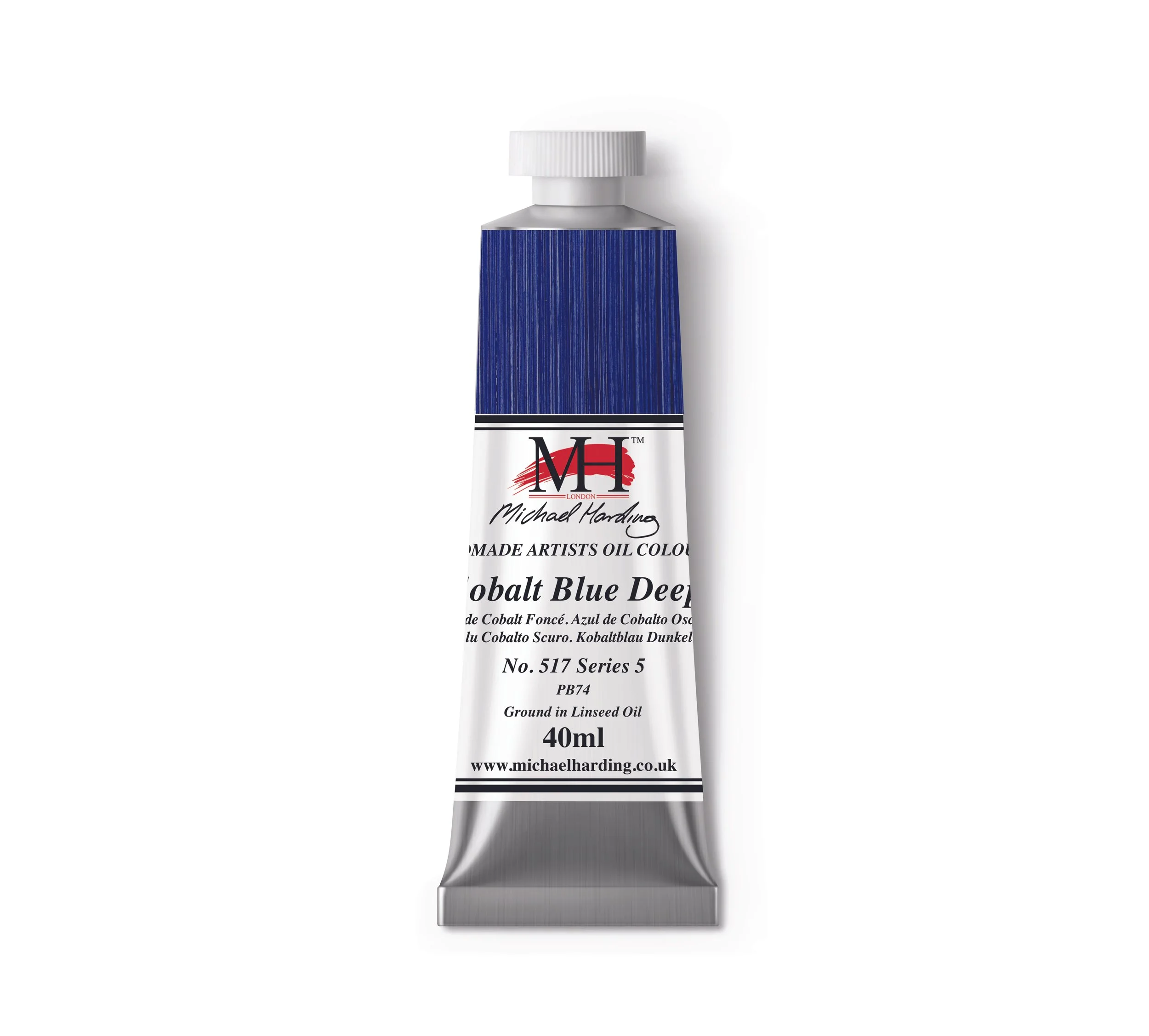
Ⓥ VEGAN Cobalt Blue Deep is one of the most dependable and elegant blues imaginable; rich, atmospheric and wonderfully lightfast. Possessing all the qualities that have made cobalt pigments favourites among painters for generations, it delivers depth, harmony and permanence in equal measure.
New Whitechapel Colours
A place-rich palette of new colours rooted in history and paint-making craft. Whitechapel - where Michael Harding first began making paint in the East End of London - inspired this collection of warm yellows, earthy browns, and soft floral tones.

Crafted with PY175 (Benzimidazolone Yellow), Citron is a cool, green-toned bright yellow offering excellent lightfastness and high tinting strength. This transparent, slow-drying organic pigment has average oil content and is perfect for layering, botanical highlights, and creating fresh, luminous passages.

A soft, romantic pink composed of PW6, PY42 (Iron Oxide Yellow), and PV19 (Quinacridone Violet). With excellent lightfastness and a semi-opaque finish, Rose Blush offers moderate drying time and a gentle balance of strength and delicacy. Its organic/inorganic blend makes it ideal for florals, portrait work, and subtle transitions.

Made with PBr25 (Benzimidazolone Brown), this transparent, reddish-brown delivers deep, warm earth tones with very good lightfastness. It has a high oil content and dries quickly, making it ideal for rich, lasting glazes. As a stable, non-toxic organic pigment with high tinting strength, Permanent Brown offers smooth handling and depth in layering.

A bold, glowing orange made from PO34 (Disazo Pyrazolone), an organic pigment known for its warmth and vibrancy. With high oil content and strong tinting power, Orange Sunset offers a semi-opaque finish and medium drying time. While its lightfastness is slightly lower than average, it excels in sunsets, highlights, and dynamic accents.

A vibrant, high-coverage yellow created from a blend of PW6 (Titanium Dioxide) and PY83 (Diarylide Yellow). This opaque pigment has excellent lightfastness, low oil content, and very strong tinting strength. Ideal for bold mixes, high-impact highlights, and reliable coverage in both traditional and contemporary work.

A rich, earthy red made from 100% natural red clay soil composed of minerals and iron oxides. Formulated with PR101 (Synthetic Red Iron Oxide), Herculane Red offers excellent lightfastness and a semi-opaque finish. This fast-drying, non-toxic inorganic pigment is known for its stability, warmth, and suitability for underpainting or tonal foundations. Low in oil content with average tinting strength, it’s a dependable classic for serious painters.

An elegant, moody violet crafted from PV23 (Dioxazine Violet), PR112, and PB29 (Ultramarine Blue). This blend of organic pigments provides excellent lightfastness and transparency, with layered depth and soft variation. With average drying time and moderate tinting strength, Belladonna is well-suited to atmospheric glazes and expressive shadow work.

This warm, slightly yellow-leaning green is named after 19th-century botanical illustrator William Hooker. Made with PG36, PR101, and PY74, it combines the boldness of phthalocyanine with earthy warmth. Fast-drying and semi-transparent, Hookers Green offers excellent lightfastness, high oil content, and strong tinting power—ideal for natural greens and layered depth.
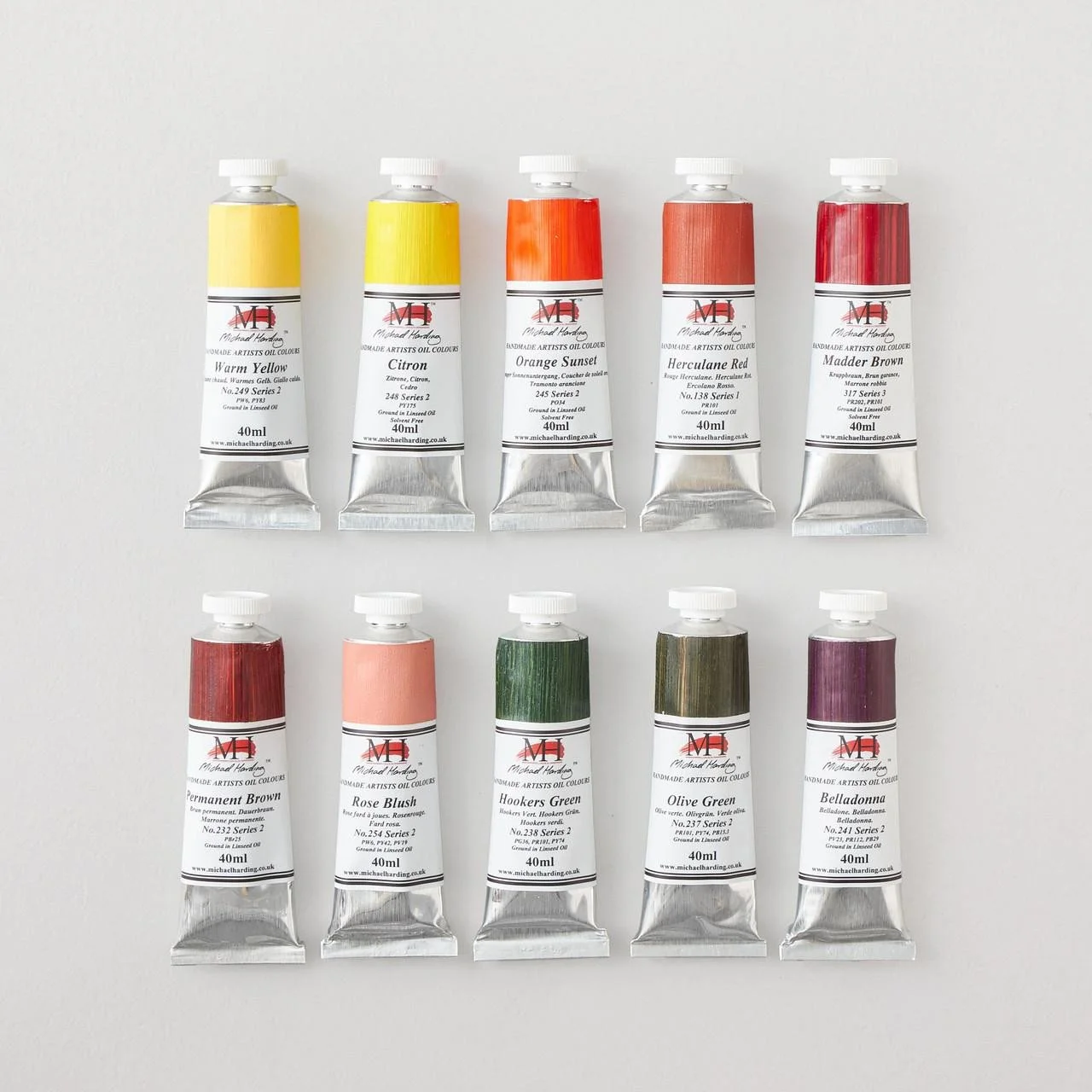
The new set from Michael Harding, Whitechapel - Cook's Yard, pays tribute to a formative chapter in Michael’s paint-making journey. From 1999 to 2010, he worked out of a small space at 88 Mile End Road in Whitechapel, East London.
That very address was once home to Captain James Cook. Cook and his family lived at both 88 and 89 Mile End Road, but reportedly detested their time there due to the overpowering smell from a nearby gin distillery — the same building Michael would later use for making paint.
The ten colours in this set reflect not only the physical environment of Whitechapel, but also the experimental spirit of that period in his career. As with every Michael Harding collection, the name reflects more than just the palette — it tells the story behind it.
Previous sets include Tunbridge Wells and Brick Lane. Cook’s Yard continues the series, with Brecon Beacons to follow. Each collection is available either as a complete set or as individual colours.
The colours included are; Belladonna, Citron, Herculane Red, Hookers Green, Madder Brown, Olive Green, Orange Sunset, Permanent Brown, Rose Blush and Warm Yellow.

A deep, expressive brown combining PR202 (Quinacridone Magenta) and PR101 (Iron Oxide). This rich, dark red-brown delivers excellent lightfastness, high oil content, and dependable coverage. The transparency and vibrancy of quinacridone merge with the weight and grounding of iron oxide, making it a beautiful choice for botanicals, portrait shadows, and atmospheric landscapes.

A sophisticated dark yellowish-green blended from PR101 (Iron Oxide Red), PY74 (Arylide Yellow), and PB15.3 (Phthalo Blue GS). Combining organic and inorganic pigments, Olive Green is fast-drying, semi-transparent, and exhibits excellent lightfastness. With high tinting strength and strong coverage, it’s perfect for landscapes, foliage, and botanical studies.
New Brick Lane Colours
A vivid modern selection of yellows, oranges, pinks, violets, blues, greens and deep neutrals. Brick Lane - another East End landmark from Michael Harding's early days - inspired this bold, contemporary collection.

Ⓥ VEGAN
No. 236 Yellow Benzimidazolone (PY154) This warm, golden-yellow hue offers excellent lightfastness and opacity. With its strong, vibrant intensity, Yellow Benzimidazolone is ideal for creating luminous and glowing washes or layering techniques. Its rich pigmentation makes it a perfect choice for landscapes, florals, and sunlit compositions. As the name suggests, this colour will dazzle you.

Ⓥ VEGAN
No. 322 Quinacridone Purple (PV55) Quinacridone, which is an organic compound, is used extensively in industrial colorant applications. Deep, transparent, and richly pigmented, Quinacridone Purple brings intensity and depth to any painting. Its slightly cool, jewel-like hue is perfect for rich shadows, dramatic skies, or floral work. The quinacridone pigment ensures long-lasting vibrancy and clarity.

Ⓥ VEGAN
No. 244 New Gamboge (PY150) A transparent, earthy yellow, New Gamboge offers a soft, natural hue with a gentle warmth. Its subtle undertones and strong tinting strength make it an excellent choice for botanical illustrations, capturing golden light effects, or blending with other colours to create a wide range of natural tones. Originally derived from the resin of trees native to eastern Asia, it is now produced as a synthetic organic pigment, delivering the rich, transparent, yolk-like colour artists have come to appreciate.

Ⓥ VEGAN
No. 234 Orange Benzimidazolone (PO36.1) A heterocyclic aromatic organic compound, this bright, radiant orange is both intense and durable, with exceptional lightfastness. Orange Benzimidazolone’s boldness makes it a striking addition to your palette, perfect for fiery sunsets, autumnal landscapes, and any composition requiring a punch of vibrant energy.

Ⓥ VEGAN
No. 233 Ultramarine Pink (PR259) Who would have thought that “beyond the sea”—the Latin meaning of Ultramarine—could also describe a soft, transparent pink with a cool undertone? Ultramarine Pink offers delicate granulation and subtle beauty, making it a unique choice for enhancing skin tones, skies, and florals. Its cool hue pairs beautifully with blues and purples, adding versatility and depth to your palette.

Ⓥ VEGAN
No. 139 Neutral Tint (PBk6, PV19, PB15.3) Neutral Tint is a versatile, dark grey with subtle hints of violet and blue, offering strong opacity and excellent mixing capabilities. It’s perfect for deepening shadows, adding contrast, or creating neutral washes without compromising the vibrancy of surrounding colours.

Ⓥ VEGAN
No. 247 Opera Rose (PR122) A highly saturated, fluorescent pink, Opera Rose captivates with its vivid intensity and bold vibrancy. Derived from the family of quinacridone magentas, it offers a striking, almost shocking, hue that stands apart. Unlike traditional quinacridones, Opera Rose has its own unique flow and handling. While its lightfastness is moderate, its radiant, eye-catching colour makes it a popular choice for fiery skies, impressionistic florals, abstracts, or any artwork where a high-impact pink is desired.

Ⓥ VEGAN
No. 318 Blue Verditer (PB28, PW6, PB36) A soft, pale blue with a slightly muted quality, Blue Verditer is a historical pigment with a modern twist. Blue verditer is basic copper carbonate and the artificial form of the pigment azurite. This opaque yet delicate hue is perfect for skies, seascapes, or atmospheric works, offering subtle, cool tones with a touch of grey.

The Michael Harding Oil Paint range contains the finest of the finest pigments, ground in refined cold-pressed linseed oil. Luminous, brilliant colours at very high tint strengths, they are totally free of fillers, extenders, or driers, with a texture that's silky rather than oily. Colours included; Neutral Tint, Ultramarine Pink, Orange Benzimidazolone, Yellow Benzimidazolone, New Gamboge, Aqua Green, Opera Rose, Blue Verditer, Quinacridone Coral and Quinacridone Purple.
Ⓥ VEGAN
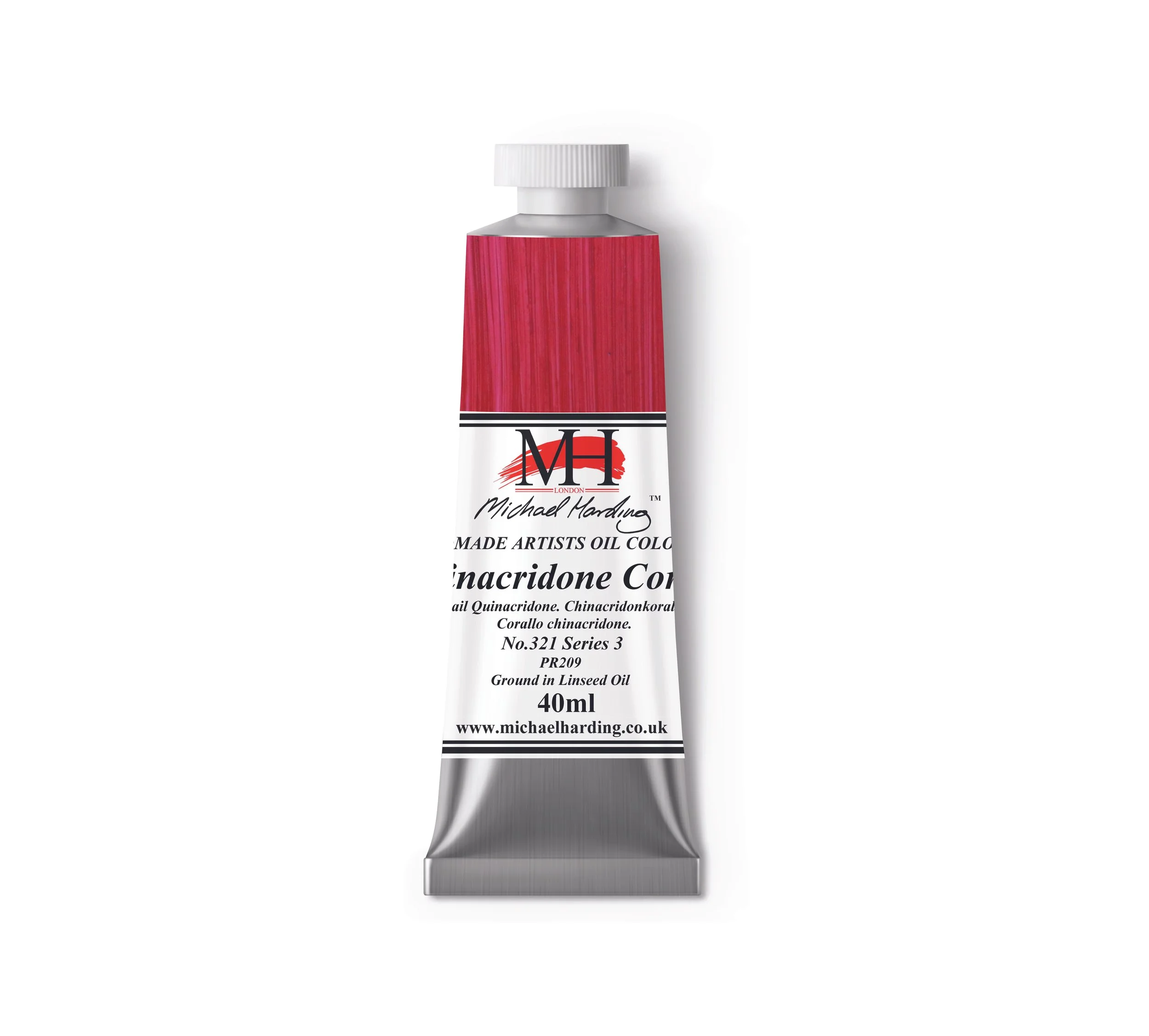
No. 321 Quinacridone Coral (PR209) Though corals in nature span a broad spectrum, Quinacridone Coral offers a rich, warm pink with a distinct coral hue, more vivid than the peachy tones we often associate with the name. Transparent yet bold, this colour is ideal for adding warmth and depth to florals, portraits, and sunsets. Its unique balance of red and pink gives it remarkable versatility, making it an excellent choice for a wide range of subjects.
Ⓥ VEGAN
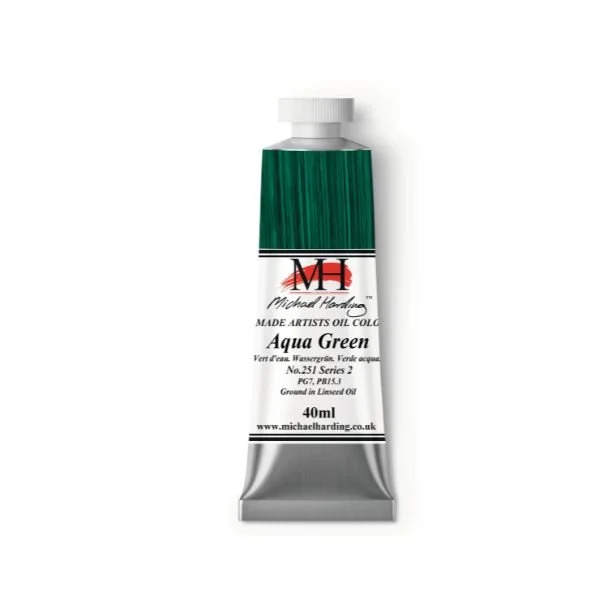
No. 251 Aqua Green (PG7, PB15.3) Green pigments were primarily used by Egyptians in the form of natural earth and malachite. Aqua green is a modern, synthetic green blended with the classic Phthalocyanine Blue to provide a cool, vibrant turquoise with excellent transparency. Aqua Green is a bold and refreshing addition to the palette. Its blend of green and blue pigments makes it ideal for oceanic scenes and verdant foliage, adding a cool accent to any composition.
New Tunbridge Wells Colours
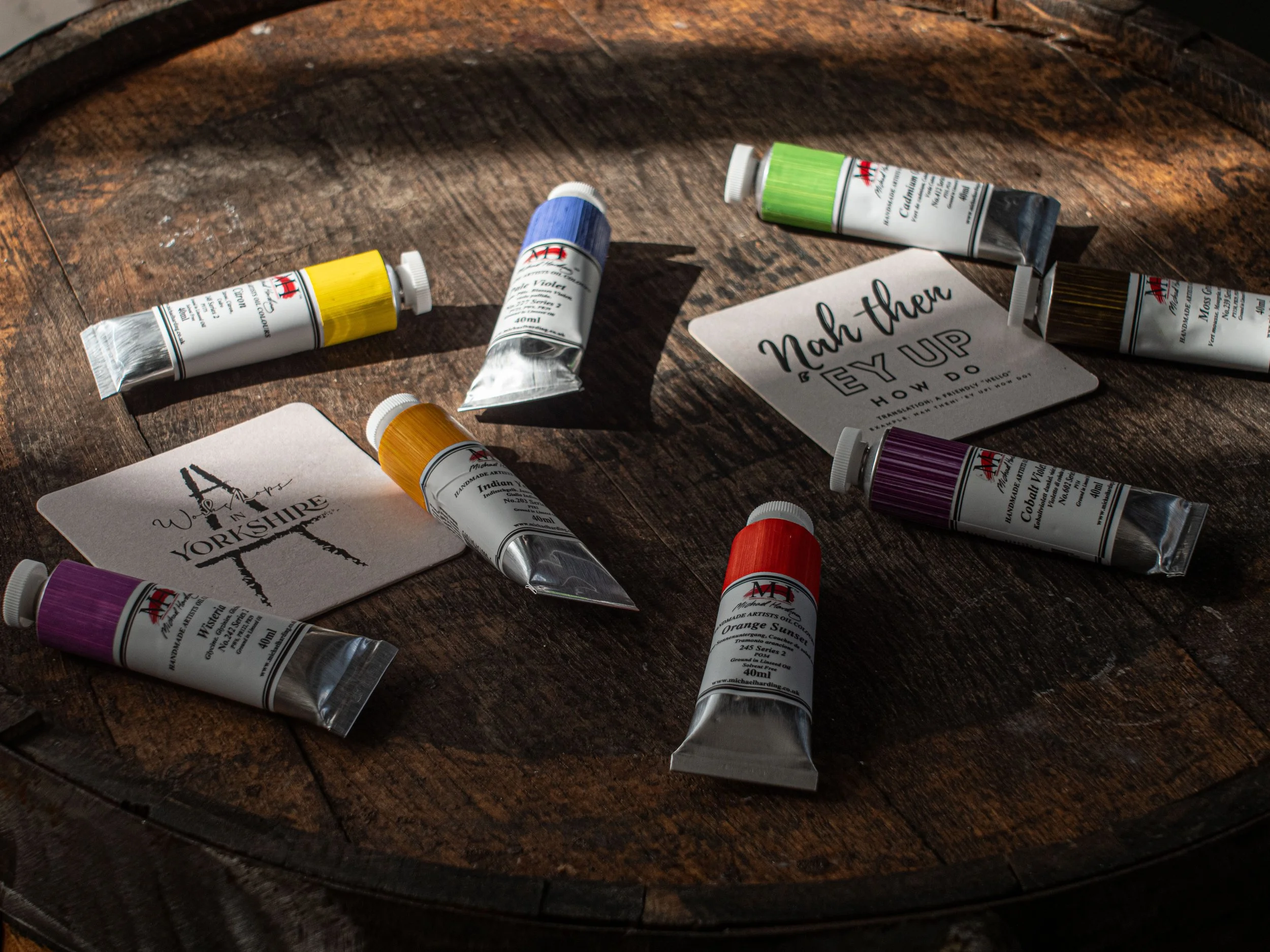
A lively collection spanning brilliant oranges, florals, violets, blues, greens and greys. Tunbridge Wells - where Michael Harding's paint-making journey first began - inspired this vibrant anniversary collection.

Ⓥ VEGAN
Brilliant Orange (No. 246) is a bold colour, radiating warmth and vitality. Its semi-opaque quality adds depth, while excellent lightfastness ensures long-lasting vibrancy. With an average drying speed and smooth consistency bound with linseed oil, it’s perfect for creating dynamic compositions that capture the intensity of a fiery sunset or the vibrant hues of autumn foliage.
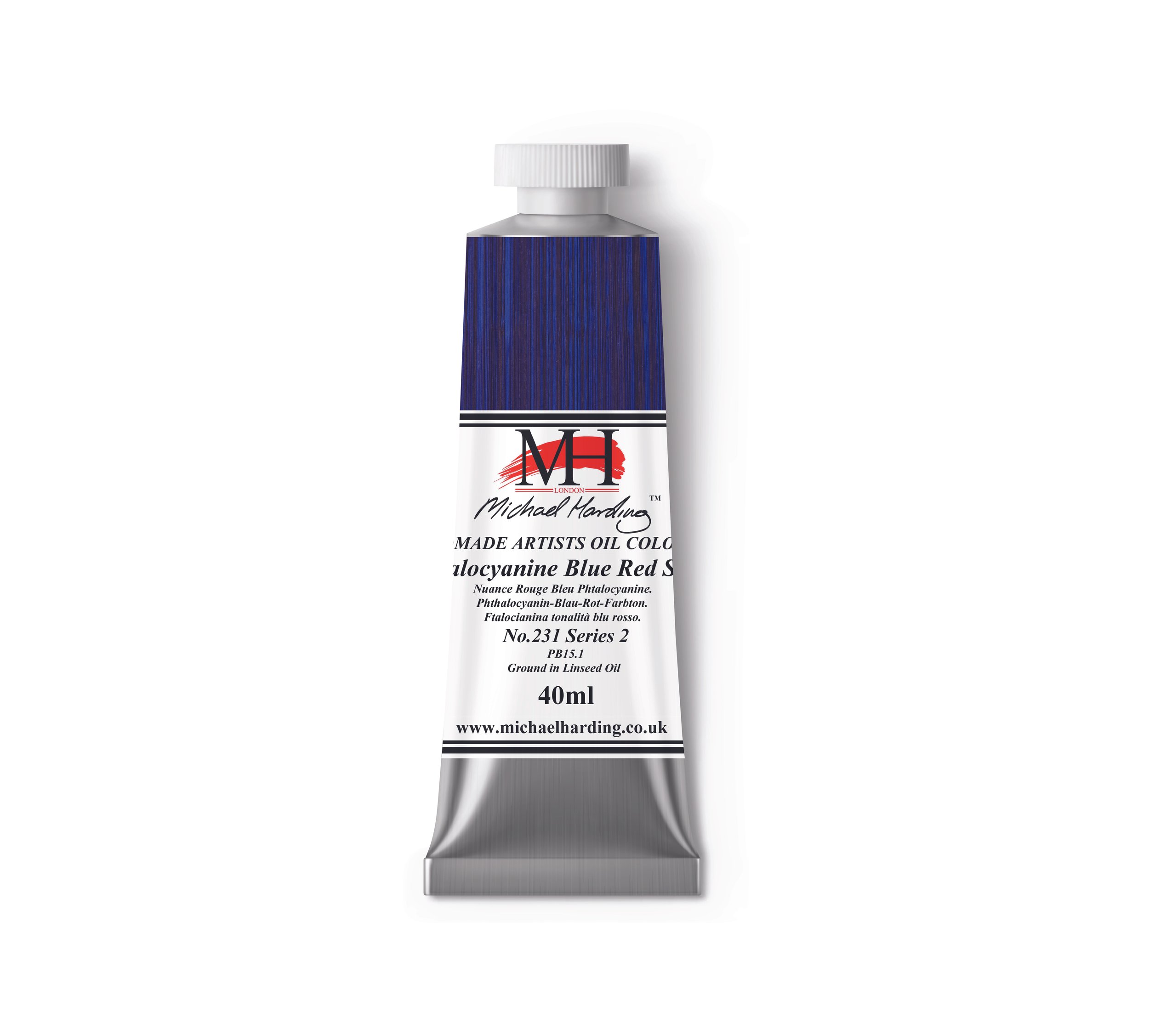
Ⓥ VEGAN
Phthalocyanine Blue Red Shade (No. 231) captivates with its deep, rich colour. Offering excellent lightfastness and a fast-drying speed, it’s ideal for creating bold, vibrant artworks. No. 231 is a red shade blue, or, put another way, a slightly violet blue with the high tinting power the artist expects of ‘thalo’ colours. Some describe it as nocturne in a tube.

Ⓥ VEGAN
With excellent lightfastness and a smooth consistency, Turner’s Yellow (No. 235) radiates warmth and saturation—perfect for adding a pop of colour to compositions. Though there is some debate as to which W. Turner is associated with the original colour and its patent,
No. 235 is a stunning colour with an abundance of uses, sitting among our Naples yellows and variety of ochres.

Ⓥ VEGAN
Rose Dore (No. 319) is a robust yet subtle colour, blending pigments PY151 and PV19 to evoke the soft, romantic tones of a golden rose. With excellent lightfastness and a semi-transparent quality, it adds depth to every composition. Featuring a slow drying speed and bound with linseed oil, No. 319 empowers the artist’s detailing and layering.

Ⓥ VEGAN
Vivid Blue (No. 240), as its name suggests, commands attention with its intense brilliance and boldness. Offering excellent lightfastness and a smooth consistency, No. 240 is perfect for creating dynamic compositions inspired by the sky or ocean.
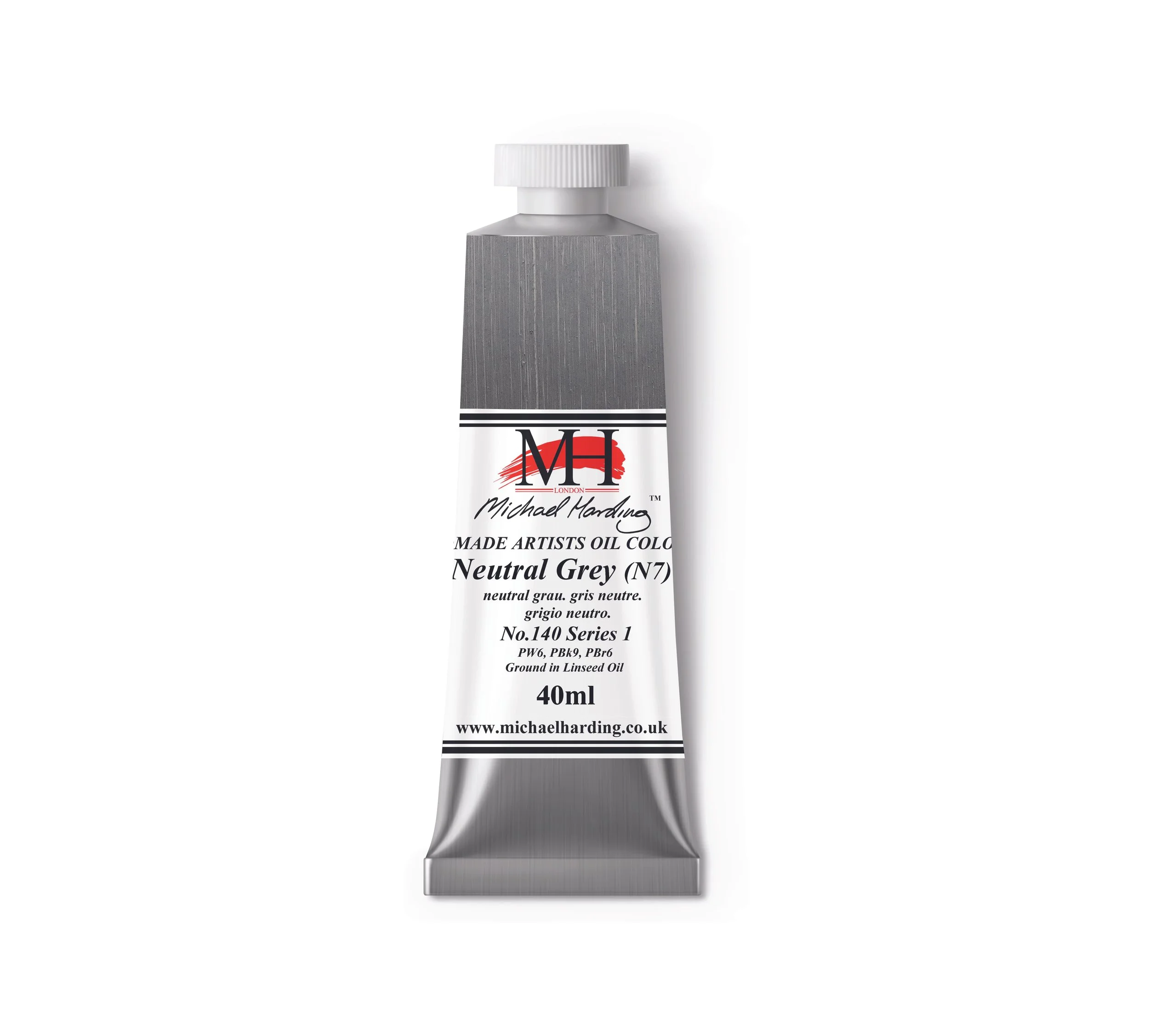
Ⓥ VEGAN
Neutral Grey N7 (No. 140) is designed to be to assist artists with tonal values. A lean colour with a relatively low oil content, Neutral Grey N7 is useful as a base ground colour with high covering power. For the more experienced artist, Neutral Grey N7 is a workhorse grey that can be tinted into.

Ⓥ VEGAN
Wisteria (No. 242) is a soft, pastel colour falling into the useful category of pale colours made for just about any application, from landscape to completely non-figurative. Vivid and powerful, No. 242 is a handy addition to every artist’s palette.

Ⓥ VEGAN
Cadmium Green (No. 412) is a vivid colour created from pigments PY35 and PG18. With excellent lightfastness and opaque transparency, it adds depth to compositions. Its average drying speed and linseed oil binder make it a versatile choice for artists seeking reliability and vibrancy in their work.

The Tunbridge Wells selection, the first of four new sets, offers a vibrant array of colors, including Neutral Grey (N7), Turners Yellow, Brilliant Orange, Rose Dore, Wisteria, Lavender, Vivid Blue, Phthalo Blue Red Shade, Cadmium Green, and Moss Green. This set marks the beginning of our 40th-anniversary celebration, with three more sets to follow, each named to reflect Michael Harding’s journey.

Ⓥ VEGAN
Another of our versatile, high-coverage, natural colours, Lavender (No. 243) is useful in myriad applications.

Ⓥ VEGAN
With its earthy tones, Moss Green (No. 239) captures the serene beauty of nature. Featuring excellent lightfastness and a semi-transparent quality, No. 239 adds depth and dimension to artworks inspirational for natural landscapes.
Non-Absorbent Acrylic Primer
-
Then properly prepare your support by using my Non-Absorbent Acrylic Primer (NAAP).
This unique primer, known for its non-absorbent properties, establishes a durable bond with paint layers, providing adequate tooth without a greasy feel. NAAP is versatile and suitable for application on various supports, even allowing for use over budget-friendly, conventionally primed canvases, transforming them into a non-absorbent surface for your artistic pursuits.
Discover the simplicity and authenticity of your oil paint colours as they interact with NAAP, preserving the freshness and vibrancy of each stroke. Enjoy the artistic process with improved control and expression, thanks to the non-absorbent quality of NAAP.
For those looking to tailor their artistic approach, consider experimenting with dilution ratios for nuanced effects. Explore the possibilities of NAAP by adjusting the mixture with water, allowing you to fine-tune the texture according to your creative vision.
If you have specific questions or seek guidance on the application of NAAP, please refer to our detailed guidelines below or reach out to us via our contact page.
Michael Harding Non-Absorbent Acrylic Primer offers a straightforward enhancement to your artistic journey, providing a foundation that respects the integrity of your creative expression.
-
Michael Harding Non-Absorbent Acrylic Primer (NAAP) is a versatile product suitable for application on various surfaces, including linen, wood, MDF, and more. It is designed to create a robust, flexible, permanent, and intensely pigmented ground, making it an excellent choice for both acrylic and oil paints.
-
Support Selection: NAAP should not be applied over surfaces treated with rabbit skin/hide glue or on unsound, flimsy supports such as cardboard. Opt for stable substrates to ensure the primer’s effectiveness.
Not a Gesso: Please note that NAAP is a primer, not a gesso. As such, there is no need for additional gessoes, sizes, or other ancillary products when using NAAP.
-
Coat Application: Apply a minimum of two coats of NAAP to your chosen support, ensuring liberal coverage for optimal results.
Dilution for Flow: If you desire increased flow, dilute NAAP with a mixture of 1 part water to 4 parts NAAP. This adjustment allows for customization based on your artistic preferences.
Second Coat Application: Apply the second coat once the first coat is touch dry, typically after approximately 1 hour. This step contributes to the creation of a well-prepared painting surface.
Use within 3 months of opening for best quality.
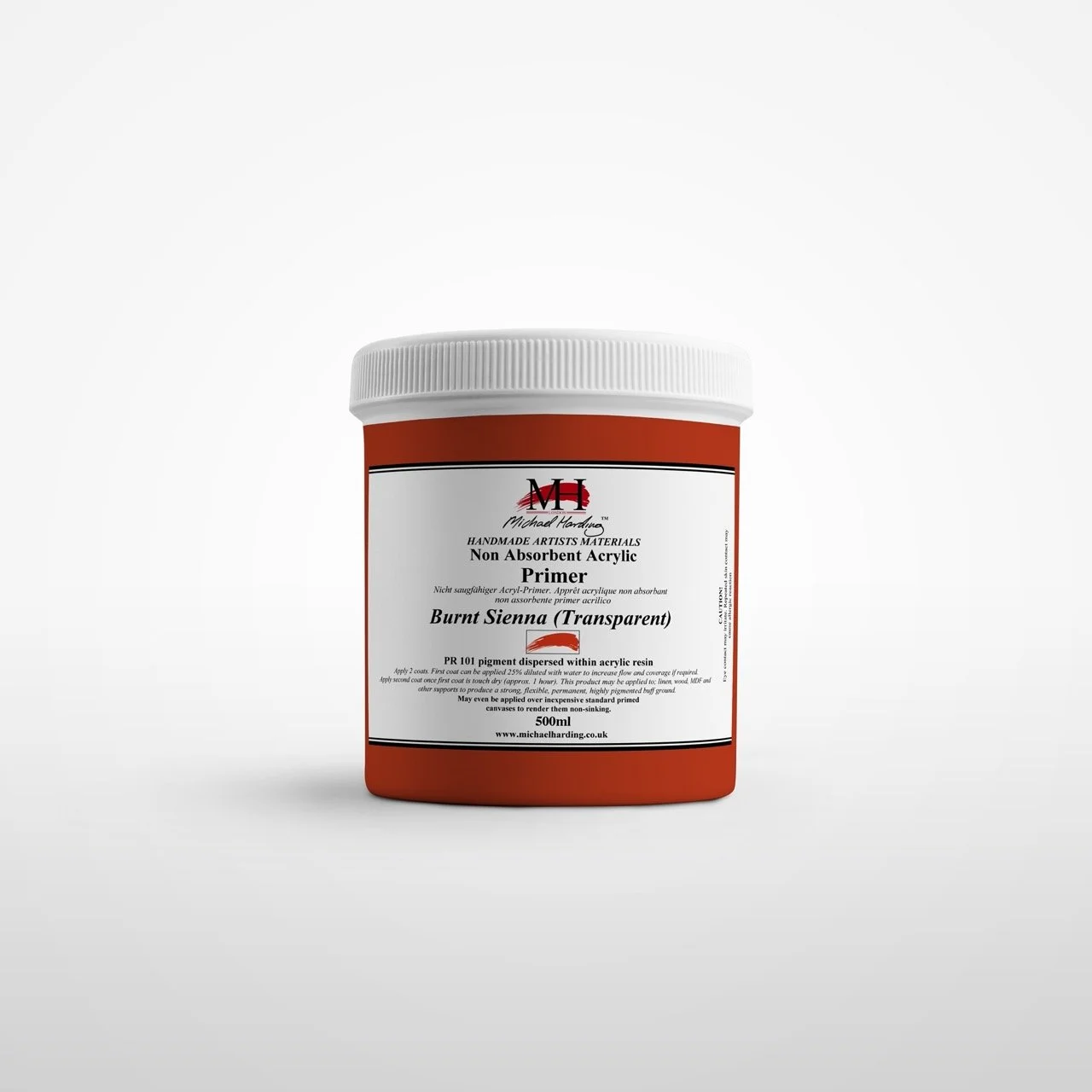
Ⓥ VEGAN
Pigment: Pr 101
Use this colour in conjunction with NAAP White to discover the transparent and luminous qualities of my Burnt Sienna.
Apply two coats of NAAP white and allow to dry. Scumble on a thin layer of NAAP Burnt Sienna to achieve a warm grisaille brushed appearance for the foundation layer of your painting.
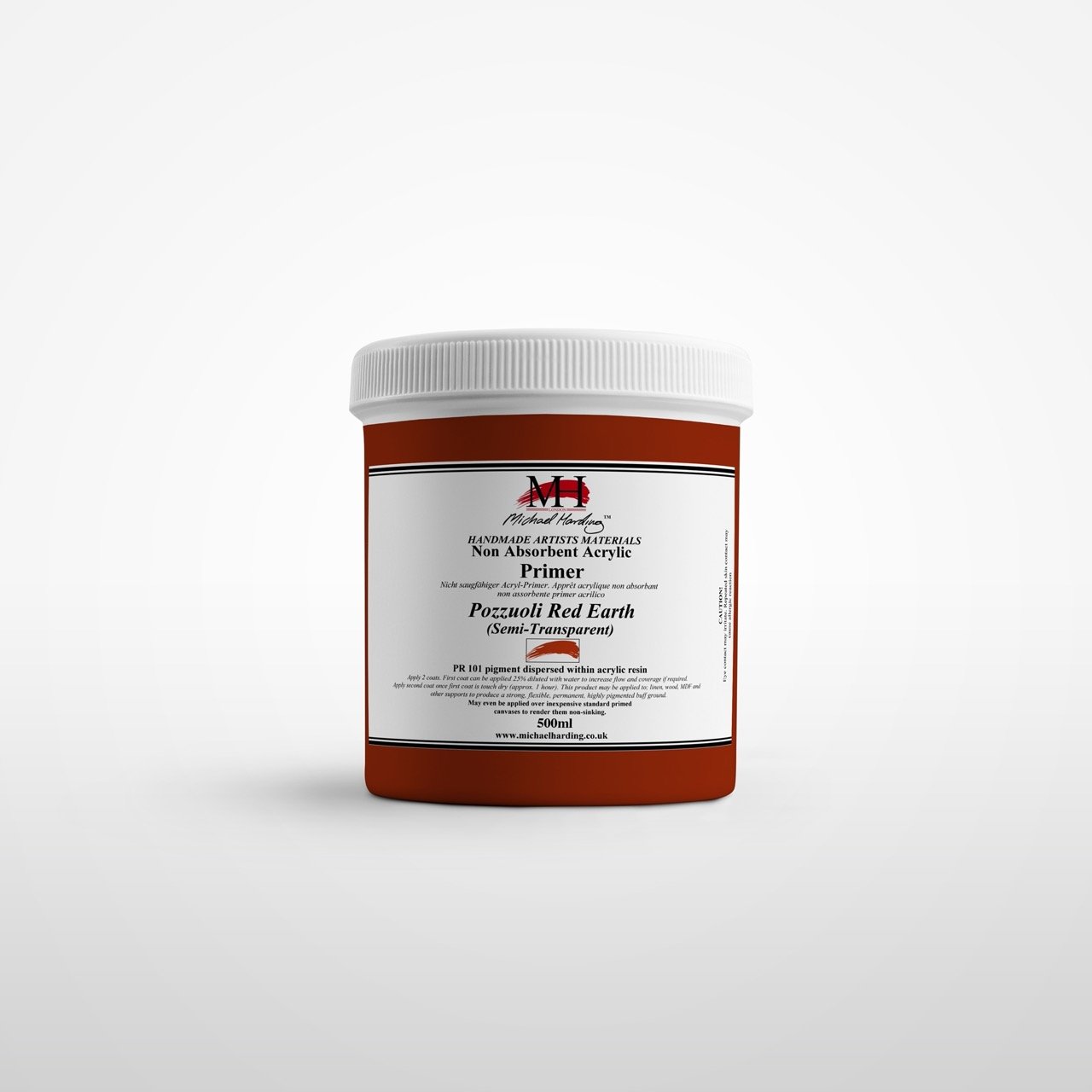
Ⓥ VEGAN
Pigment: Pr 101
A favourite colour of 18th-century landscape painters used on top of a white primer was Pozzuoli Red Earth. Today one can experience the reveal of Pozzuoli Red Earth occasionally in 18th-century paintings. Based on this observation, Possuoli Red Earth is an appealing priming colour that works beautifully. Remember to use this colour in conjunction with NAAP White.
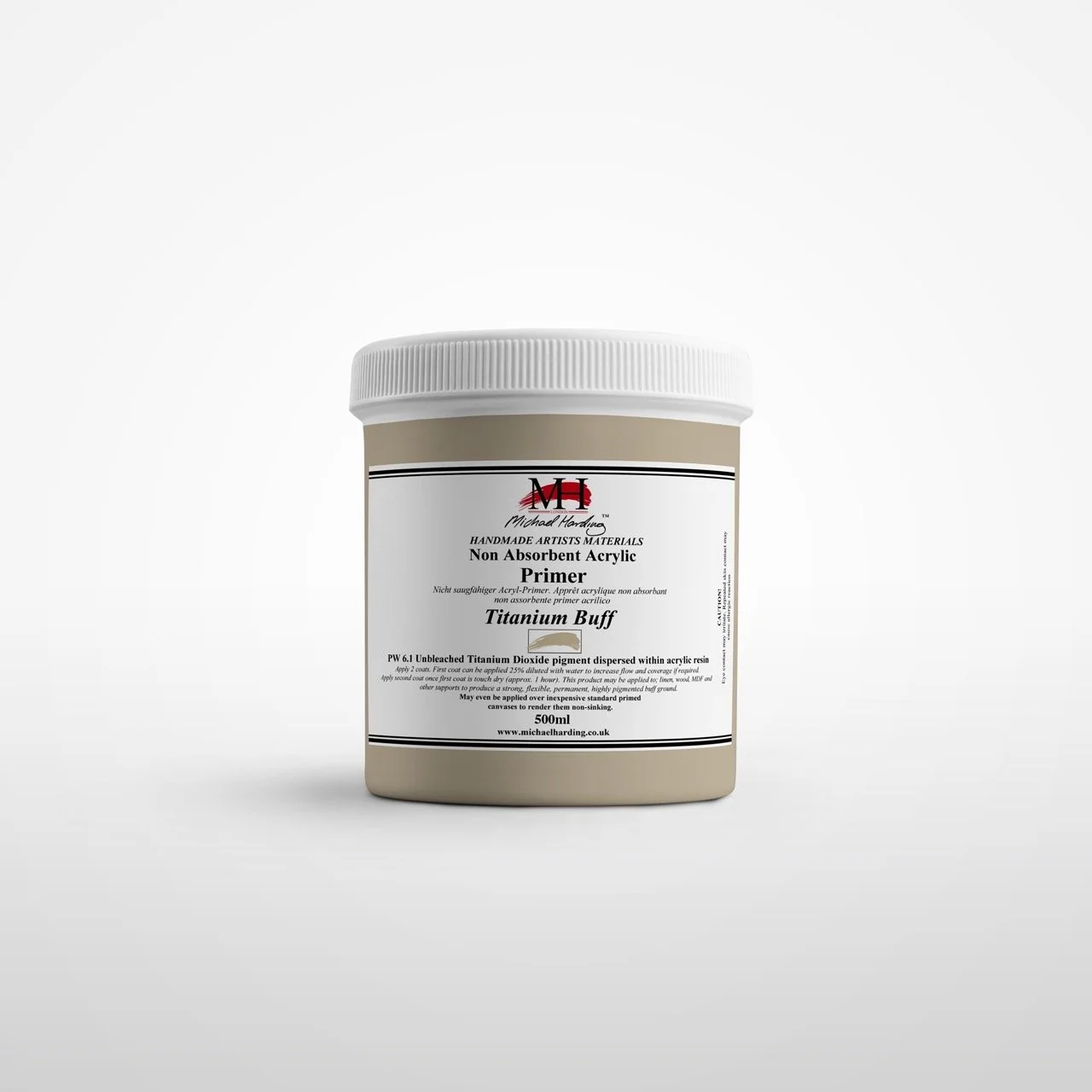
Ⓥ VEGAN
Pigment: Pw 6.1
This NAAP colour is based on my Unbleached Titanium Dioxide in oil colour and uses the same pigment, PW6.1. It’s ideal for creating a good neutral base colour upon which to work and is extremely lightfast.
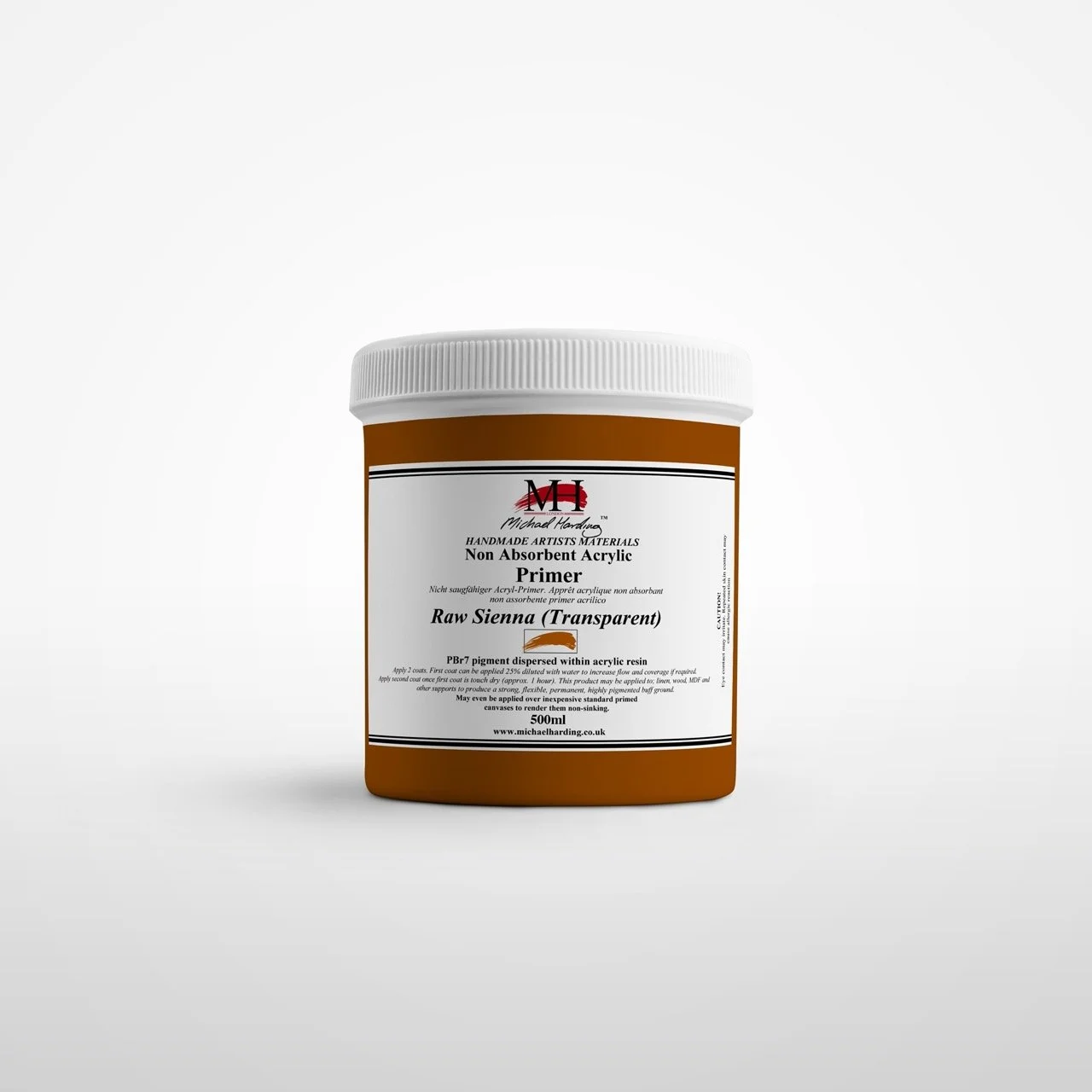
Transparent primer. Use over NAAP White; scumble a thin layer for a warm grisaille foundation.
NAAP Raw Sienna (Transparent) is a single-pigment Michael Harding primer made with PBr7.
It is transparent.
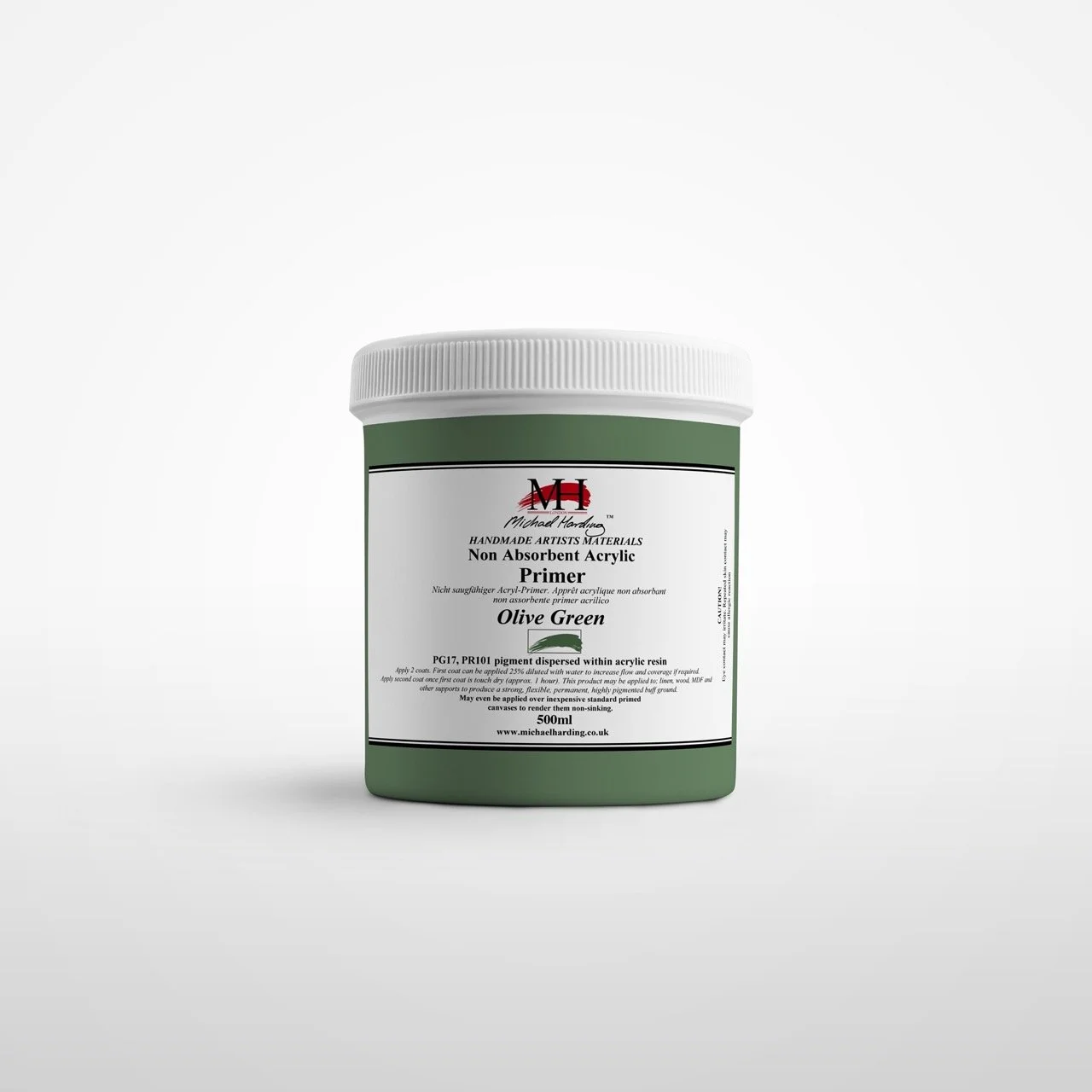
Ⓥ VEGAN
Pigment: PG 17 and Pr 101
Olive/Moss Green acts as the perfect complementary green and has a deep, mossy nature. I designed this color to push red and brown shades forward so that they glow like those we see in skin tones. Though I had portraitists in mind when I developed this green, after sharing a tube with an artist friend, she reported it ideal for landscapes as well.
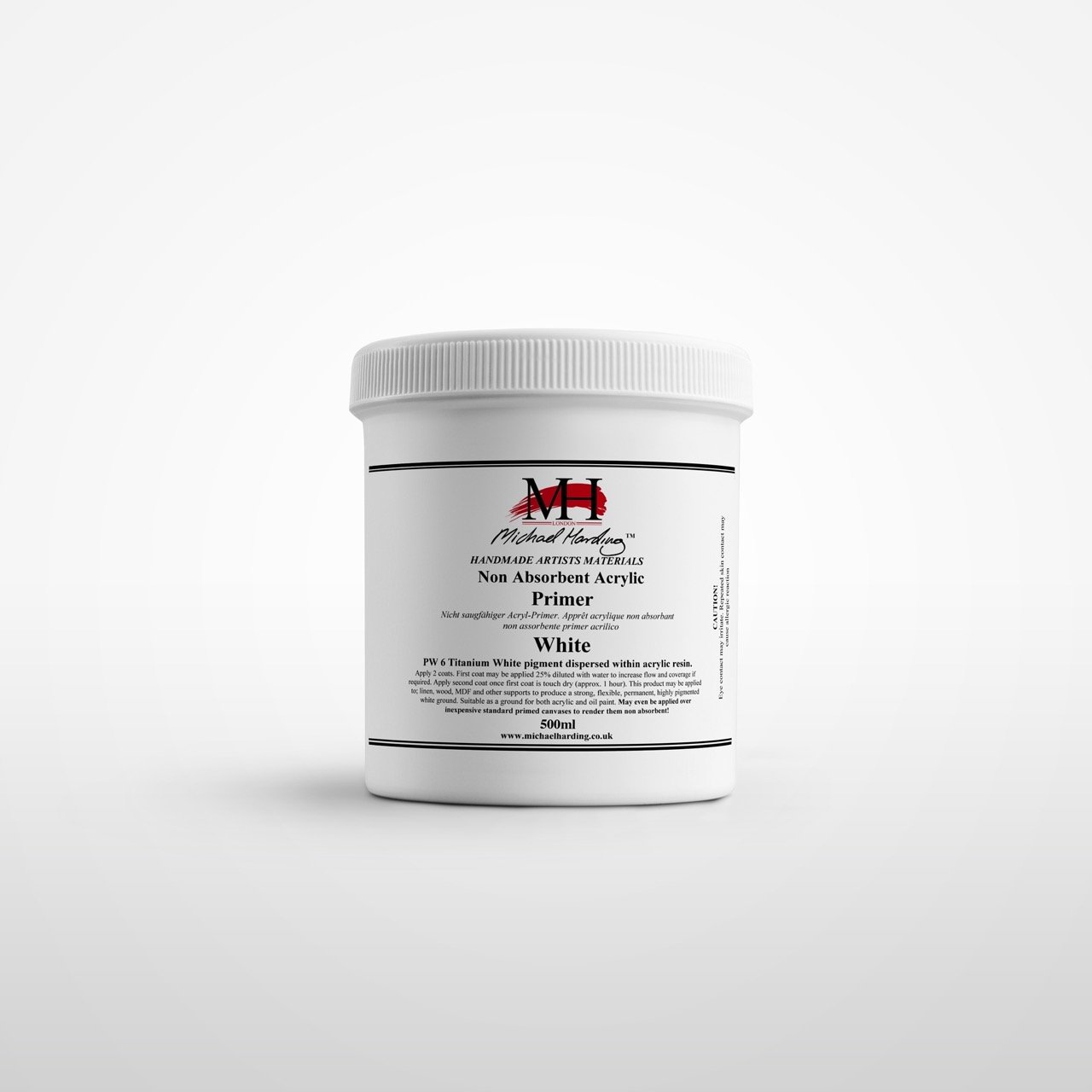
Opaque white ground. Apply two coats to linen, wood, or MDF. Flexible, permanent and highly pigmented; suitable for acrylics and oils. Use as the base layer for transparent NAAP colours.
NAAP White is a single-pigment Michael Harding primer made with PW6.
It is opaque.
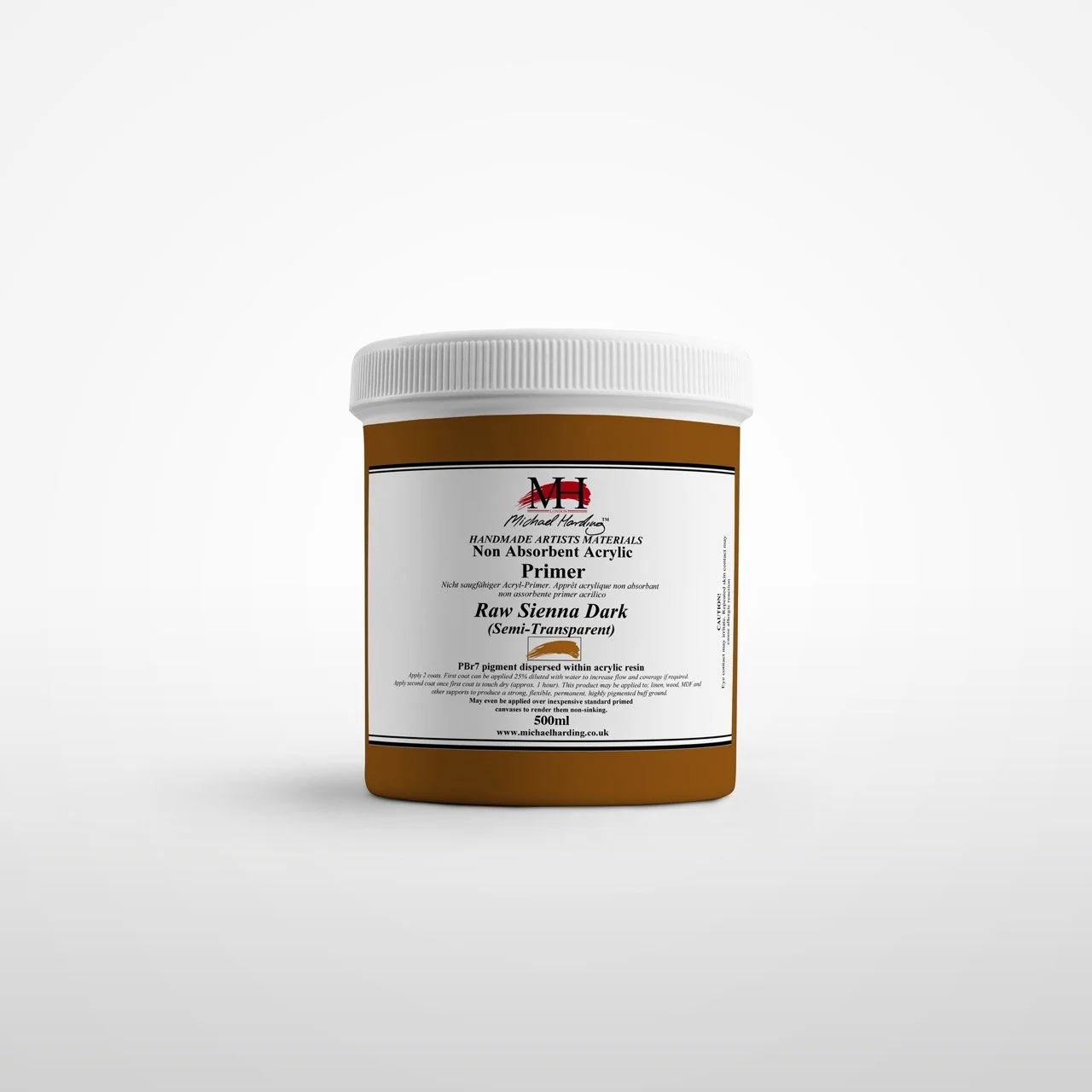
Ⓥ VEGAN
Pigment: PBr 7
As any artist would expect, Raw Sienna Dark is a deep, ochry, brown shade, beautiful for any type of painting.
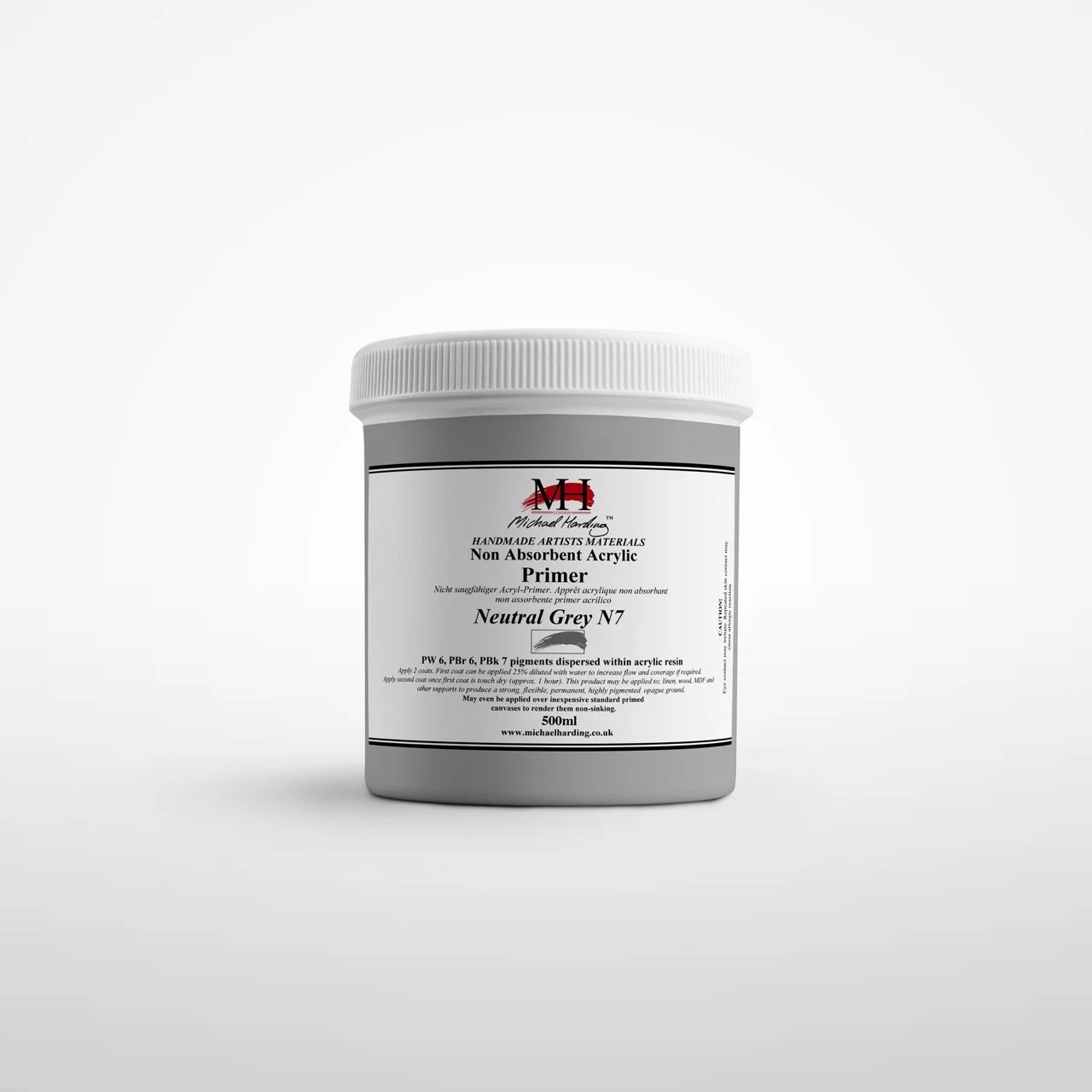
Pigment: Pw 6,PBk6 (Lamp)
Exactly as stated, a neutral grey with a slightly warm undertone. I am informed my Neutral Grey is equivalent to a seven (7) on the Munsell scale.
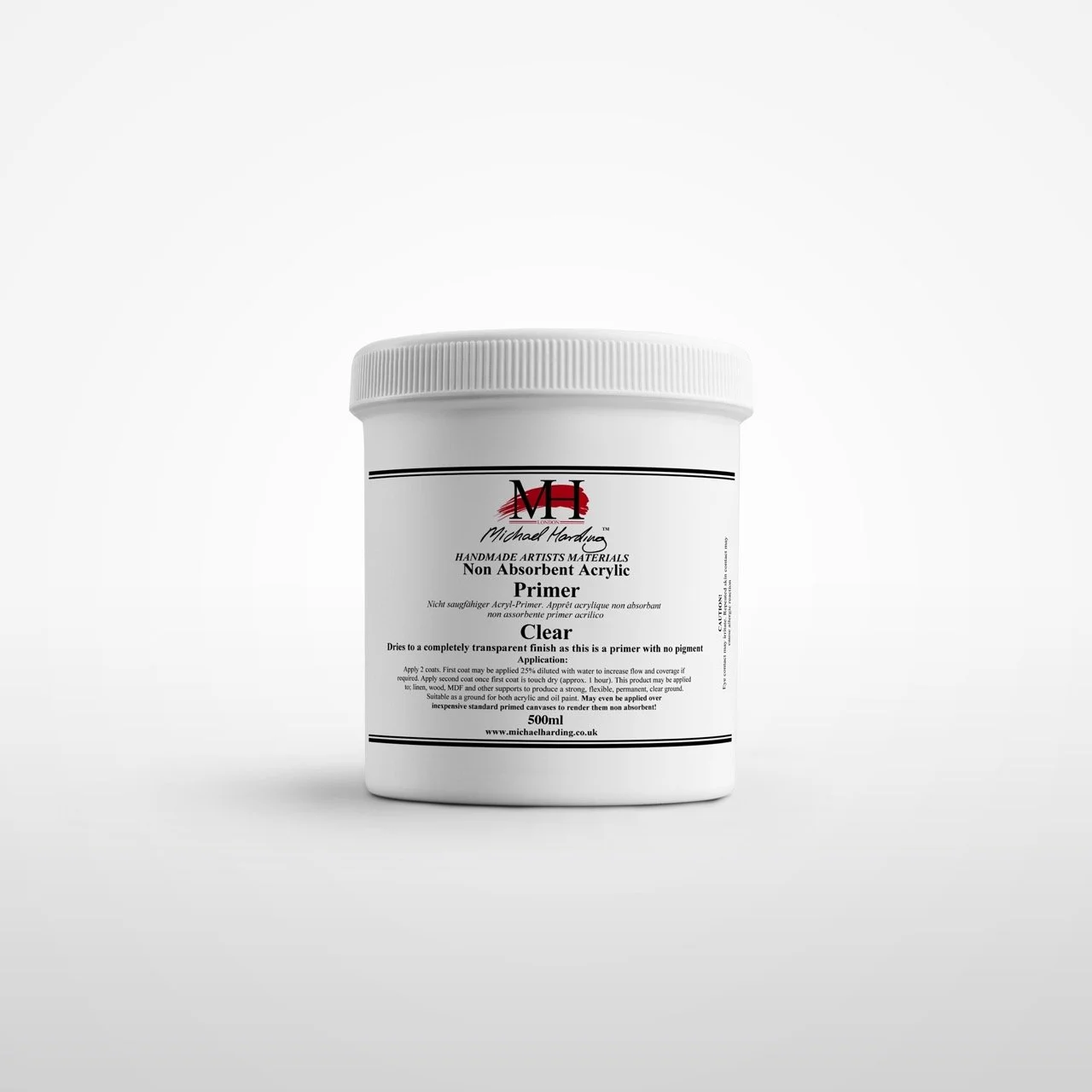
Ⓥ VEGAN
Pigment: None
Michael Harding’s Clear (Transparent) is designed for application to a coloured support surface the artist wishes to preserve or enhance, such as raw linen or wood. The support will become slightly darker from the Clear (Transparent) NAAP application.
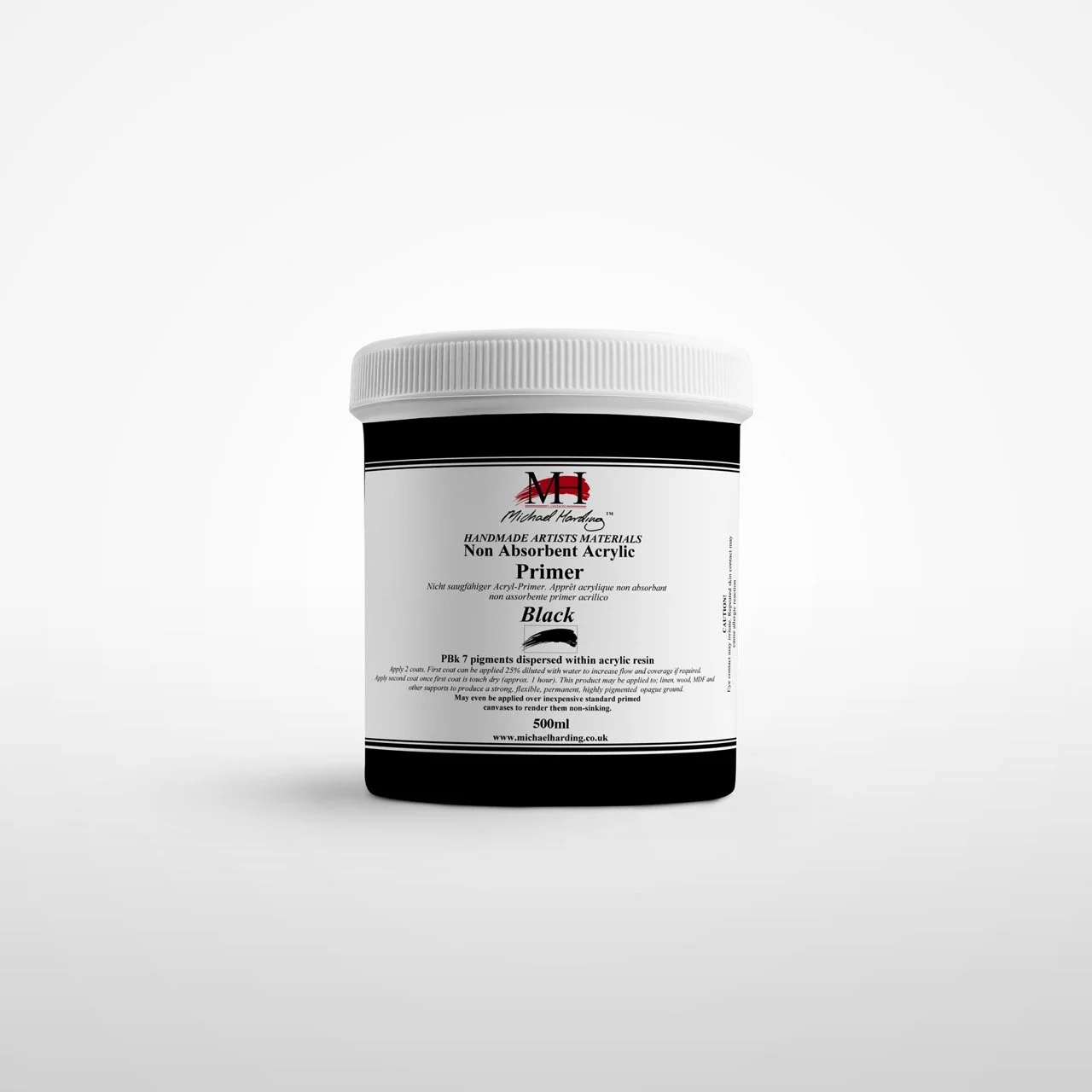
Pigment: PBk 9
Black is either one’s favorite colour or one’s bête noire. My Black primer is a simple, powerful colour that makes a canvas inviting!
Oils & Varnishes
Throughout the Renaissance, artists worked with combinations of tree resins, thickened vegetable oils, waxes, and balsams. The exact organisation of these raw materials is open to speculation and likely differed from one artist to the next - even within the practice of an individual artist.

Ⓥ VEGAN
When mixed with oil paint, Michael Harding’s linseed oil increases the gloss and transparency of the paint, thins the paint for easier flow, and reduces visible brush marks. It also slows the drying time of the paint. However, using too much can cause yellowing due to the natural color of the oil and can lead to defects like wrinkling if layers are applied too thickly.
Alkali Refined Pale Linseed Oil, a pale oil extracted from flax seeds, is used in many of Michael Harding’s paints. This oil ensures a strong paint film during drying, contributing to the longevity of each painting. It is also suitable for use with dry ground pigments.
Please note: Soft materials soaked in linseed oil should be stored in sealed containers to prevent oxidation, which can generate heat and potentially cause spontaneous combustion. Ensure the container is securely closed and stored in a cool place. Brushes and tools used with linseed oil should be cleaned with white spirit.
Michael Harding’s Refined Linseed Oil is crafted from the finest materials. Michael Harding continually develops, tests, and releases new artist supplies, maintaining a commitment to sourcing the highest quality materials. Using Michael Harding products means working with materials that meet the standards of the Old Masters, combined with modern innovation.
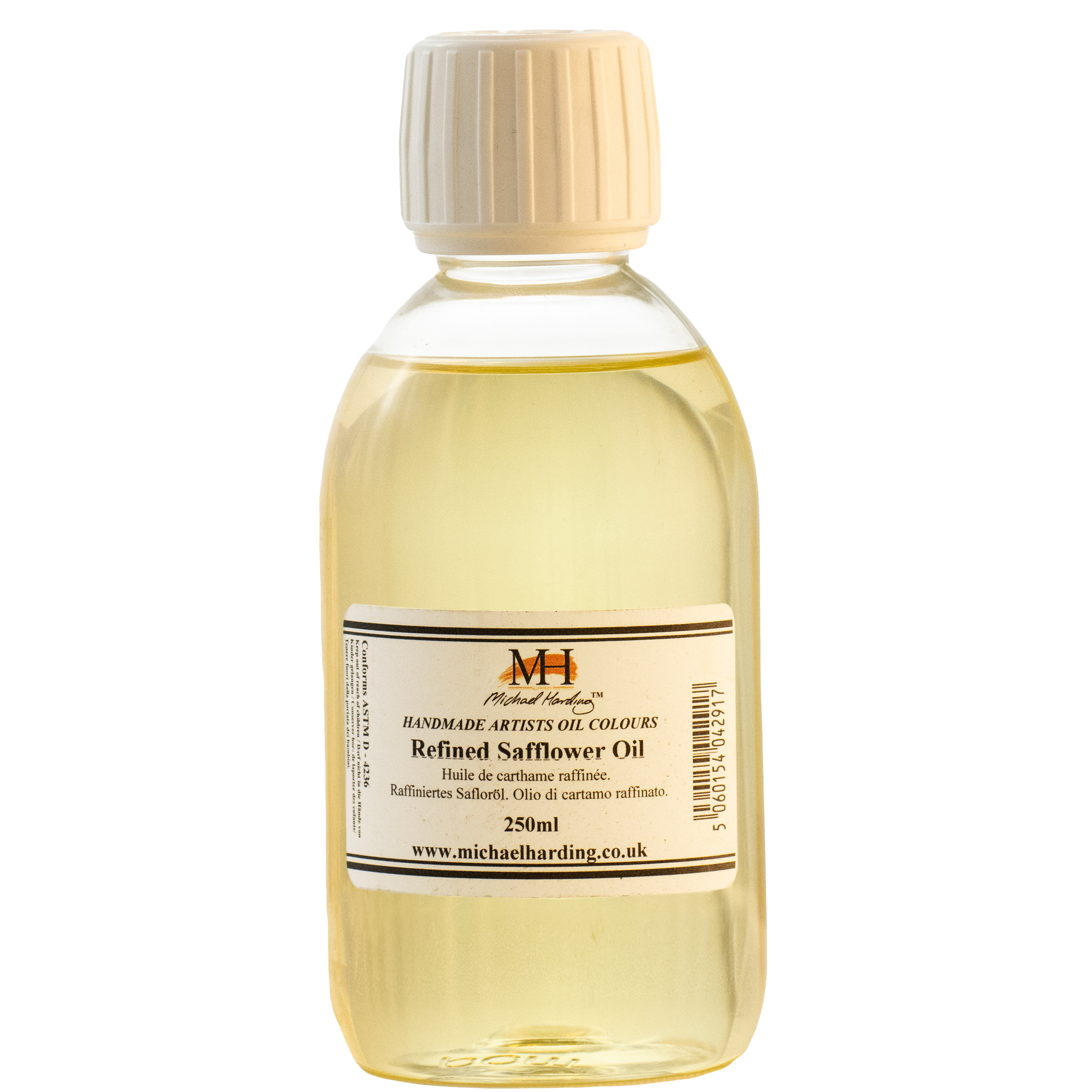
Ⓥ VEGAN
Refined Safflower Oil is bright, clean, and one of the highest in colour for oil, a favourite for my Titanium White No. 1.
Safflower oil is a pale, slow-drying oil that can be used to brighten and thin oil paints.
As it is a paler yellow than linseed oil, paler pigments (whites and pale blues especially) maintain their brightness when mixed with safflower oil.
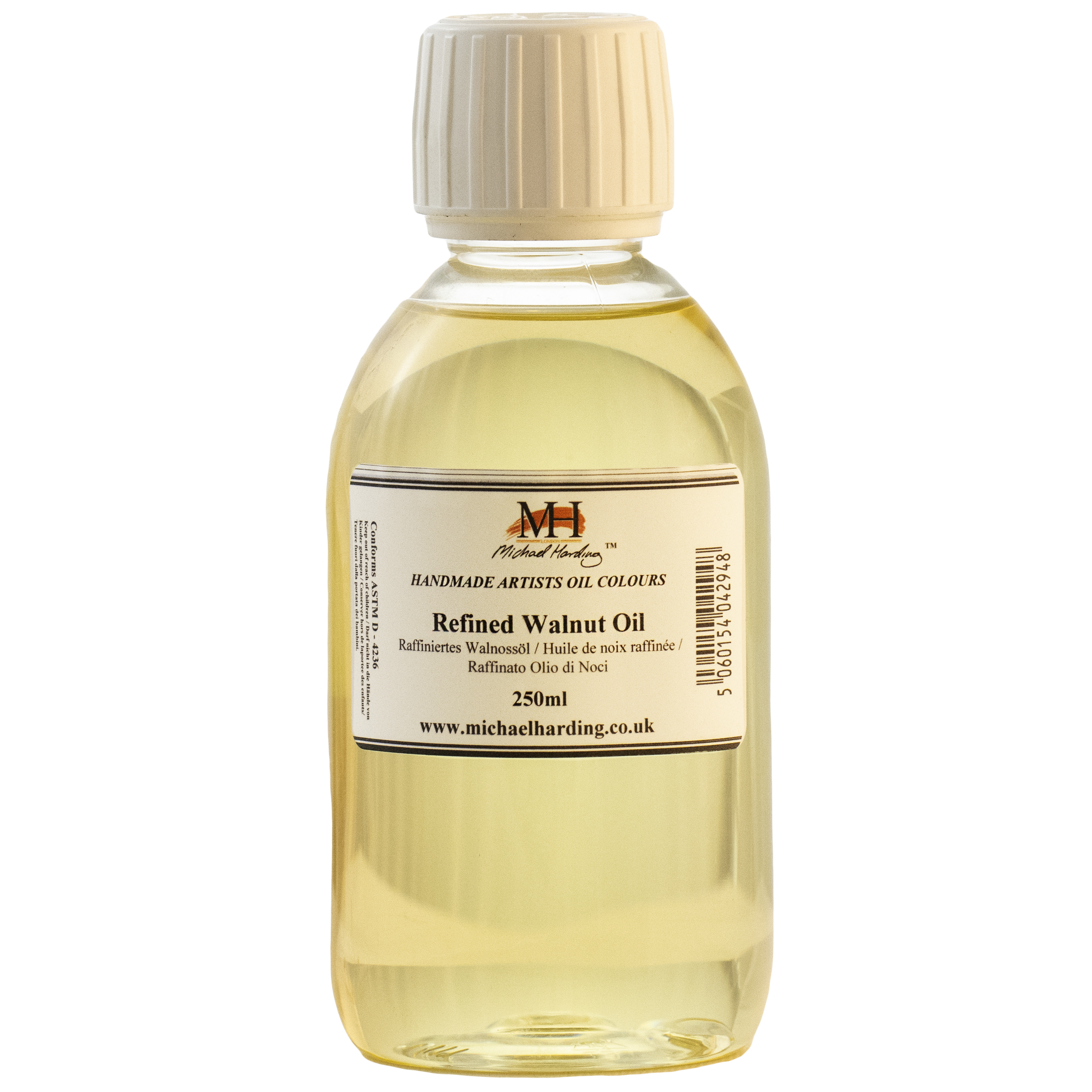
Refined Walnut Oil is a pale oil medium that dries at a similar rate to linseed oil but yellows less. It forms a clean, bright paint film and is often used as a binder in high-quality white paints.
Guide to Use: Shake well before use. Add small amounts to oil paint to improve flow and maintain brightness, especially in whites. Use as a binder or medium for smoother handling and a cleaner, less yellowing finish in paint layers.
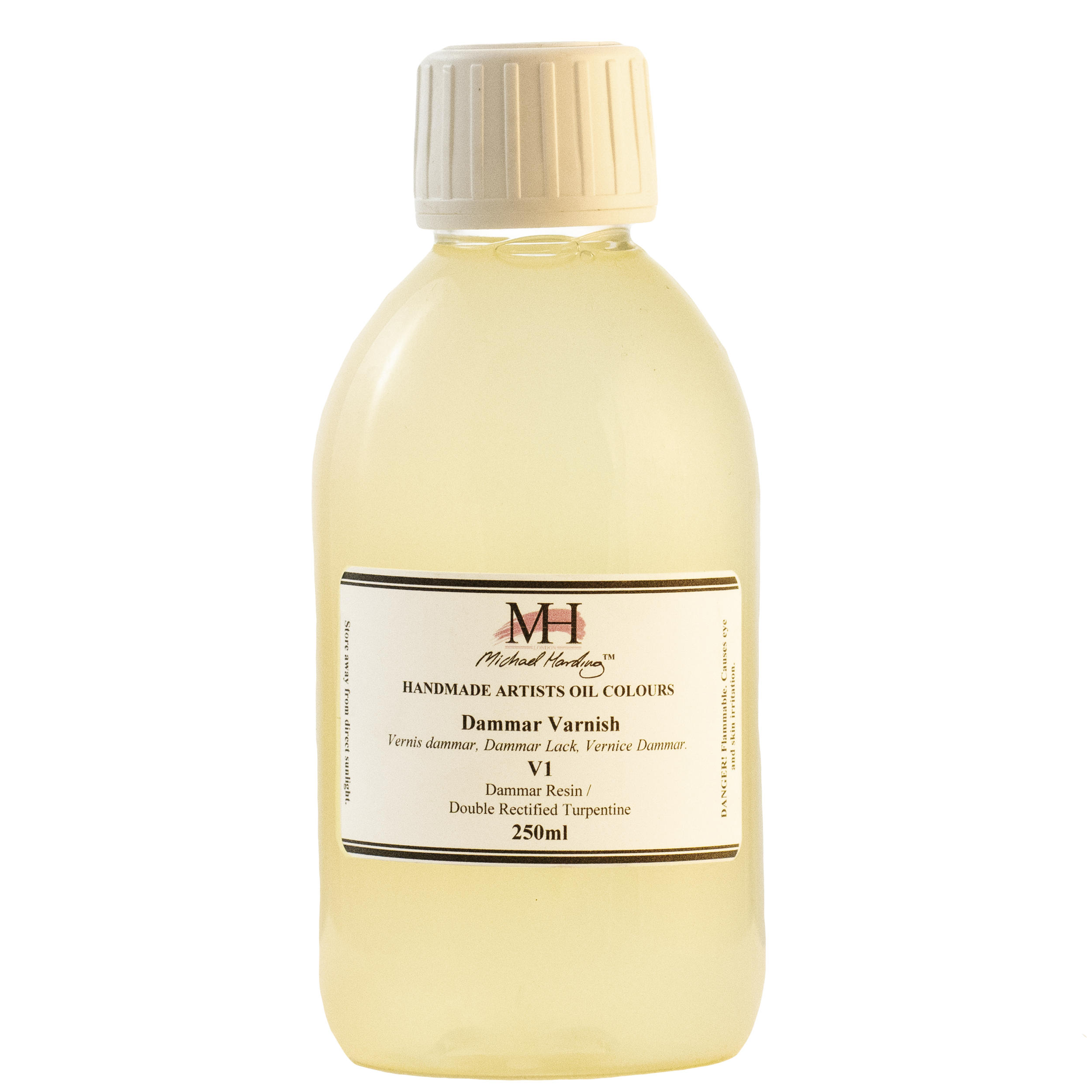
This versatile varnish creates a subtle gloss finish. Our Dammar Varnish is made from the best quality dammar resin from Thailand that is dissolved in double-rectified Portuguese maritime turpentine and carefully filtered. Use it to bring out the best in opaque and semi-opaque colours.
Miracle Medium™
Over four decades of listening to artists, formulating by hand, and remaining uncompromising in quality has led to the creation of the Miracle Medium Range.

Ⓥ VEGAN – PLANT BASED – SOLVENT FREE.
MM0 Miracle Medium is a solvent-free, odourless, vegan, and plant-based Medium that serves as an alternative to traditional turpentine. This medium offers artists a natural and sustainable option for thinning oil paints, cleaning brushes, and glazing (see our MM2 Quick Dry Dammar Varnish Miracle Medium) without the use of harsh chemicals or toxic fumes. CAN EXTEND DRYING TIME. ADD 5-10% TO OIL COLOUR AS NEEDED.
Oil paint artists use MM0 Miracle Medium in several ways:
Artists may dip their brush in MM0 Miracle Medium before applying it to the paint to achieve the desired consistency.
Clean brushes: MM0 Miracle Medium can be used to clean oil paint brushes. After painting, artists may rinse their brushes in MM0 Miracle Medium to remove excess paint and then wash the brushes with soap and water
Ingredients:
Miracle Medium.
Available in 100ml, 250ml, and 1 Litre sizes.
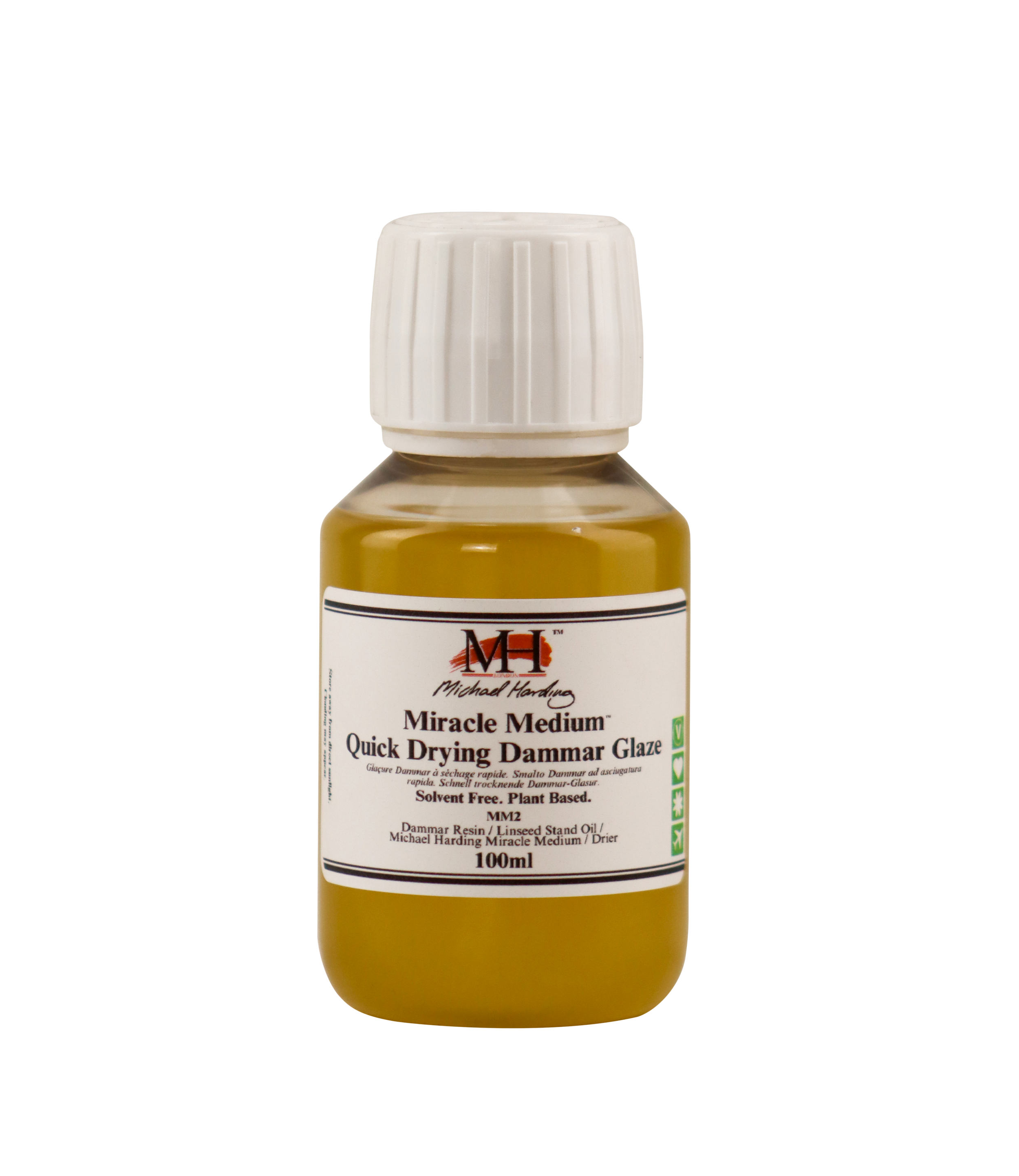
MM2 Miracle Medium ™ Quick Dry Dammar Glaze is based on a traditional glaze medium that adds depth and gloss to transparent oil colours. Contains a cobalt-free drier for safer use and offers a modern alternative to Dammar glaze mediums.
Miracle Medium ™ Quick-dry Dammar Glaze is a Michael Harding medium.
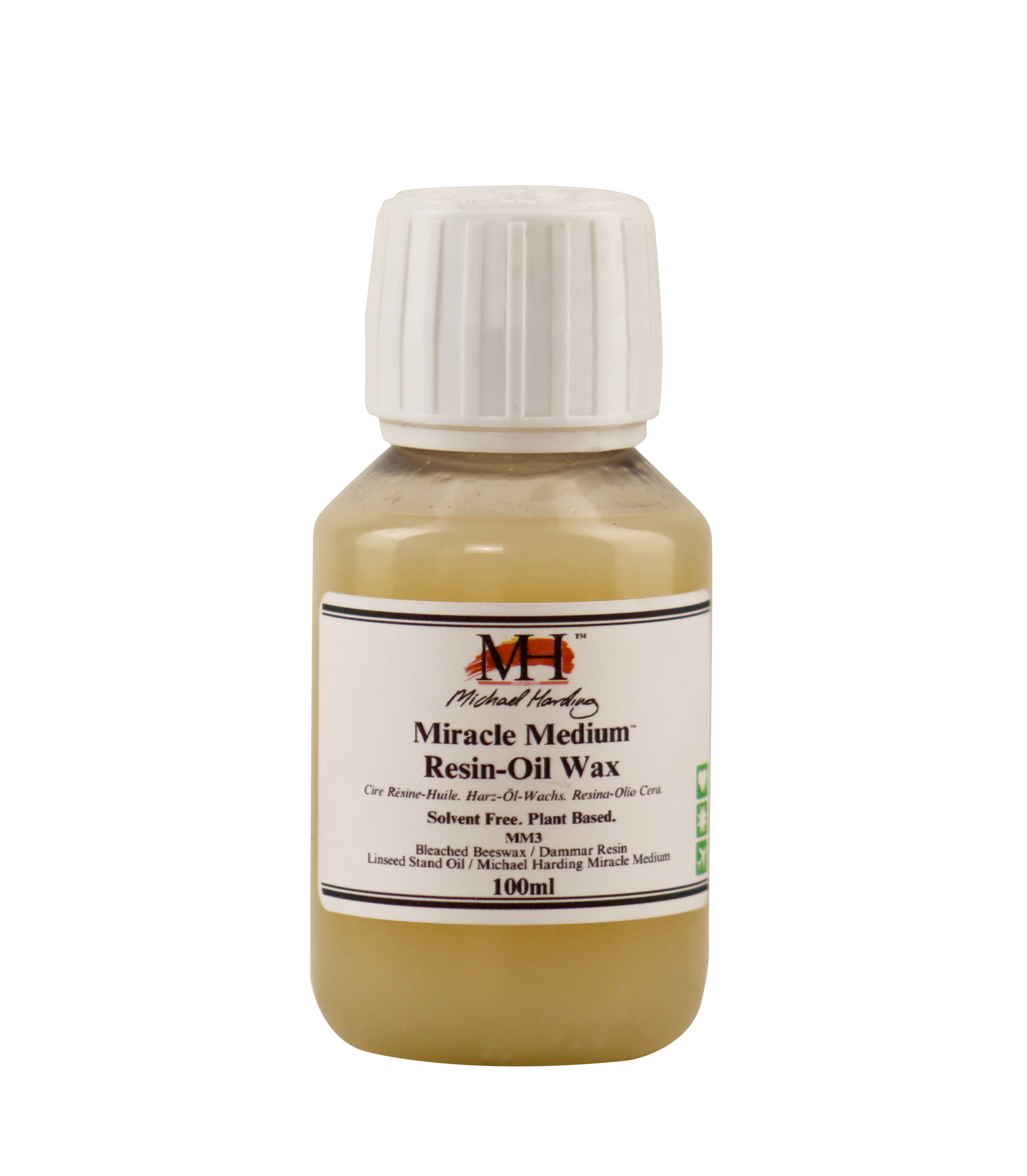
MM3 Miracle Medium ™ Resin-Oil Wax is a soft resin oil wax medium made from bleached beeswax, dammar resin, stand oil and Miracle Medium™, creating a satin sheen and gentle impasto while enhancing texture and body of oil paints.
Miracle Medium ™ Resin Oil Wax is a Michael Harding medium.
Guide to Use: Shake well before use. Add 5-10% to oil paint to adjust texture and body, creating soft impasto and satin finishes. If settled, warm jar in hot water and stir until smooth before mixing into paint.
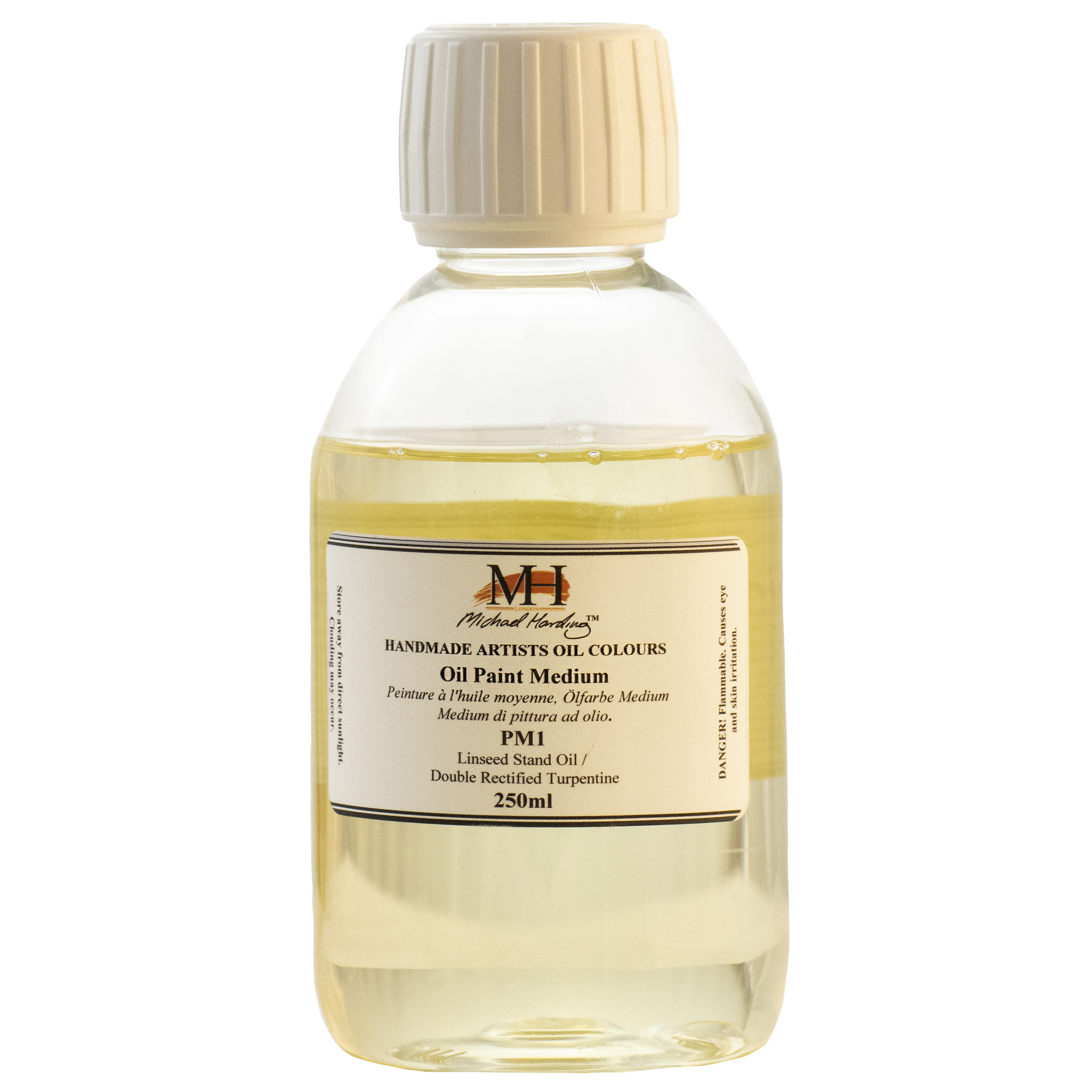
MM1 Miracle Medium ™ Oil Paint Medium is a solvent-free oil painting medium made with stand oil and Miracle Medium™, designed to improve flow, gloss, transparency and depth of colour, enhancing pigment richness and overall handling.
How should Miracle Medium ™ Oil Paint Medium be used?
Guide to Use: Shake well before use. Add 5-10% to oil paint to improve flow, blending and transparency. Use to adjust consistency and texture, enabling smoother handling, richer finishes and a range of surface effects in painting.
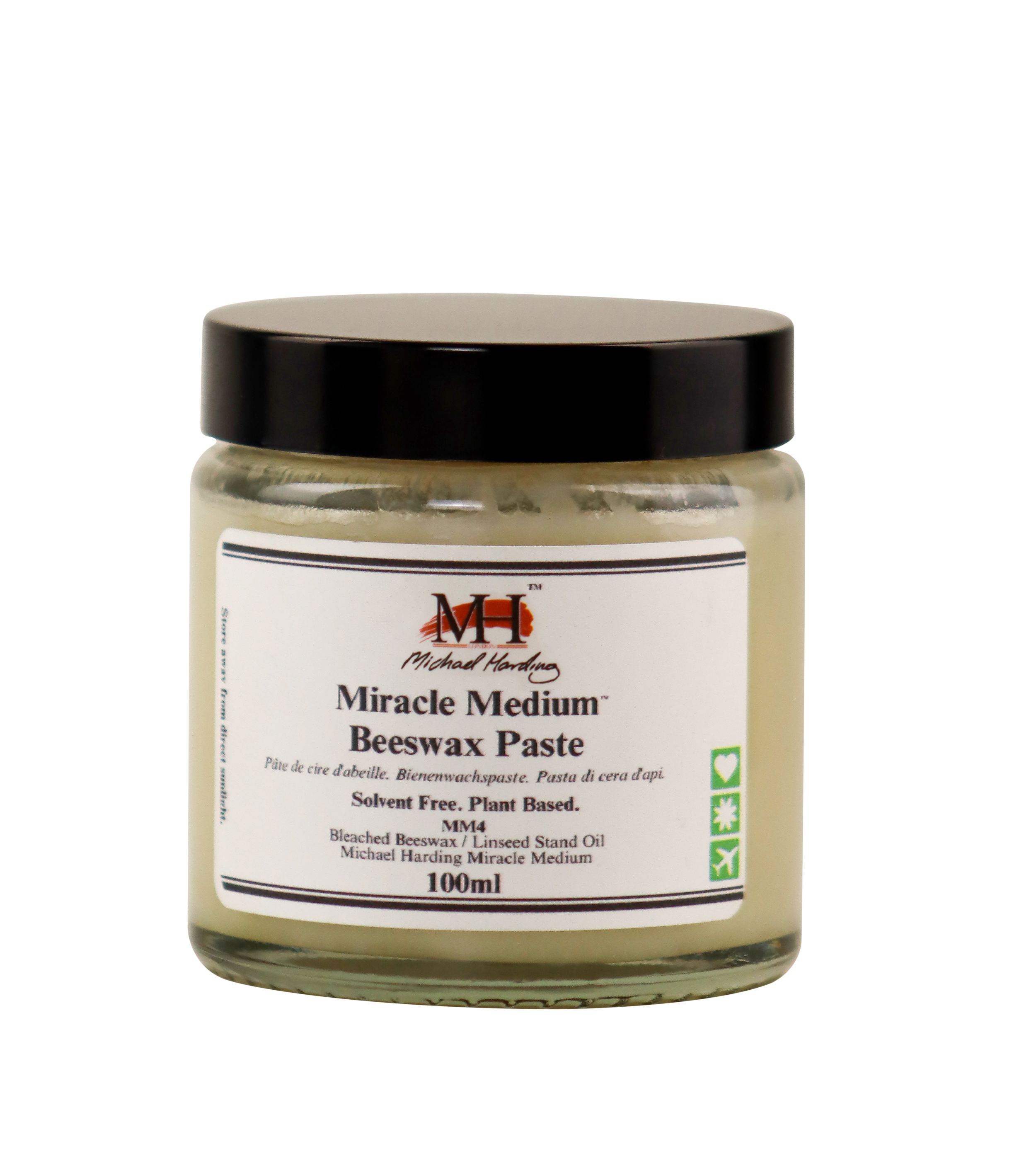
MM4 Miracle Medium ™ Beeswax Paste is a high oil-content beeswax paste made with stand oil and Miracle Medium™, designed to increase body and create a satin-matt finish, especially effective with opaque oil colours and textured effects.
Miracle Medium ™ Beeswax Paste is a Michael Harding medium.
Artist Oil Paint Sets
Michael Harding's paint sets offer the perfect foundation for the colourful world of Michael Harding. The sets provide a rich and fulfilling painting experience.
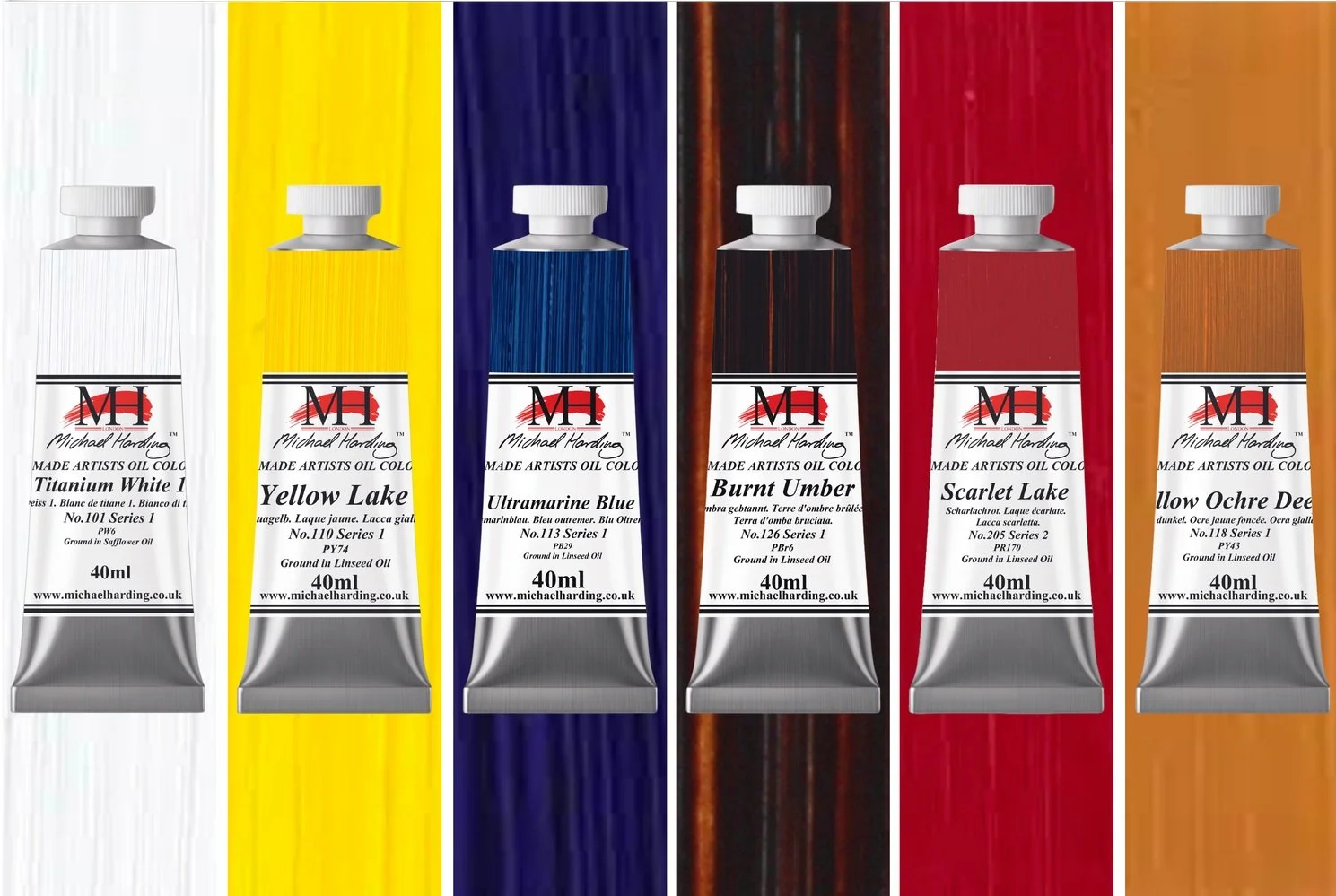
Artists unfamiliar with Michael Harding paints should begin with the MH introductory set. Use this set to mix many colours in Michael’s range. Play, experiment, and enjoy true oil paints.
The Introductory set contains; Titanium White No.1, Yellow Lake, Ultramarine Blue, Burnt Umber, Scarlet Lake and Yellow Ochre Deep.
The fourth and final release of our 40th-anniversary celebration, inspired by the shifting hues of the Welsh mountain range. This set of ten new colours introduces expressive modern pigments - including Bismuth Vanadate, Amber, Pyrrole Crimson, Corinthian Purple, Cobalt Blue Deep and Cosmic Blue.
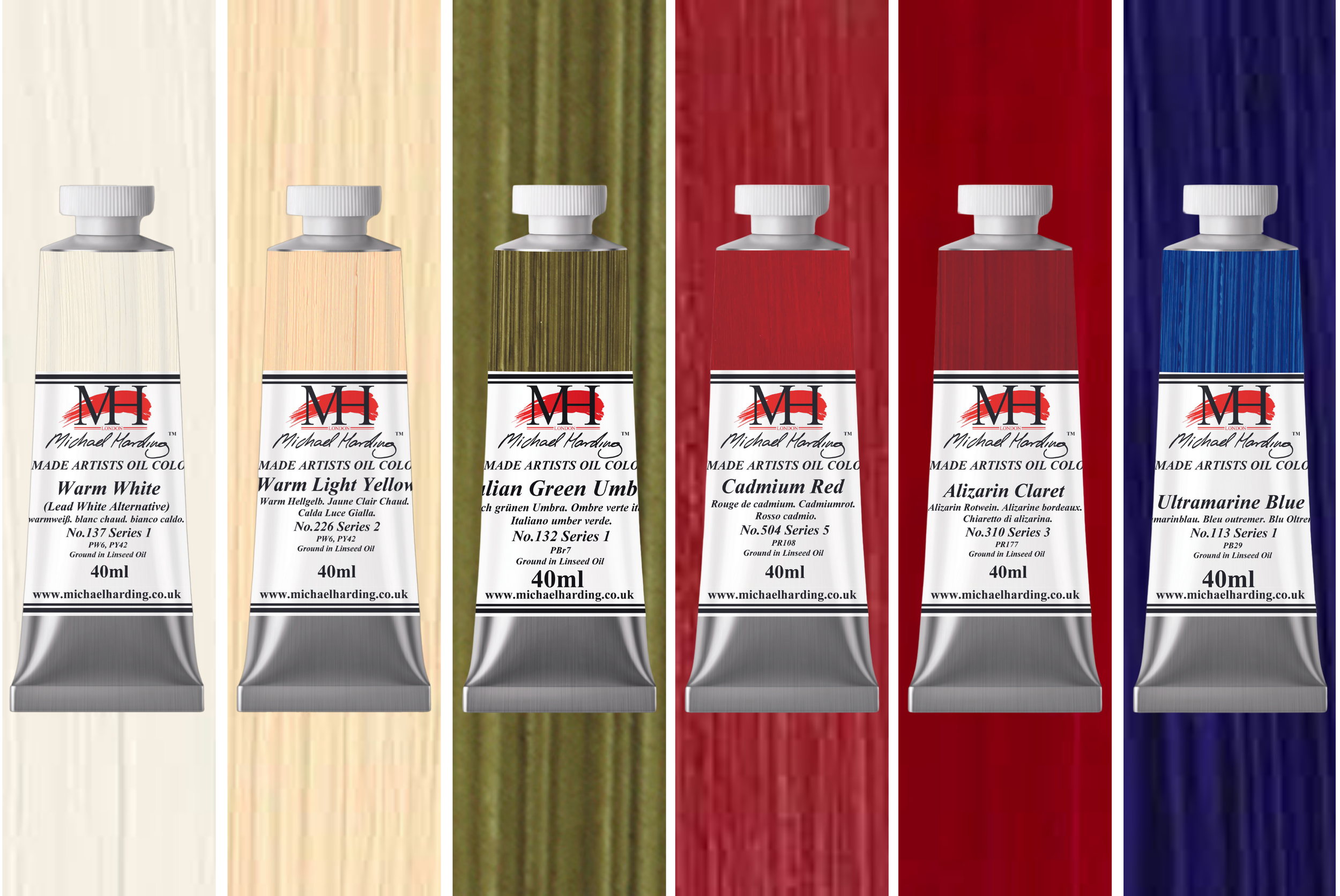
Paint like an Old Master, affordably. The Modern Master set contains oil paints that look like the Old Master paints but are reasonably priced. For countries where lead is banned, I’ve formulated Warm White with you in mind. Now you have an oil paint that looks like lead but isn’t hazardous.
The Modern Master set contains, Warm White, Warm Light Yellow, Italian Green Umber, Cadmium Red, Alizarin Clare and Ultramarine Blue.
The Tunbridge Wells selection, the first of four new sets, offers a vibrant array of colors, including Neutral Grey (N7), Turners Yellow, Brilliant Orange, Rose Dore, Wisteria, Lavender, Vivid Blue, Phthalo Blue Red Shade, Cadmium Green, and Moss Green. This set marks the beginning of our 40th-anniversary celebration, with three more sets to follow, each named to reflect Michael Harding’s journey.
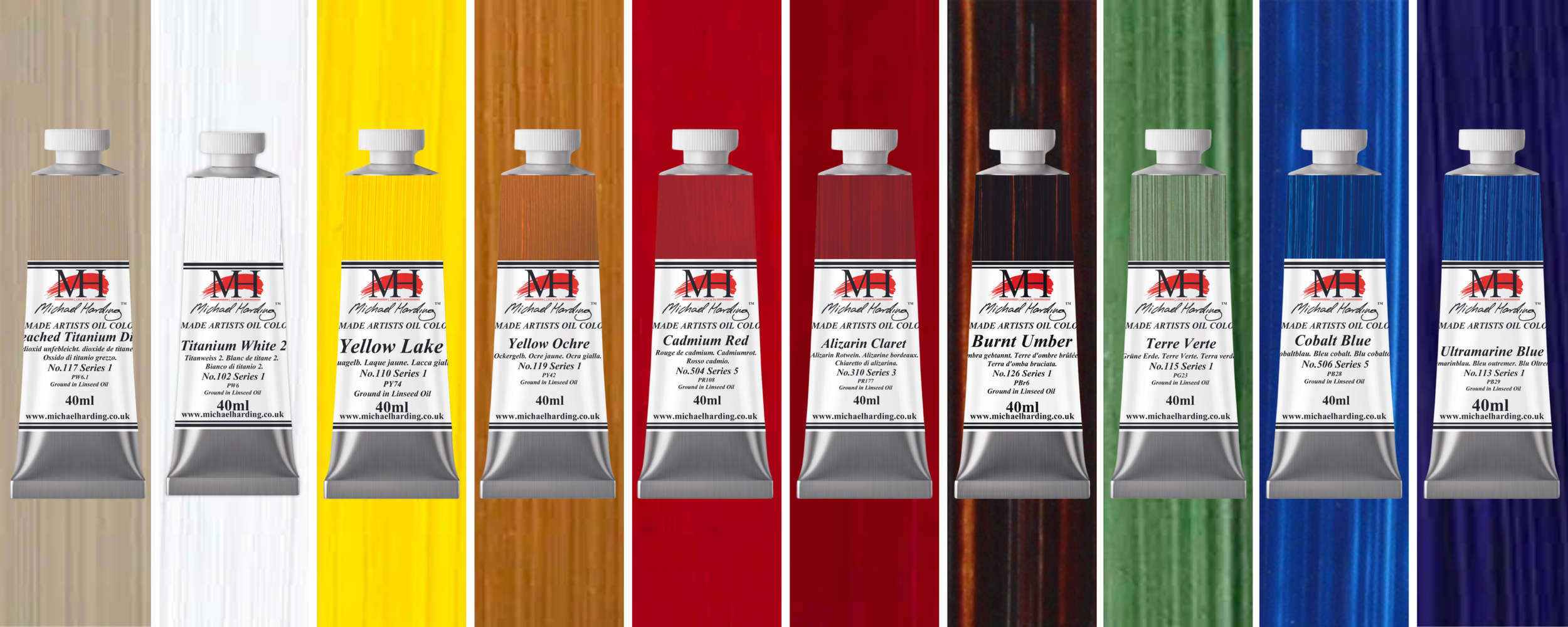
Want to capture the essence of what you see while painting Plein Air? Then use this versatile set, which has a unique combination of colours that will help you capture the natural beauty of landscapes, flesh tones, and everything in between. Affordably priced, this set gives the Plein Air artist tremendous mixability and flexibility.
The Plein Air Painter set contains:
Titanium White No.2
Yellow Lake
Cadmium Red
Alizarin Claret
Ultramarine Blue
Cobalt Blue
Terre Verte
Burnt Umber
Yellow Ochre
Unbleached Titanium Dioxide
The Michael Harding Oil Paint range contains the finest of the finest pigments, ground in refined cold-pressed linseed oil. Luminous, brilliant colours at very high tint strengths, they are totally free of fillers, extenders, or driers, with a texture that's silky rather than oily. Colours included; Neutral Tint, Ultramarine Pink, Orange Benzimidazolone, Yellow Benzimidazolone, New Gamboge, Aqua Green, Opera Rose, Blue Verditer, Quinacridone Coral and Quinacridone Purple.
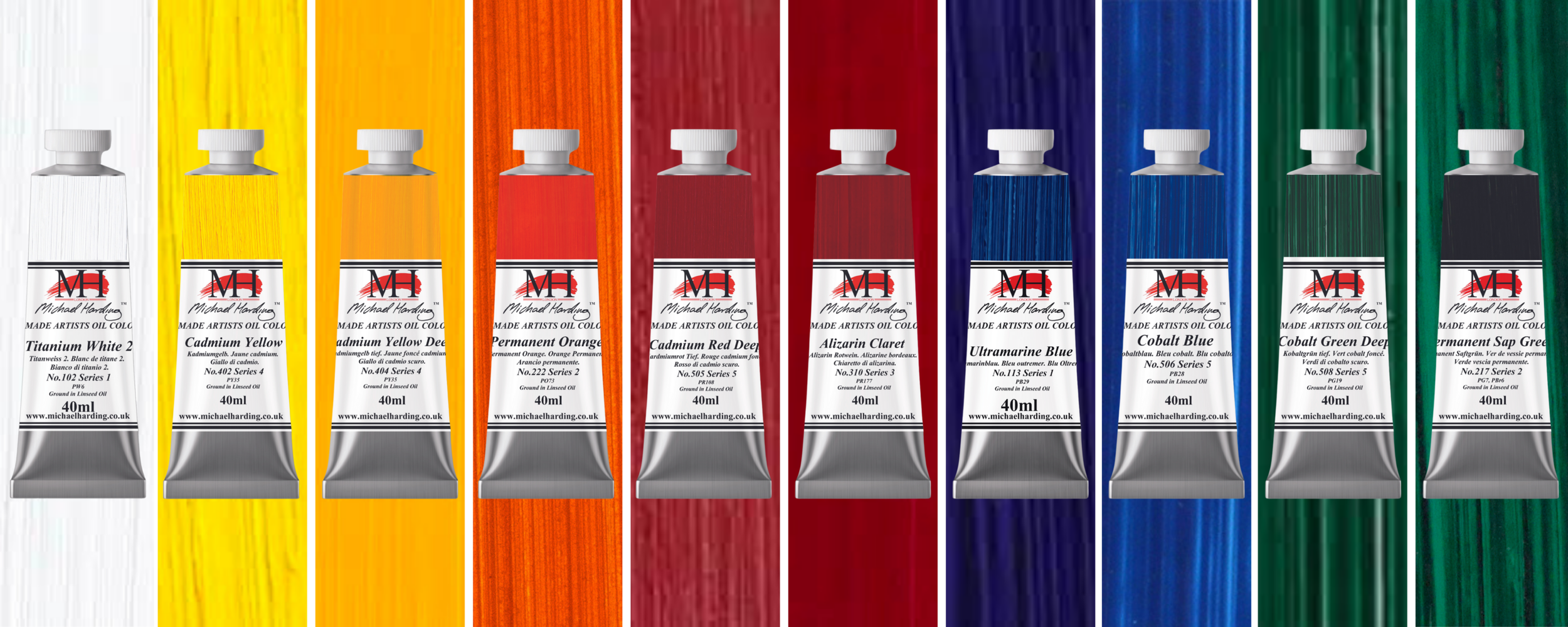
If you love the Plein Air painter set and are ready to dip your brush into cadmiums and cobalts, then the Plein Air Master set is for you! While I formulate colours to mimic cadmiums and cobalts at a reasonable price, there’s nothing like the joy that comes from using genuine pigments.
The Plein Air Master set contains:
Titanium White No.2
Cadmium Yellow
Cadmium Yellow Deep
Permanent Orange
Cadmium Red Deep
Alizarin Claret
Ultramarine Blue
Cobalt Blue
Cobalt Green Deep
Permanent Sap Green
The new set from Michael Harding, Whitechapel - Cook's Yard, pays tribute to a formative chapter in Michael’s paint-making journey. From 1999 to 2010, he worked out of a small space at 88 Mile End Road in Whitechapel, East London.
That very address was once home to Captain James Cook. Cook and his family lived at both 88 and 89 Mile End Road, but reportedly detested their time there due to the overpowering smell from a nearby gin distillery — the same building Michael would later use for making paint.
The ten colours in this set reflect not only the physical environment of Whitechapel, but also the experimental spirit of that period in his career. As with every Michael Harding collection, the name reflects more than just the palette — it tells the story behind it.
Previous sets include Tunbridge Wells and Brick Lane. Cook’s Yard continues the series, with Brecon Beacons to follow. Each collection is available either as a complete set or as individual colours.
The colours included are; Belladonna, Citron, Herculane Red, Hookers Green, Madder Brown, Olive Green, Orange Sunset, Permanent Brown, Rose Blush and Warm Yellow.

Ⓥ VEGAN
Inorganic – Cadmium Sulphide is a ‘tangy’, bright, high-tint power yellow. It’s an inorganic pigment that lightens and increases the opacity of warm mixes without overthrowing them. The Cadmium range of pigments was introduced into production between 1840 and 1890, as costs permitted, and it has proved the most artistically reliable of all the metal compounds discovered in the 19th-century.

Ⓥ VEGAN
Inorganic – Lead Tin Yellow Lemon is a vivid, sulphury yellow. Like its lighter version, it’s indispensable to artists mixing flesh tones, which can be achieved with the unlikely choice of brilliant pink and rendering the challenge much easier.
Ⓥ VEGAN A soft, yet vibrant and zesty addition to the range of yellows. Bismuth Vanadate possesses a brightness and freshness that brings remarkable energy to mixtures, while retaining the opacity and permanence demanded by professional painters.
Ⓥ VEGAN Warm, yolky, transparent, essential and powerful. Hansa Yellow Medium possesses the clarity and strength that every painter looks for in a modern yellow. Ideal for vibrant still lifes, luminous landscapes and brilliant mixtures, it quickly earns a permanent place on the palette.

Ⓥ VEGAN
Inorganic – The deepest of the Cadmium range, this red has distinct bluish undertones that produce lovely purplish hues.

Ⓥ VEGAN
Organic – Yellow Lake Deep is a much warmer version of Arylide Yellow, exhibiting beautiful yet subtle bronze-gold undertones in complex mixes. Yellow Lake Deep has the high tint power to influence even the heaviest combinations of earth colour combinations.
Ⓥ VEGAN
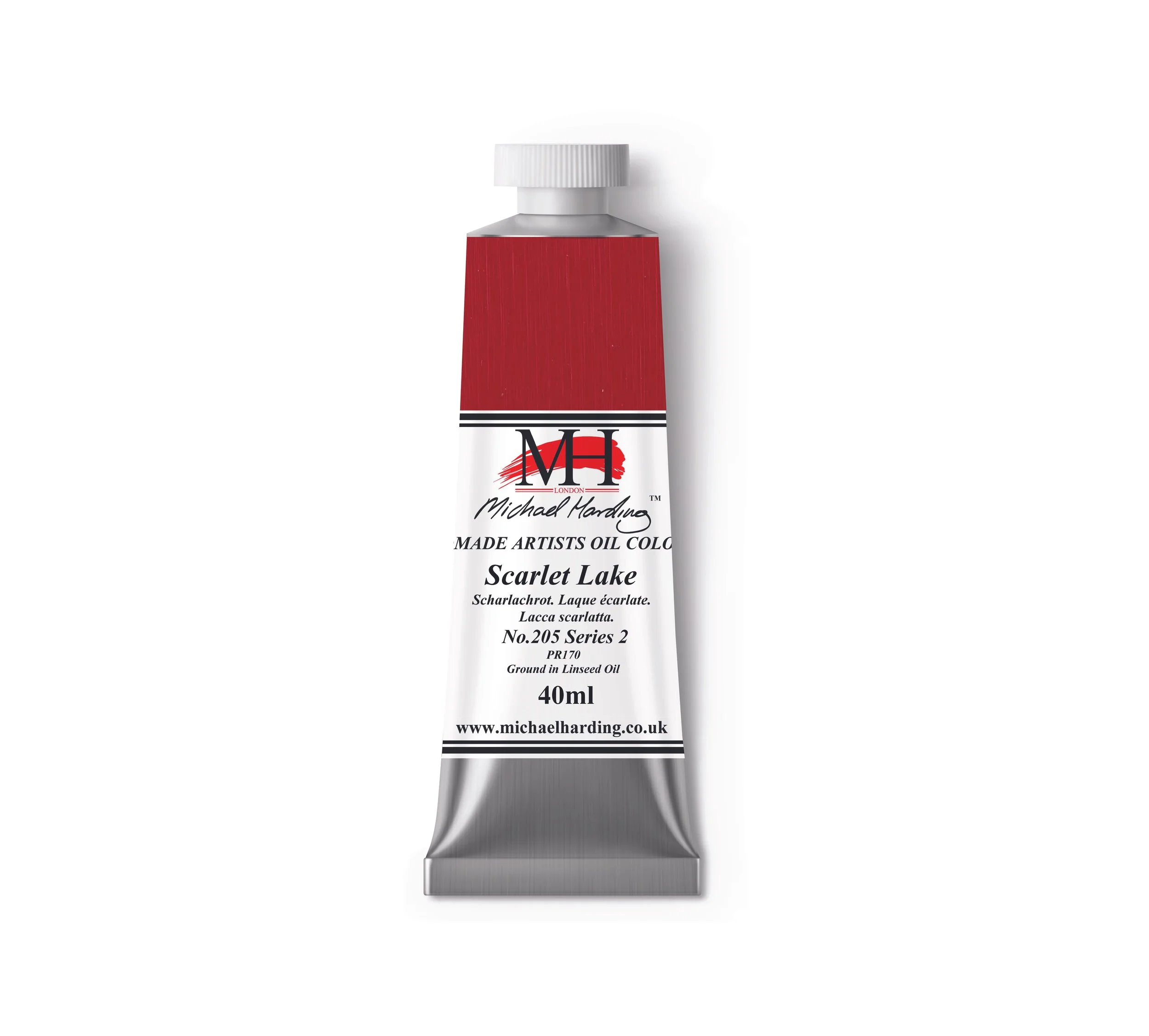
Organic Pigment – Scarlet Lake belongs to the family of Naphthol Red pigments. This Lake is organic, warm, and possesses high tinting power.
Ⓥ VEGAN
Brilliant Orange (No. 246) is a bold colour, radiating warmth and vitality. Its semi-opaque quality adds depth, while excellent lightfastness ensures long-lasting vibrancy. With an average drying speed and smooth consistency bound with linseed oil, it’s perfect for creating dynamic compositions that capture the intensity of a fiery sunset or the vibrant hues of autumn foliage.

Ⓥ VEGAN
Organic – Napthol Red is a well-established, organic pigment that can be used transparently or opaquely, according to choice. In an unmixed state, it is a pure and slightly fiery red with high tint power and a range of yellowy-orange undertones. These undertones become noticeable when brushed and produce much brighter and warmer pinks than are attainable with the Cadmium Reds. When mixed with white, Napthol Red will appear almost fluorescent.
Ⓥ VEGAN
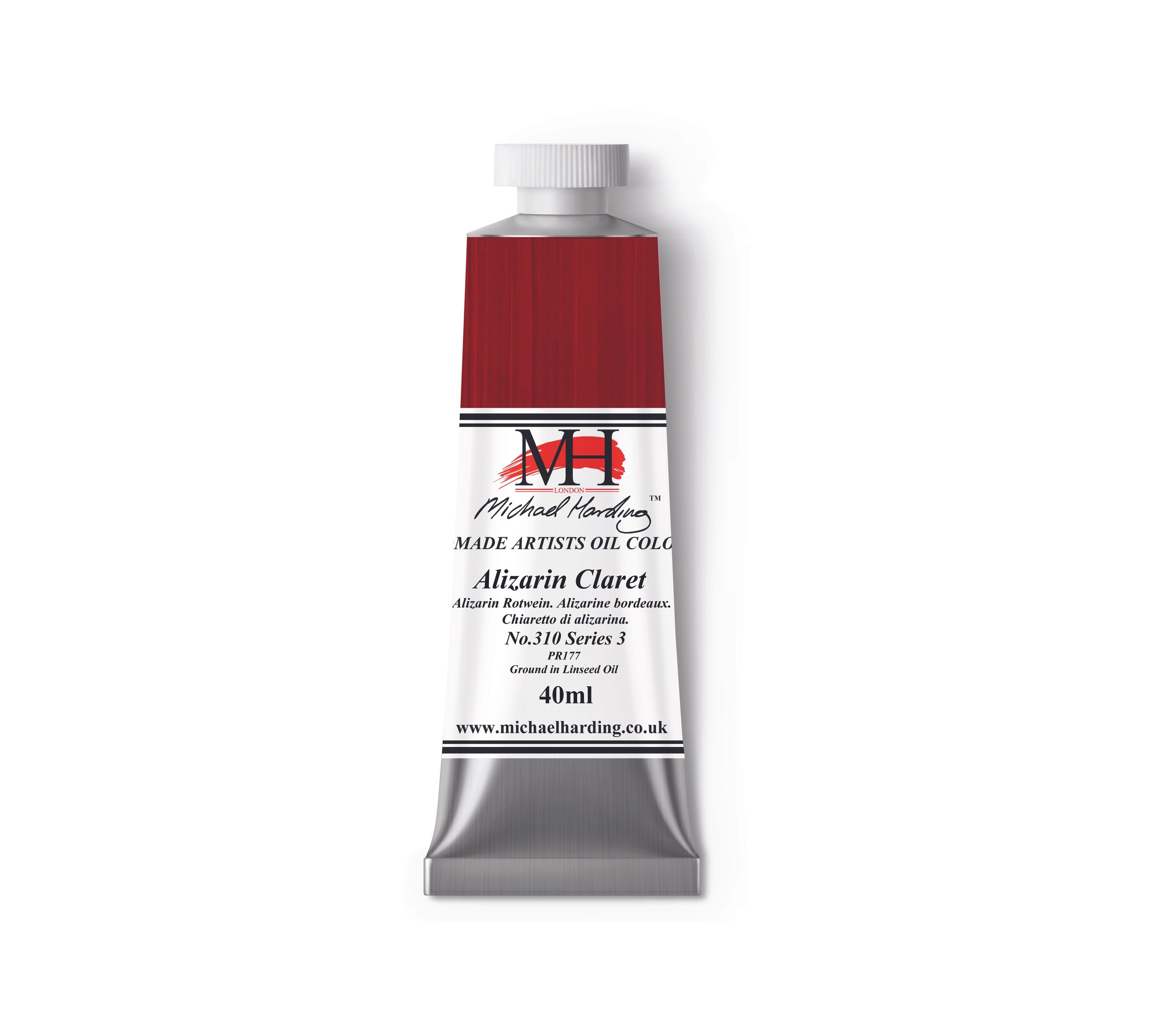
Organic – Alizarin Claret has a slightly lighter mass tone than that of Alizarin Crimson, and yet it has greater resistance to UV light than Alizarin Crimson. I specifically formulated this beautiful, full-bodied colour for those artists who are reluctant to use Alizarin Crimson. With its versatility and beautry, Alizarin Claret is perfect for portraitures, landscapes, and non-figurative works, and it’s a delight for mixing with other transparent colours.
Ⓥ VEGAN A sharp bluey red, ideal for those tricky hues that can sometimes be difficult to achieve. Pyrrole Crimson offers a real special angle on the palette, bringing clarity, brilliance and intensity to mixtures. Particularly effective for dramatic skies and those crazy sunsets.
A bold, glowing orange made from PO34 (Disazo Pyrazolone), an organic pigment known for its warmth and vibrancy. With high oil content and strong tinting power, Orange Sunset offers a semi-opaque finish and medium drying time. While its lightfastness is slightly lower than average, it excels in sunsets, highlights, and dynamic accents.

Ⓥ VEGAN
Organic –Rose Madder is an incredibly beautiful gift from nature. It is a traditional Lake pigment, extracted from the common madder plant Rubia Tinctorum. As early as 1500 BC, this plant was grown in Asia and Egypt for the purpose of dying. The Egyptians are credited with developing several techniques to produce Lake pigments, the best of which came from plants 18 to 28 months old that had been grown in soil rich with lime and chalk. During the 17th century, red coats made for the British army were dyed with a shade of madder! Before you call me mad for putting such a terribly fugitive colour in the range, let me say in my defence that it’s included for its historic beauty and to help artists get closer to the pallets of earlier times. Unless you display it in direct sunshine, it will last for years with little change. When was the last time you saw a Rembrandt tested in sunlight, which is the criteria for modern pigments? A favoured colour of the Old Masters.

Ⓥ VEGAN
Inorganic and Organic Pigments –Adored by the landscape painter, Pale Violet adds vibrancy to any sky. Those confusing, hard to express violet shadows we all see in clouds are now easily achievable with this colour. Pale Violet is a wonderful addition to our range of colours. It’s made from three stable, reliable, and lightfast pigments. Although these pigments are available in pure pigment form in Michael’s range, artists always tell me they can’t achieve quite the same vibrancy when mixing in their studios. Pale Violet also allows the portrait artist to achieve interesting shadow combinations—for example, as a complimentary colour to create vibrancy in greys. Pale Violet has an obvious place in still lifes and interiors. Modern artists will love it as well. Enjoy!

Ⓥ VEGAN
Inorganic – This Iron Oxide has been used as a wood dye, and its capacity to enrich hardwood grain makes it a wonderful candidate for paint making. It has great warmth, with gingery undertones quite different from those seen in the Indian Yellows. Because the pigment particles are small, it could almost be mistaken for a Lake. It has huge tint power that pulls whites and other yellows into a golden, rich, Titianesque zone of warm, low tones. Try it with Aureolin and the Earths.
Ⓥ VEGAN
Vivid Blue (No. 240), as its name suggests, commands attention with its intense brilliance and boldness. Offering excellent lightfastness and a smooth consistency, No. 240 is perfect for creating dynamic compositions inspired by the sky or ocean.

Ⓥ VEGAN
Inorganic & Organic mix –Another blend to supplement the sea-green range, this is a powerful mixer, which landscapists often find indispensable. The addition of Titanium White and Phthalocyanine green and blue hue gives it strong covering power, which shows through over large areas of application.
A rich, earthy red made from 100% natural red clay soil composed of minerals and iron oxides. Formulated with PR101 (Synthetic Red Iron Oxide), Herculane Red offers excellent lightfastness and a semi-opaque finish. This fast-drying, non-toxic inorganic pigment is known for its stability, warmth, and suitability for underpainting or tonal foundations. Low in oil content with average tinting strength, it’s a dependable classic for serious painters.

Ⓥ VEGAN
Inorganic – This is a fantastic colour with an incredibly small pigment particle size that gives it great, clean transparency, ideal for glazing. Transparent Oxide Brown is one of my favourite colours for all-around use in my paintings.

Ⓥ VEGAN
Inorganic – No. 117 is manufactured using a chemical process different from the standard rutile titanium dioxide, giving it a subtle linen or lime wash, pinky-brown shade. This paint is an ideal ground or underpainting colour, with good texture and a lean surface. Its real power comes from its ability to mix into any colour, providing a “suede” effect that lends well to pastels and rich textures. Many years ago, a well-known English artist asked me to make him special batches of this colour. When his fellow artists saw it, it became part of our regular range and has proven hugely popular

Ⓥ VEGAN
Inorganic – Indian Red is a deeper and cooler blue-red shade of synthetic Iron Oxide. Its colourific density creates hues with conspicuously purplish undertones, which some painters value for rendering flesh tones in interior light.

Inorganic – Payne’s Grey is a blend of Ivory Black, Ultramarine, and Iron Oxide Yellow that produces a markedly cool black substitute. The blue undertones are similar to but much milder than those of Prussian Blue. Some painters prefer this blend for its restrained tint power and use it in cool reflex tones in flesh painting.
Ⓥ VEGAN
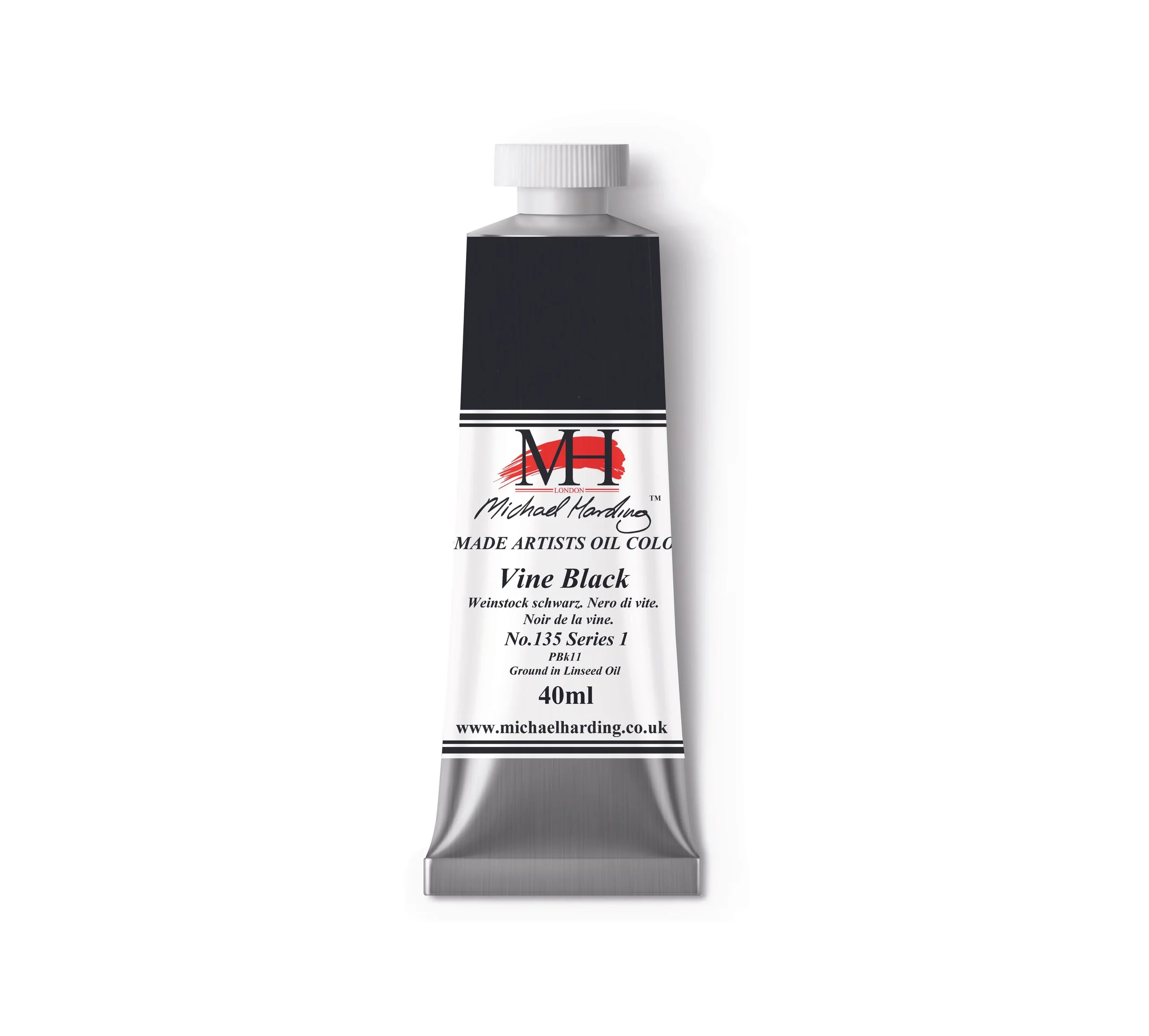
Inorganic, Natural Earth –Vine Black is another useful alternative to the existing blacks, with a cool, almost slightly yellow undertone when thinned.

Ⓥ VEGAN
Organic – Yellow Lake is one of the oldest established organic lakes, Arylide Yellow. This is a warmer version of Bright Yellow Lake, with similar properties. Deceptively transparent but with strong tint power, it runs through mixes with a milder and more golden range of undertones.

Ⓥ VEGAN
Organic – Permanent Orange is a powerful, organic, fruity red-orange that is a tremendous addition to the range as a mid-hue orange.

Ⓥ VEGAN
Inorganic – A powerful orange shade red with the usual cadmium characteristics, Cadmium Red Light has high tint power and opacity. This red presents warm, almost fiery hues when mixed with a more transparent white.
Ⓥ VEGAN
Rose Dore (No. 319) is a robust yet subtle colour, blending pigments PY151 and PV19 to evoke the soft, romantic tones of a golden rose. With excellent lightfastness and a semi-transparent quality, it adds depth to every composition. Featuring a slow drying speed and bound with linseed oil, No. 319 empowers the artist’s detailing and layering.

Ⓥ VEGAN
Inorganic & Organic – No. 204 is Indian Yellow with the addition of an Iron Oxide pigment. The Iron Oxide gives a rich, beautiful, gingery red shade to the blend, as well as greatly accelerating the curing speed, making this paint an excellent curing agent when it’s mixed with others. Indian Yellow Red Shade is fabulous when mixed with Magenta, Ultramarine Blue, and other vivid colours.
Crafted with PY175 (Benzimidazolone Yellow), Citron is a cool, green-toned bright yellow offering excellent lightfastness and high tinting strength. This transparent, slow-drying organic pigment has average oil content and is perfect for layering, botanical highlights, and creating fresh, luminous passages.

Ⓥ VEGAN
Inorganic – Aureolin (Cobalt Yellow) is a transparent, straw, ochre-like yellow with rich, greenish undertones. It was produced in the 1850s as an inorganic replacement for the unreliable organic yellow gum known as Gamboge. In glazes and thinned layers, it displays a Renaissance-like range of muted gold, which over whites can be quite fiery. However, in or over deeper layers, Aureolin exhibits a mustardy, heavy patina. Mixed with PV 23, it can make a most remarkable deep, gingery colour.

Ⓥ VEGAN
Inorganic – This oil paint is a warmer version of Cadmium Yellow Golden, giving a transitional colour more powerful, vivid colour than those obtained by mixing Cadmium Reds and Yellows. Cadmium Yellow Deep is often used to warm the mid-tones and lights of some flesh painting.

Ⓥ VEGAN
Organic – Alizarin Crimson is the oldest synthetic, organic lake introduced in 1868, and the only lake of the coal-tar lake range to have survived in use until the present. Before the end of the 19th-century, other Lakes were found too impermanent, and some Amerian authorities frown on Alizarin because its lightfastness (II-III on the ASTM scale) doesn’t match that of more recent organic red pigments. But its clarity and subtly beautiful bluish undertones are unique; since its introduction, portraitists have prized its range of cool, rather smoky hues, which are well suited for Caucasian tones. If you have concerns about using Alizarin Crimson, try mixing transparent oxide red with magenta for “look-alike” oil paint, or use Alizarin Claret.

Ⓥ VEGAN
Inorganic – My Cadmium Red is a powerful, orange shade red with the usual cadmium characteristics of high tint power and opacity. This red presents warm, almost fiery hues when mixed with a more transparent white.
Ⓥ VEGAN
No. 321 Quinacridone Coral (PR209) Though corals in nature span a broad spectrum, Quinacridone Coral offers a rich, warm pink with a distinct coral hue, more vivid than the peachy tones we often associate with the name. Transparent yet bold, this colour is ideal for adding warmth and depth to florals, portraits, and sunsets. Its unique balance of red and pink gives it remarkable versatility, making it an excellent choice for a wide range of subjects.

Ⓥ VEGAN
Inorganic & Organic Mix – Brilliant Pink is luminous and has an intense presence. The complementary vibrations it sets up with the greens, particularly Emerald Green, have to be seen to be believed. It forms a lean surface, and since the red is supplied by Quinacridone, a permanent organic pigment, the undertones are bluish yet warm, and are disclosed in further hues and mixes.

Ⓥ VEGAN
Inorganic and Organic – Amethyst is a mixture of three well-known colours that come together to create an extraordinary shade of violet, particularly for the exotic artist’s palette or artists who regard themselves as ‘colourists’. This colour has been known to evoke warmth and pleasure. Artists use Amethyst in portraits, landscapes, and non-figurative works. For years, artists have wanted more from their violets, so I’ve developed and offer this potent, vivid, transparent shade!
Ⓥ VEGAN
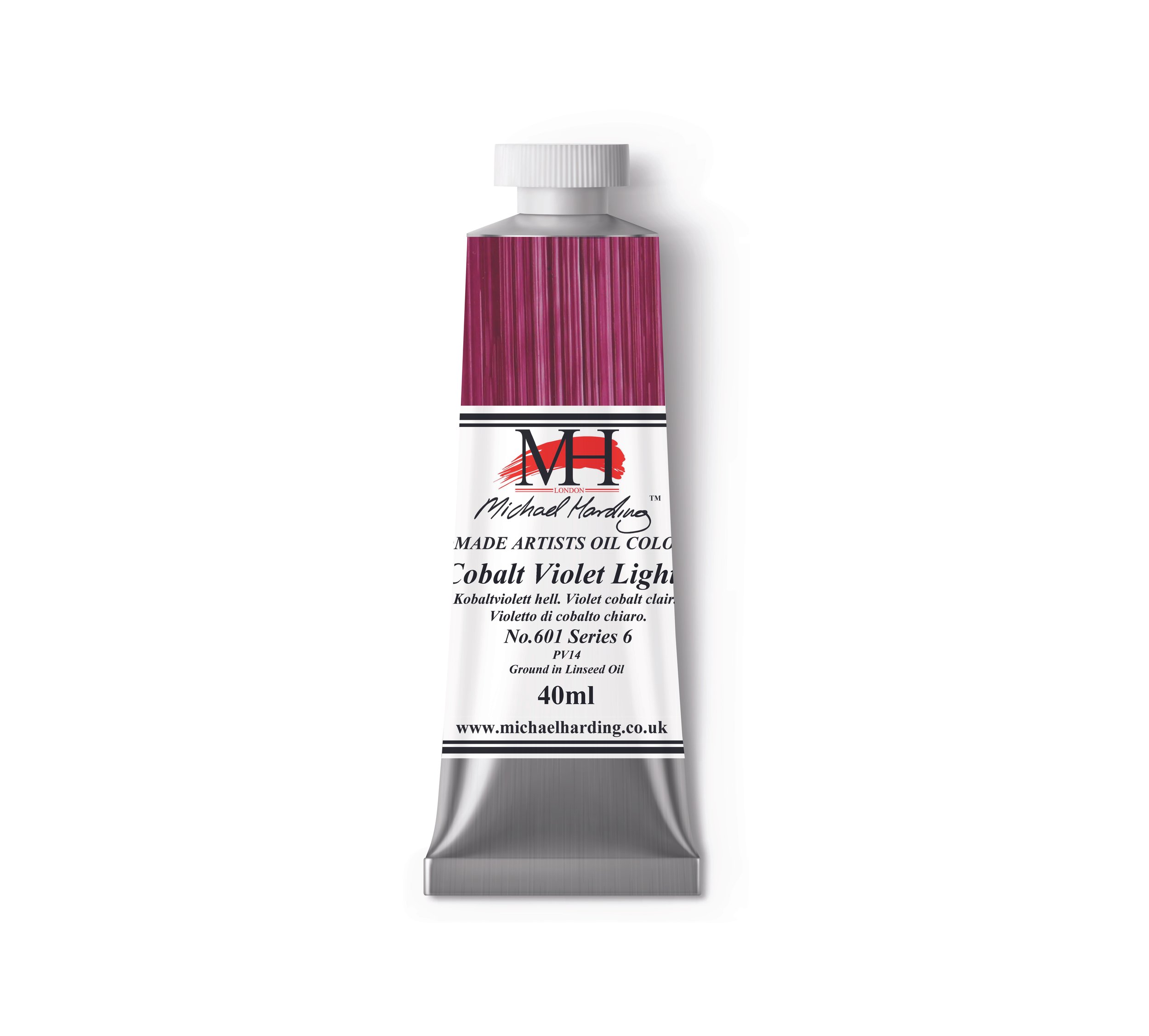
Inorganic – First made from the rare ore of Cobalt Phosphate in the mid-19th century, it’s now a synthetic, inorganic pigment. This lighter shade is closest to the original, natural version. Cobalt Violet Light has a delicate shade of violet that appears opaque in mass-tone but that quickly becomes transparent when applied thinly and glazed over a white ground, creating an intriguing range of bluish pinks. The hues are equally restrained. Always allow Cobalt Violet Light to cure in a good light for the cleanest results.
Ⓥ VEGAN A fantastic coming together of three wonderful pigments; a colour that is really going somewhere. The moment it touches the palette, ideas begin to emerge: evening light, nocturnes, deep shadows and atmosphere. It is one of those colours that immediately sparks the imagination and seems to suggest paintings of its own.

Ⓥ VEGAN
Inorganic – This name was given by English manufacturers to smalt, a cobalt-based pigment that was used in the sixteenth and seventeenth centuries as a less expensive alternative to Lapis Lazuli. Unfortunately, smalt tends to fade into a light grey, as some Veronese skies demonstrate. But the introduction of Ultramarine Blue made the original smalt formula obsolete, and so Michael offers a completely reliable substitute blend that evokes the aerial effects of the great Venetian decorators.

Ⓥ VEGAN
Inorganic – First made from the rare ore of Cobalt Phosphate in the mid-19th century, this is now a synthetic inorganic pigment, of which the lighter shade is closer to the original, natural version. Cobalt Violet Light has a very delicate shade of violet which appears quite opaque in mass-tone which quickly becomes transparent when applied thinly, and when glazed over a white ground, creating a very interesting range of bluish pinks. The hues are equally restrained. Always allow to cure in a good light for the cleanest results.
Ⓥ VEGAN
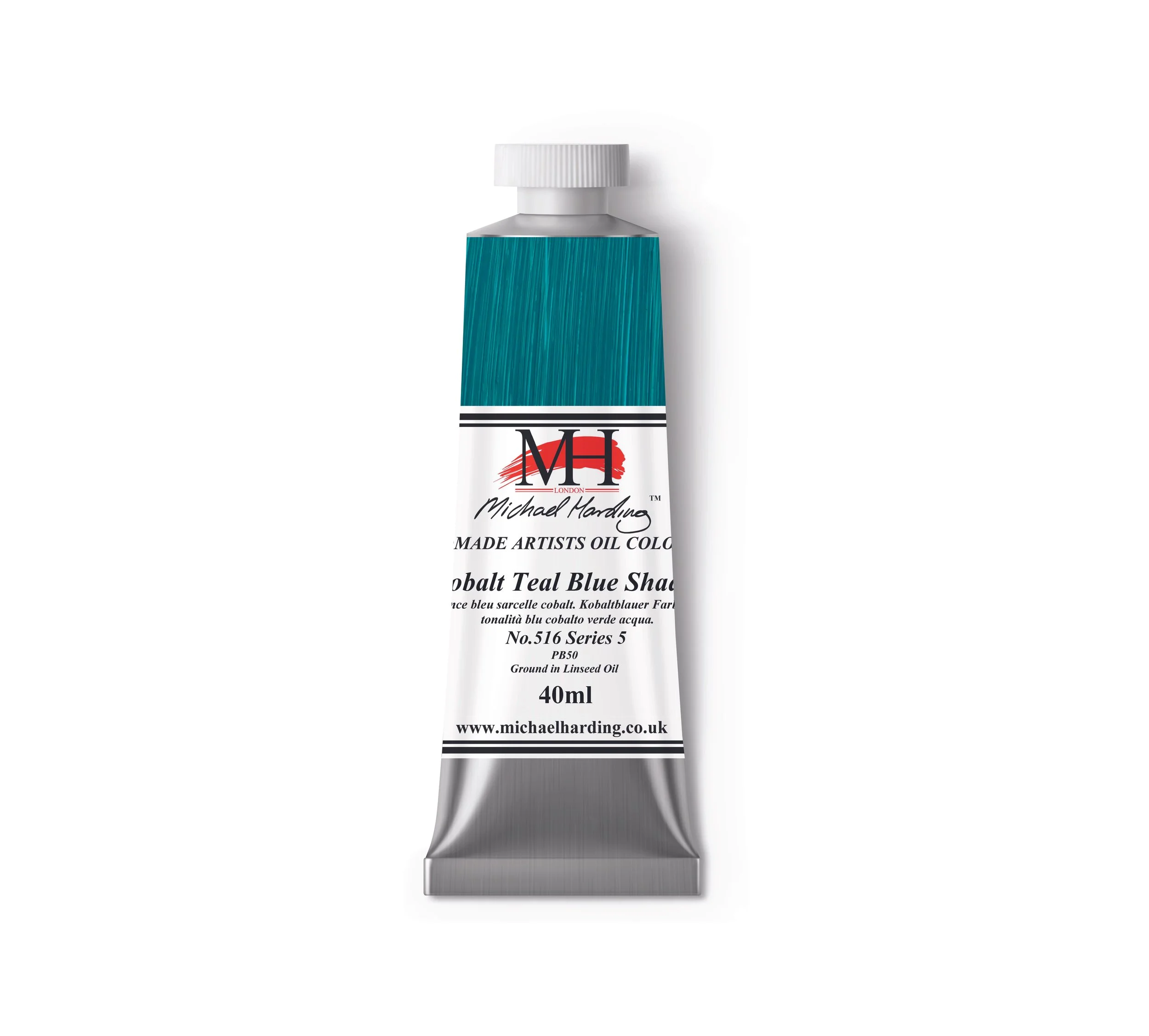
Cobalt Teal Blue Shade – This is a bluer version of my Cobalt Teal. For landscape, portrait, and non-figurative painters, this is a fabulously delicious and vivid colour! Introduced into the range for its incomparable colour, handling, and coverage, No. 516 is a staple for artists who discover the range of colours and values they can create.

Ⓥ VEGAN
Inorganic – Cobalt stannate was introduced in 1870 under the name ‘Cerulean’, i.e. sky-blue, in imitation of a Roman pigment of that name. It’s a subtle, greyish turquoise that discerning painters value for its mild hues for landscapes and seascapes. No. 602 is a gorgeous, unique blue with excellent covering power.

Ⓥ VEGAN
Organic – Copper Phthalocyanine Green probably ties with Phthalo Blue and Deep Purple as the strongest pigment in the range. Atomic Tint Power, add it with great care! Ferocious acidy blue-green hues and blue undertones come to prominence in mixes with yellows. In common with the Blue, it displays, on curing and when used virtually unmixed, a certain tendency to show surface bronzing. The ruination of many a student’s work, use with great caution! Always check in a good light as it can silently destroy a painting till seen in a true light when it is too late! This colour, otherwise known as the embalmer, has been the ruination of many a student’s work as it tends to invisibly leach into all other colours on the palette till one stands back and sees in a good light what has happened, caution!
A sophisticated dark yellowish-green blended from PR101 (Iron Oxide Red), PY74 (Arylide Yellow), and PB15.3 (Phthalo Blue GS). Combining organic and inorganic pigments, Olive Green is fast-drying, semi-transparent, and exhibits excellent lightfastness. With high tinting strength and strong coverage, it’s perfect for landscapes, foliage, and botanical studies.

Ⓥ VEGAN
Inorganic & Organic – No. 216 is a blend of organic Lake colours (Arylide Yellow and Phthalo Green) with two inorganic whites to give a safe and permanent substitute for the original Emerald Green. The original is the notorious Copper Aceto-Arsenite, a brilliant green introduced circa 1810 and long since abandoned as being impermanent, highly reactive with other pigments, and very toxic! This safe, vegan organic is great for any landscape/plein air artist.

Ⓥ VEGAN
Inorganic – Michael Harding’s Warm Light Yellow is the solution to artists’ needs for a white with a tinge of yellow. Perfect for mixing colours and use in portraits, landscapes, and non-figurative works. The consistency is gorgeous, with easy brush strokes. Coverage and opacity are luminous in soft, beautiful light.
Ⓥ VEGAN
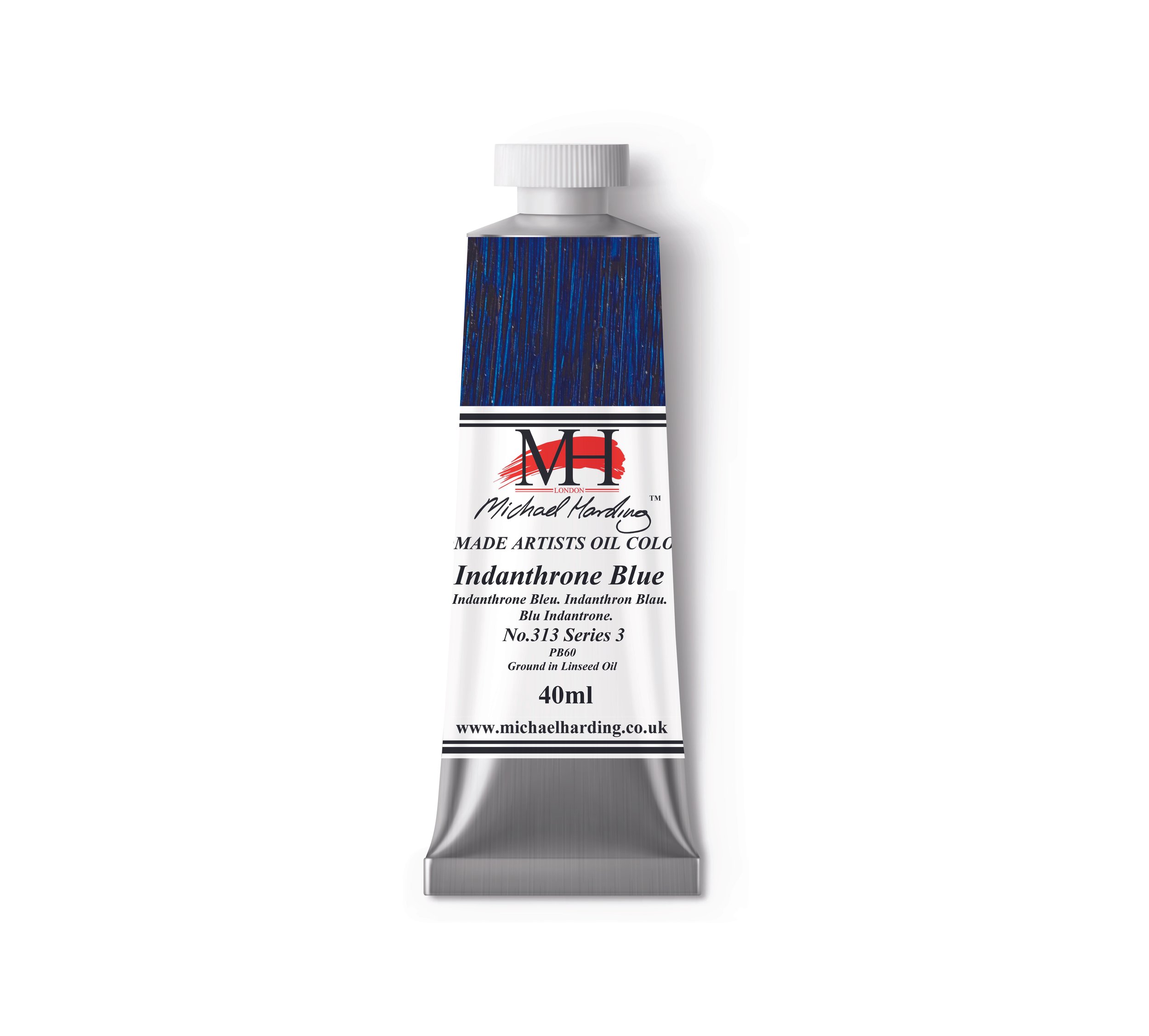
Beautiful Indanthrone Blue was invented in 1901 as a synthetic dye that resists fading. Its popularity came about because of this resistance and a need for it in the automotive industry. Michael attracted to it because it’s inky and interesting! This blue is essential for those wishing to expand their understanding of such a hypnotic shade. Blue can have a strong psychological effect on artists, from the shades of Lapis Lazuli through intense Phthalocyanines to the shade of Indanthrone Blue. When Michael recently painted a nocturn using my Indanthrone Blue, it fulfilled my needs, producing an almost narcotic effect upon him, like a poetic musical note! MH Indanthrone Blue is a strong inter-mixer. He so enjoys getting little surprises of colour when mixing with whites, yellows, and reds. Because my oil paints are not compromised by dryers, fillers, or extenders, mixing a few colours together leads to interesting colour outcomes! Try it!
Ⓥ VEGAN Cobalt Blue Deep is one of the most dependable and elegant blues imaginable; rich, atmospheric and wonderfully lightfast. Possessing all the qualities that have made cobalt pigments favourites among painters for generations, it delivers depth, harmony and permanence in equal measure.
Ⓥ VEGAN Rich, glowing and beautifully warm, Amber sits somewhere between deep orange and burnt gold. It immediately makes me want to paint. There is something luminous about it, as though the colour radiates from within. Whether used in glazing, landscape painting or portraiture, Amber brings warmth, depth and a natural glow to every mixture. When I stare at it my imagination sees a tiger staring back….

Ⓥ VEGAN
Inorganic – Introduced at about the same time as Ultramarine, Cobalt Aluminate is a synthetic, inorganic pigment. It is more greenish-blue, with a heavier, more mineral appearance when seen as a dry pigment. The hues formed from it are correspondingly heavier and greyer. But it has a certain shade that the less expensive ultramarine cannot quite match. The paint film, when cured, is quite soft.
Ⓥ VEGAN
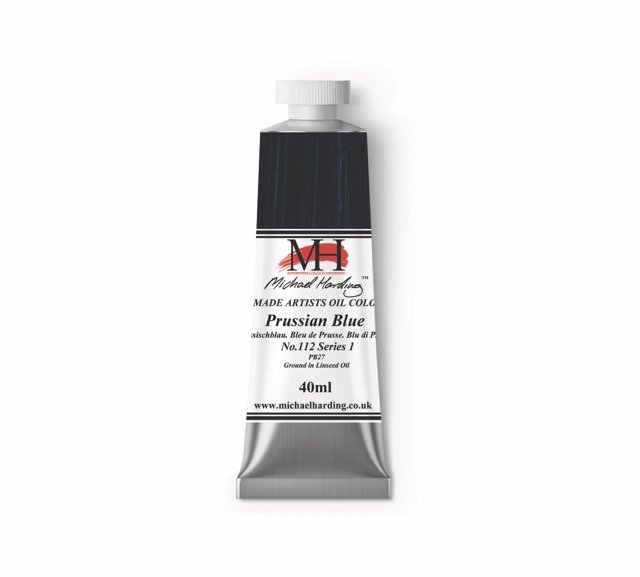
Inorganic – Prussian Blue was created in Berlin in 1704, and its popularity spread through the early 18th century. Prussian Blue is one of the first synthetic inorganic pigments and one of the most controversial as well. The earlier and less purified versions had mixed reputations; they were said to fade in hues and migrate or leech through succeeding paint layers. But modern standards of washing have corrected the tendency to fade, and migratory problems are no longer reported. I suspect that this was the result of poor stabilizing. At any rate, Prussian Blue, like Alizarin, is one of those colours some painters find essential. It has a deep, inky beauty. On its own and in more concentrated mixes, it exhibits a slight bronzy sheen that can be used as a complementary glaze. Its tint power is frightening, so beginners beware!

Ⓥ VEGAN
Inorganic, Natural Earth– This semi-transparent dark brown is a solid alternative to blacks made from natural earths and iron oxides. Vandyke Brown is reminiscent of the backgrounds of Flemish portraits and has a fast drying time.

Ⓥ VEGAN
Inorganic – Manganese Ammonium Pyrophosphate is a bold, heavy Violet that was first made in Germany in 1868 as one of the mid-19th century wave of synthetic inorganic metal salts that prompted a change in artists’ palettes. Manganese Violet has mild, reddish overtones that do not cut through mixes and that some find useful when making reflex or shadowy greys. Its average tint power allows it to be added without greatly lowering the tonality of the result.

Ⓥ VEGAN
Inorganic – Red Umber is a synthetic iron oxide. I decided to make this variant shade of Burnt Umber after my observations of 16th and 17th century paintings suggested this pigment had lighter and redder characteristics than those it assumed when manufactured in animal bladders. Raw Umber is calcinated to make the pigment, and the amount of Manganese Dioxide mixed with the Iron Oxide determines the range of undertones; my formulation is much warmer than is usual.
Ⓥ VEGAN
Wisteria (No. 242) is a soft, pastel colour falling into the useful category of pale colours made for just about any application, from landscape to completely non-figurative. Vivid and powerful, No. 242 is a handy addition to every artist’s palette.
Ⓥ VEGAN
No. 251 Aqua Green (PG7, PB15.3) Green pigments were primarily used by Egyptians in the form of natural earth and malachite. Aqua green is a modern, synthetic green blended with the classic Phthalocyanine Blue to provide a cool, vibrant turquoise with excellent transparency. Aqua Green is a bold and refreshing addition to the palette. Its blend of green and blue pigments makes it ideal for oceanic scenes and verdant foliage, adding a cool accent to any composition.

Ⓥ VEGAN
Organic – Michael Hardings Caribbean Turquoise is made from organic pigments, is transparent and fast-drying, and has a high tint power. Turquoise is one of many coveted ancient gems, adored by the Egyptians and carved by Chinese artisans more than 3000 years ago. Turquoise has long been considered a stone that guarantees health, good fortune, and protection from evil. Where might one go nowadays for good health, good fortune, and protection from evil? Let yourself be swept off the beach and into the ocean for that refreshing, long-deserved break in beautiful, tropical islands. Michael created Caribbean Turquoise because whether you paint like an Old Master, a famous Plein Air painter, or a Modern Abstract artist, this colour will help create the mood you want to convey with the stroke of a brush to canvas.

Ⓥ VEGAN
Organic, Natural Earth – French Yellow Ochre is an iron-based, inorganic earth pigment. Its curing speed is, of course, fast. French Yellow Ochre can be described as a semi-transparent oil paint that is gritty by nature. Ochre is a common pigment choice for artists dating back to the Middle Stone Age. Ochre is a natural earth pigment containing hydrated iron oxide. Michael obtains his high-quality ochre pigment from the oldest source in France. His formulation of pigment is ground in linseed oil. They’ve added French Yellow Ochre to our range of ochres because of its earth properties, providing the artist with a glowing, natural yellow. Although the beautiful tones of our French Yellow Ochre will be appreciated by all styles of painters, the landscape and portrait artists will especially enjoy this paint!
Ⓥ VEGAN
Organic – No. 214 is a variant of the Phthalo Green compound, but with a greater range of gingery yellow undertones that are immediately apparent in hues. This expansion is due to increased numbers of Chlorine and Bromine atoms. The tint power is less than that of straight Phthalo Green, but the range of clean, beautiful pine greens obtainable from it is remarkable and unique.
Ⓥ VEGAN
No. 244 New Gamboge (PY150) A transparent, earthy yellow, New Gamboge offers a soft, natural hue with a gentle warmth. Its subtle undertones and strong tinting strength make it an excellent choice for botanical illustrations, capturing golden light effects, or blending with other colours to create a wide range of natural tones. Originally derived from the resin of trees native to eastern Asia, it is now produced as a synthetic organic pigment, delivering the rich, transparent, yolk-like colour artists have come to appreciate.

Ⓥ VEGAN
Organic – Michael Harding formulated this blend of organic pigments Arylide Yellow and Phthalo Green to fill the gap previously occupied by the Lead Chromate Greens, long discontinued by manufacturers because of their tendencies to darken or react with other paints. This paint differs from them not only in being a permanent lake but also in sheer power. A fruity, loud, tropical green with exotic undertones, it almost fluoresces on its own and cuts right into mixes to reveal light, sappy yellows.

Ⓥ VEGAN
Inorganic – This Iron Oxide has been used as a wood dye, and I realised that its capacity to enrich the grain of hardwood made it a wonderful candidate for paint making. Michael’s Transparent Red Oxide is an Iron Oxide manufactured to such a small pigment particle size that like its yellow counterpart, it possesses Lake-like characteristics. No. 220 has terrific tint power that produces wonderful results in mixes with yellows and brings gravity to mid-red tones. Mix it with phthalocyanine blue for an interesting surprise!
This warm, slightly yellow-leaning green is named after 19th-century botanical illustrator William Hooker. Made with PG36, PR101, and PY74, it combines the boldness of phthalocyanine with earthy warmth. Fast-drying and semi-transparent, Hookers Green offers excellent lightfastness, high oil content, and strong tinting power—ideal for natural greens and layered depth.
A deep, expressive brown combining PR202 (Quinacridone Magenta) and PR101 (Iron Oxide). This rich, dark red-brown delivers excellent lightfastness, high oil content, and dependable coverage. The transparency and vibrancy of quinacridone merge with the weight and grounding of iron oxide, making it a beautiful choice for botanicals, portrait shadows, and atmospheric landscapes.

Ⓥ VEGAN
Organic, Natural Earth – So named because it was originally derived from the soot of oil lamps, this is pure Carbon and probably the first pigment our ancestors ever used to decorate their caves. Lamp Black is a soft, slightly warm shade whose surface gives it a greyish aspect. It’s probably not the best choice for unmixed underpainting because of its tendency to move while drying, but this can be remedied with the addition of good-drying Earths. Lamp Black tends to dry with a matte finish, which can be compensated for with the addition of a little stand oil.

Ⓥ VEGAN
Inorganic – This is a version of Burnt Umber that has heavier and more red-brown undertones than the raw umber variant. This is the colour in its presentation from the last two centuries, invaluable for underpainting and showing a range of sandy pinks in hues.

Inorganic – Neutral Grey is a blend of Lamp Black and Titanium White. I formulated Neutral Grey because a number of artists requested I have a colour on the Munsell scale. My formulation is similar to Munsell scale 5.
Ⓥ VEGAN
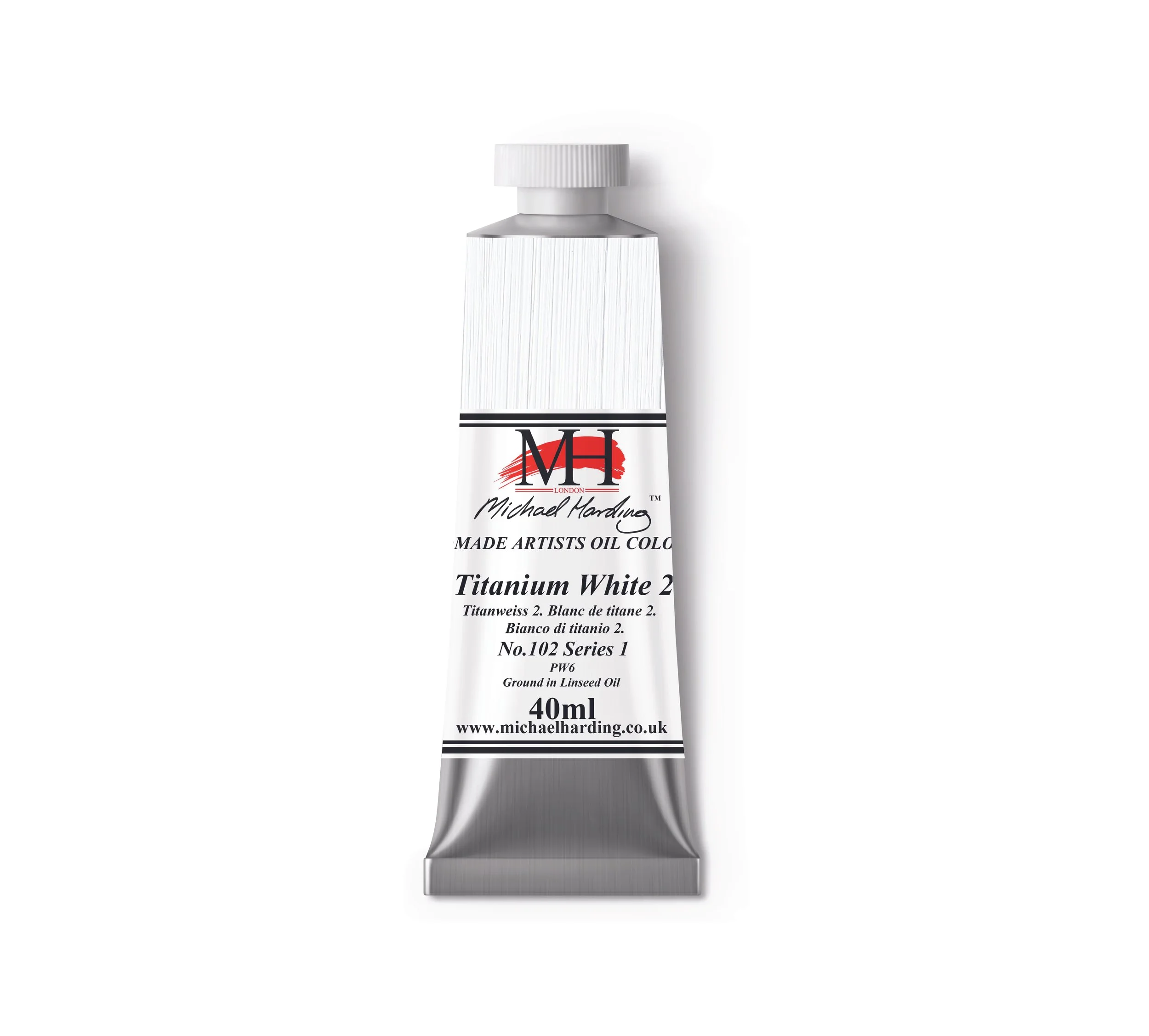
Inorganic – This paint is ground with linseed oil to form a sturdy, strong paint film with impeccably high covering power. Michael Harding also offer this beautiful colour ground in safflower oil. Check out TW1 for this. Additionally, we offer Refined Linseed Stand Oil and Refined Pale Linseed Oil mediums because linseed oil produces the strongest of paint films, thus helping to ensure the longevity of your oil painting.
Ⓥ VEGAN
With excellent lightfastness and a smooth consistency, Turner’s Yellow (No. 235) radiates warmth and saturation—perfect for adding a pop of colour to compositions. Though there is some debate as to which W. Turner is associated with the original colour and its patent,
No. 235 is a stunning colour with an abundance of uses, sitting among our Naples yellows and variety of ochres.

Ⓥ VEGAN
Inorganic – This name was given by English manufacturers to smalt, a cobalt-based pigment that was used in the sixteenth and seventeenth centuries as a less expensive alternative to Lapis Lazuli. Unfortunately, smalt tends to fade into a light grey, as some Veronese skies demonstrate. But the introduction of Ultramarine Blue made the original smalt formula obsolete, and so I offer a completely reliable substitute blend that evokes the aerial effects of the great Venetian decorators.

Ⓥ VEGAN
Organic Pigment – Green Gold is a pigment Michael has admired for many years, although it’s essentially a modern colour. As a standalone pigment it brings your painting a unique green that has its own elegance. However, when mixed, it’s ‘weird’! When you first look at it as a single colour, it’s interesting. But when Green Gold is mixed with other transparent colours, such as Alizarin Claret or Magenta, it does extraordinary things. You’ll wonder where the ‘third’ colour came from because it will seem so magical. Green Gold’s bewitching qualities give it a high tint power, and because it has only a single organic pigment, it’s both lightfast and transparent. And because it’s transparent, it possesses wonderful glazing properties and power.
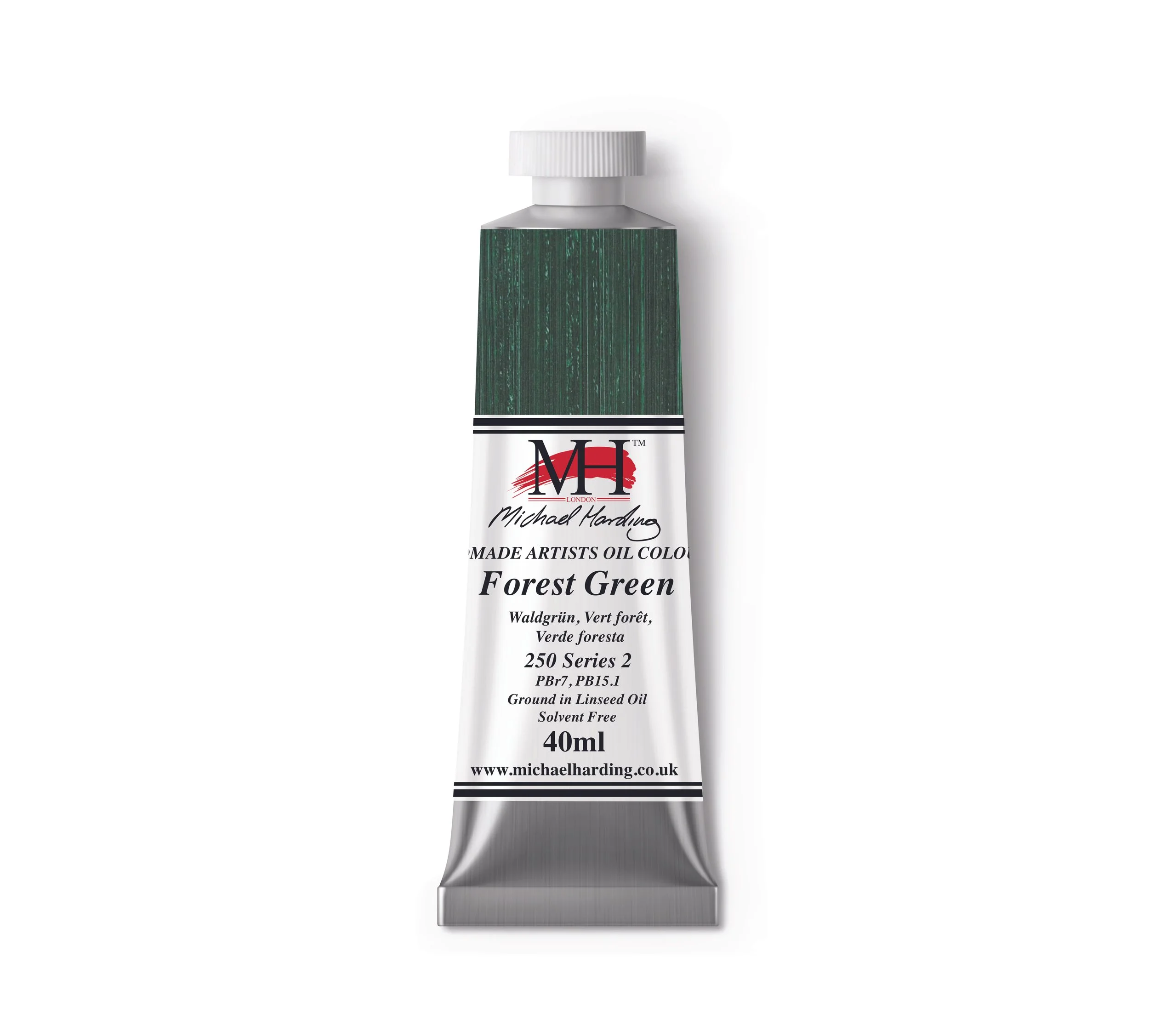
Ⓥ VEGAN Another really sumptuous, verdant, sappy green, ideal not just for landscapes but any area where a green might be required. Forest Green has a natural richness and vitality that allows it to move effortlessly between foliage, shadow and reflected colour. Full of character, it feels as though it belongs in the landscape.

Ⓥ VEGAN
Titanium White No. 1 is the most brilliant white in my range, suitable for crisp, cool, opaque, light shades. If you want a powerful mixer that lightens , then this is it. Although not subtle, this white is the most suitable for a bright, fresh palette. It forms a strong and durable film when cured. PW6 is an inorganic pigment.
Ⓥ VEGAN
No. 318 Blue Verditer (PB28, PW6, PB36) A soft, pale blue with a slightly muted quality, Blue Verditer is a historical pigment with a modern twist. Blue verditer is basic copper carbonate and the artificial form of the pigment azurite. This opaque yet delicate hue is perfect for skies, seascapes, or atmospheric works, offering subtle, cool tones with a touch of grey.
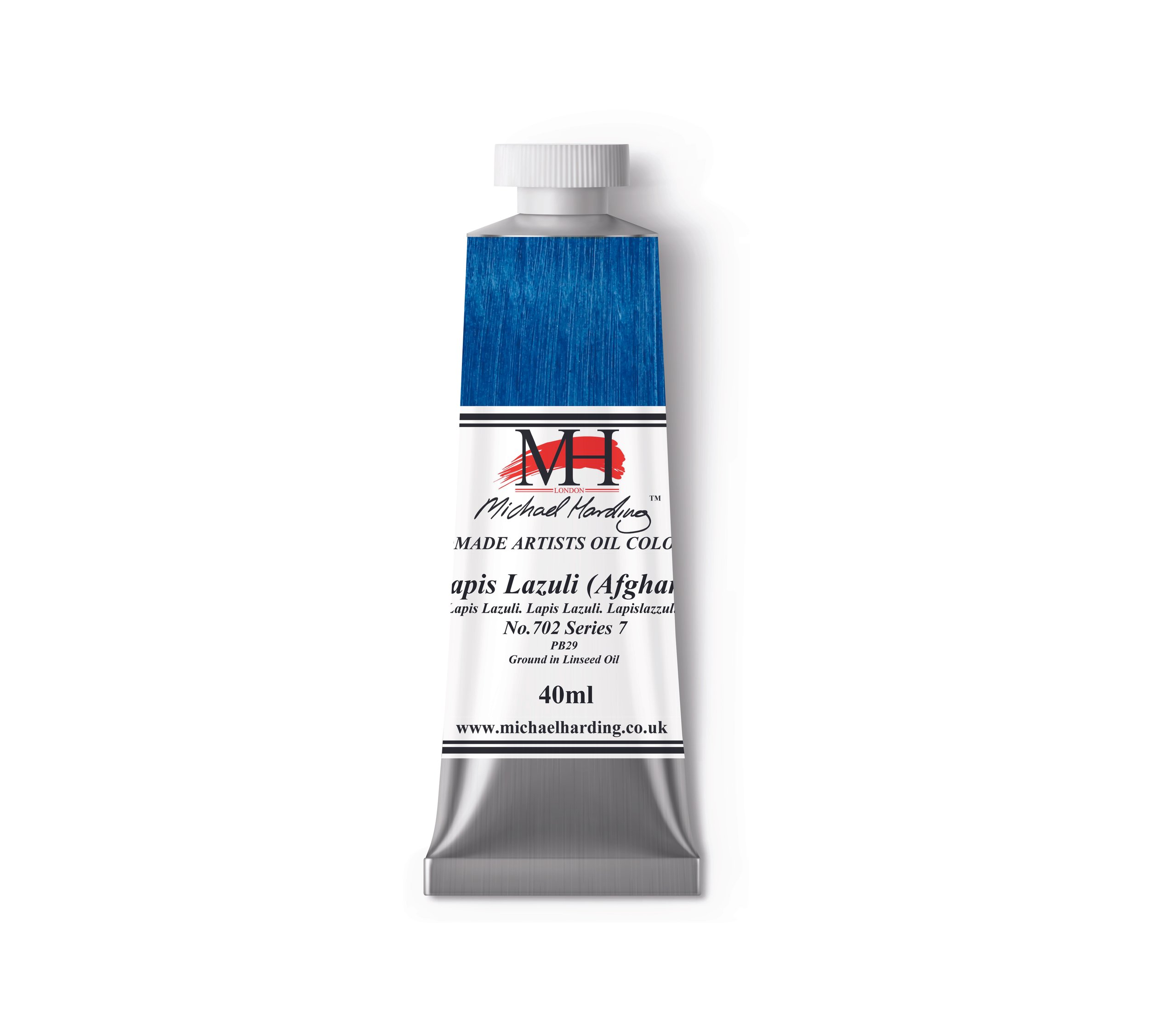
Ⓥ VEGAN
Inorganic, natural earth—This is the purest and oldest form of the Lapis Lazuli pigment, a genuine earth from Afghanistan. Lapis was the inspiration for the modern synthetic ultramarine blue, whose colour is a deeper, less dirty blue than Lapis; the handling qualities are identical.
This is the blue that the Old Masters used for centuries. This pigment is expensive and rare. Lapis Lazuli and Azurite are a family of natural earth pigments and were the source of the famous blues of the Middle Ages.
There are plenty of books that deal with this subject superbly, but I feel it’s appropriate that I say a few things about it…

Ⓥ VEGAN
Michael Harding’s Warm White is my solution for the UK and EU artists who want a lead-like paint without the lead content, which is banned unless you are a certified restorer in the UK and EU. This warm white is opaque, has outstanding brushing qualities, and mixes well with every colour on the artist’s palette. Warm White is available worldwide.

Ⓥ VEGAN
Inorganic – Sometimes known as Barium Yellow, as it is Barium Chromate. It was introduced into painting after the Lead Chromates, circa 1820. Unlike Lead Chromates, though, Barium has proven permanent and non-reactive. Most colourmen consider this yellow obsolete, and Michael Harding is probably the only one still making it. By itself, it’s an acidic looking yellow with weirdly green overtones. Its low tint and covering power mix with Magenta and the cooler reds to produce modulated greys artists sometimes seek for certain passages of flesh painting. This is the only yellow chrome paint that doesn’t discolour.

Ⓥ VEGAN
Michael Harding wanted to add an affordable red to the product line that complements our current reds and provides another level of depth to the family of MH reds. While Michael’s first passion is pigments from the time of our Old Masters, today’s modern-made pigments offer us yet another level of discovery and enjoyment. Michael feels Pyrrole Red is one such colour—an affordable, highly lightfast, vivid red. Michael’s Pyrrole Red is like a lot of my oil product line: bold and bright, yet with a cool, crisp undertone. MH Pyrrole Red is a terrific intermixer for everything from Brilliant Pink to our gorgeous Permanent and Cadmium Oranges. Michael encourages artists everywhere to try it with our Yellows, Oxides . . . well, all the MH Colours!
Ⓥ VEGAN
No. 322 Quinacridone Purple (PV55) Quinacridone, which is an organic compound, is used extensively in industrial colorant applications. Deep, transparent, and richly pigmented, Quinacridone Purple brings intensity and depth to any painting. Its slightly cool, jewel-like hue is perfect for rich shadows, dramatic skies, or floral work. The quinacridone pigment ensures long-lasting vibrancy and clarity.

Ⓥ VEGAN
Organic – After many years Michael Harding was able to find a variety of this pigment that had a reasonable drying speed. It may interest some of you that Michael has PV 23 samples which he made in the late 1990s that still have not dried!! Deep Purple has tremendous use in all aspects of painting but should be used with caution by new artists as it has a tint power only matched by the Phthalocyanines. However, please do not be daunted by this description as when combined with whites it produces remarkable shades. Also, its slight addition to transparent yellows, such as Indian Yellow, can result in some extraordinary results that one can only describe as dark yellow which as a concept can be a little strange.
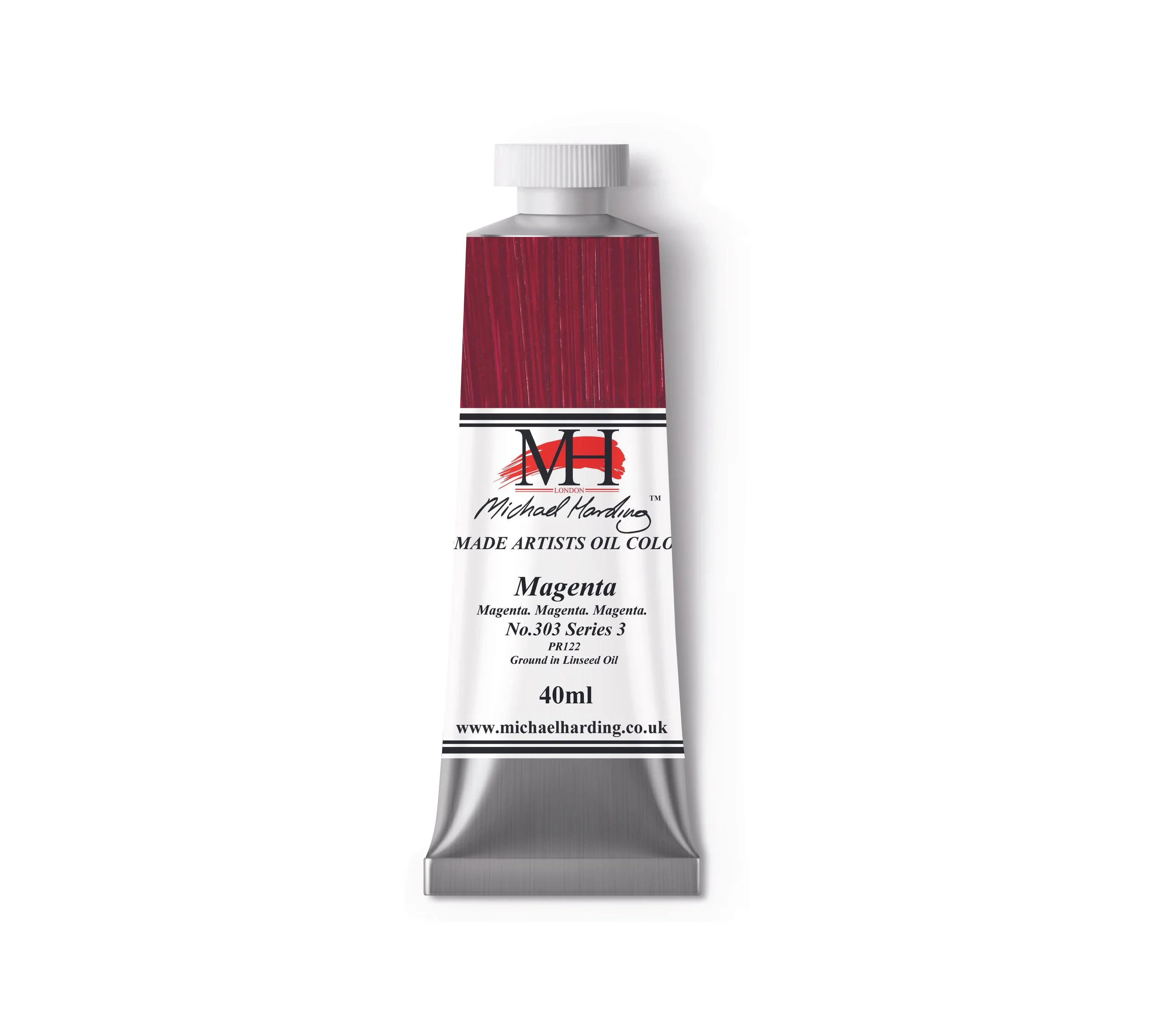
Ⓥ VEGAN
Organic – Magenta is a lightfast organic pigment with strong bluish overtones that shine through as if it is used as a glaze. When made into hues, it presents a wonderful range of decadent, strong, cool pinks evocative of rich satins. In mixes with Yellow Lakes, the results are ranges of strikingly warm, gingery oranges, or mixed with transparent oxide red, it mimics the unique shades of alizarin. To make gorgeous purples, mix Magenta with Ultramarine Blue.

Ⓥ VEGAN
Inorganic – No. 508 is a Cobalt Titanate compound made by ‘cooking’ at a high temperature to produce a soft, subtle blue-green hue valuable in influencing low hues and blacks. It possesses little tint power in higher keyed mixes, and it was described to me by one artist as ‘the one colour that captures the foliage of English landscape’.
Ⓥ VEGAN
Cadmium Green (No. 412) is a vivid colour created from pigments PY35 and PG18. With excellent lightfastness and opaque transparency, it adds depth to compositions. Its average drying speed and linseed oil binder make it a versatile choice for artists seeking reliability and vibrancy in their work.
A vibrant, high-coverage yellow created from a blend of PW6 (Titanium Dioxide) and PY83 (Diarylide Yellow). This opaque pigment has excellent lightfastness, low oil content, and very strong tinting strength. Ideal for bold mixes, high-impact highlights, and reliable coverage in both traditional and contemporary work.

Ⓥ VEGAN
Inorganic – Yellow Ochre Deep is a natural earth pigment in a beautifully rich shade with a warm, dense undertone. It’s a good modelling pigment, working well into yellow and red highlights. It also makes excellent Caucasian flesh tones when mixed with Cadmium Red or Vermilion and any white.
As a colour maker, Michael is proud of his exotic, historic colours, such as Vermilion. But I couldn’t be prouder of this rich earth colour, a must for portraitists and a versatile colour for any artist.

Ⓥ VEGAN
Inorganic, Natural Earth – Burnt Sienna is one of the natural earth iron oxides, of such antiquity and usefulness it barely needs an introduction. It creates rich but subdued pinks, which reveal how transparent and warm are its undertones. Its Tint Power is noticeably stronger than the more opaque Earths.

Ⓥ VEGAN
Titanium White No. 3 (No. 130) is identical to Titanium No. 2, except this formula has the addition of cobalt drier. Michael formulated TW3 for artists who need a white that can dry quickly, especially in colder climates. Please consider that the addition of dryers can result in compromised longevity of the paint film. The TW3 is the only paint within our range to have this addition.
Ⓥ VEGAN
No. 236 Yellow Benzimidazolone (PY154) This warm, golden-yellow hue offers excellent lightfastness and opacity. With its strong, vibrant intensity, Yellow Benzimidazolone is ideal for creating luminous and glowing washes or layering techniques. Its rich pigmentation makes it a perfect choice for landscapes, florals, and sunlit compositions. As the name suggests, this colour will dazzle you.

Ⓥ VEGAN
Inorganic – This is a unique shade of Cadmium Sulphide that bridges the yellow to orange range with a pigment that seems destined to be mixed with the earths, ochres, and mid-reds.
Ⓥ VEGAN
No. 233 Ultramarine Pink (PR259) Who would have thought that “beyond the sea”—the Latin meaning of Ultramarine—could also describe a soft, transparent pink with a cool undertone? Ultramarine Pink offers delicate granulation and subtle beauty, making it a unique choice for enhancing skin tones, skies, and florals. Its cool hue pairs beautifully with blues and purples, adding versatility and depth to your palette.
Ⓥ VEGAN
No. 247 Opera Rose (PR122) A highly saturated, fluorescent pink, Opera Rose captivates with its vivid intensity and bold vibrancy. Derived from the family of quinacridone magentas, it offers a striking, almost shocking, hue that stands apart. Unlike traditional quinacridones, Opera Rose has its own unique flow and handling. While its lightfastness is moderate, its radiant, eye-catching colour makes it a popular choice for fiery skies, impressionistic florals, abstracts, or any artwork where a high-impact pink is desired.
An elegant, moody violet crafted from PV23 (Dioxazine Violet), PR112, and PB29 (Ultramarine Blue). This blend of organic pigments provides excellent lightfastness and transparency, with layered depth and soft variation. With average drying time and moderate tinting strength, Belladonna is well-suited to atmospheric glazes and expressive shadow work.

Ⓥ VEGAN
Inorganic – Viridian is about the fastest curing colour in my entire range, along with Stack Lead White. This hydrated variant of Chromium Hydroxide, introduced in the mid-19th century, is a valued support colour used for influencing greys in underpainting. The vivid blue undertones apparent in thin layers are soon eclipsed in thicker applications. Landscapists and some portraitists still prefer it to the more brutal power of the Phthalo Greens. When combined with reds, an interesting range of blue-greys results. Placing it as local colour in the proximity of vermilion can also produce some interesting complementary effects.

Ⓥ VEGAN
Inorganic – No. 208 is a variant of Ultramarine pigment. This colour is achieved by slightly altering the manufacture of blue shade Sodium Sulphosilicate by heating it with Chlorine. The result is a weaker, more violet pigment that has a relatively low tint power and a degree of transparency that lends itself well to glazes or thin body colour. In hues it becomes a high-keyed, rather fluffy textured mauve, which landscapists have found useful for the brighter tones of a clear sky and for the modelling of a sunlit cloud.

Ⓥ VEGAN
Inorganic & Organic – Permanent Green, also known as Victoria Green, was the generic name given by 19th-century English manufacturers to a mid-green, slightly bluish in undertones and made from a variety of blends. My own formula combines Arylide Yellow and Yellow Shade Phthalo Green to give a rich, earthy hue in Titanium Whites. Much stronger than Terre Verte, it sometimes fulfils the same role in providing reflex tones for portraiture and figure painting.

Ⓥ VEGAN
Organic – Invented in 1935, Chlorinated Copper is one of the first synthetic organic pigments to be accepted as reliably permanent. It is sometimes seen as a modern replacement for Prussian Blue, but its unmixed colour is slightly more cyan, and in hues, it exhibits a unique range of throbbing, intense, greenish blues that are quite distinct from Prussian Blue. Having one of the highest tint powers in my range, this paint will blow any mix apart; if you wish to avoid doing so, add it incrementally and with caution! Its metallic content makes it a great drier, and like Prussian Blue, it shows a tendency to bronze upon curing. Again, use it with caution if you are a beginner.

Ⓥ VEGAN
Inorganic – No. 305 is a mid-19th-century metallic oxide with solid covering power and little tinting strength. It’s a heavy, vegetable green that can be surprisingly enlivened by adding yellows. Landscapists find that its range in mixes and hues makes it a staple green. It does well as a complement to active red hues.
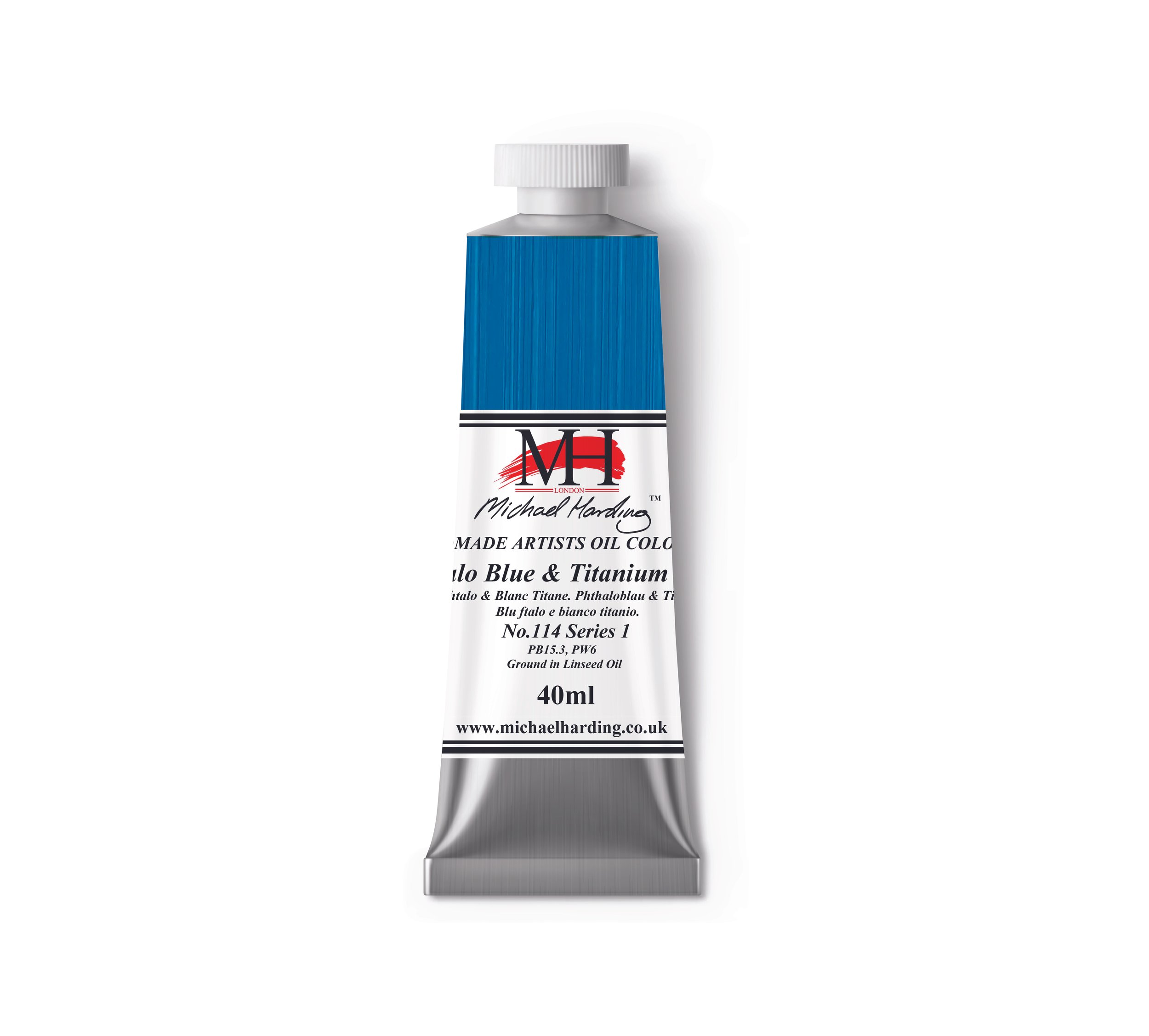
Ⓥ VEGAN
Inorganic & Organic Mix – I devised this blend to replace the unavailable pigment Manganese Blue, a pigment introduced in the 1950s but now no longer manufactured. This is far more intense than Manganese Blue, with a vivid, almost luminous appearance, evoking the rich blue skies of Veronese and other Venetian painters. The phenomenal tint power of the Phthalo component means that it can be hued much more with little loss of brightness. This mixture of organic and inorganic pigments demonstrates what can be attained with modern pigment strengths.
Ⓥ VEGAN
With its earthy tones, Moss Green (No. 239) captures the serene beauty of nature. Featuring excellent lightfastness and a semi-transparent quality, No. 239 adds depth and dimension to artworks inspirational for natural landscapes.

Ⓥ VEGAN
Inorganic – This is Titanium Antinomy Chromium Oxide, a synthetic, inorganic compound which Michael began to use to make a solid, mid-range substitute Naples Yellow whilst seeking a source of genuine Lead Antimoniate. Though Michael now has one, many artists want me to retain this beautifully golden paint, which makes bronze-like hues and works well with the low earths.
Ⓥ VEGAN Subtle, gem-like, yet icy. Hidden within a dark, shadowy black lies a remarkable sapphire-like blue that reveals itself gradually as it is worked. Cosmic Blue offers something quite different from the traditional blues, possessing depth, mystery and an unexpected luminosity. The universe can be yours.

Ⓥ VEGAN
Inorganic – This is the darker of the two Lead Antimoniates (Genuine Naples Light & Dark), closer to the shade offered by makers in more recent times. Most manufacturers, except Michael, replaced the genuine pigment with rather inaccurate substitute blends. Genuine Naples Yellow Dark is a classic shade good for low flesh undertones.
Lead Antimoniate, in genuine versions, appears to have been used as a pigment since the 5th century B.C. and has been manufactured since the 1400s, becoming one of the most relied-upon colours and in constant demand. I’m one of just a few colourmen who continue to make the genuine article. I do so because its vivid, dense, almost ochre yellow cannot be mimicked, as portraitists and figure painters will attest. It’s more powerful and yet more muted than its equivalents among the Cadmium range, and its handling characteristics are incomparable. Because it tends to react when parsed with steel rollers, to this day I still grind it with stone.

Ⓥ VEGAN
Inorganic – Yellow Ochre is a higher-keyed and more green-gold shade of manufactured Iron Oxide. Its hues yield mustardy yellows quite close to Genuine Naples Yellow Dark. No. 119 possesses an almost viscous texture and is a lovely colour for flesh tones, landscapes, and non-figurative works.

Ⓥ VEGAN
Organic, Inorganic – Michael Harding’s deep, rich Indigo is both organic and inorganic: it is transparent, has an average drying time, demonstrates excellent lightfastness, and possesses high tint power. Artists have yearned for high-quality Indigo for years, but finding and securing an Indigo pigment that met my high standards was essential before he considered making an oil paint colour. Michael finally found one I like. Nocturne painters will be especially pleased as this Indigo is what they’ve been waiting for! Artists who like painting sultry skies or more conservative painters looking for ways to enhance their greys and shadows should try this Indigo. No. 228 is rich, deep, and dark, with uncompromising quality and consistency. It is delicious, beautiful, and inky.
Ⓥ VEGAN
No. 139 Neutral Tint (PBk6, PV19, PB15.3) Neutral Tint is a versatile, dark grey with subtle hints of violet and blue, offering strong opacity and excellent mixing capabilities. It’s perfect for deepening shadows, adding contrast, or creating neutral washes without compromising the vibrancy of surrounding colours.

Ⓥ VEGAN
Inorganic, Natural Earth – Green Earth, a complex of ferrous silicates in aluminium and magnesium clays, is one of the few naturally occurring inorganic pigments still offered by colourmen. It has a soft texture with very low tint power and is beloved by portraitists who use it as a glaze over Alizarin Crimson hues. Some makers add other pigments in order to give it a spuriously enhanced tint power, which depletes these qualities; I don’t. A popular trick is to use a little Terre Verte under the portrait subject’s nose to get red-coloured cheeks to play up as a complementary colour!

Ⓥ VEGAN
Organic, Natural Earth – Italian Brown Ochre is an interesting natural earth from the Mediterranean that possesses the most wonderful transparent undercolour. It’s a beautiful addition, expanding our range of existing ochres and umbers. Apply this gorgeous, rich colour in landscapes, portraits, and non-figurative works to complement more powerful colours.

Ⓥ VEGAN
Inorganic – Venetian Red is synthetic Iron Oxide, a heavy red that yields fruity, fleshy hues and makes great sonority when mixed with the Yellow Lakes. Venetian Red is a most favoured staple for many portrait and landscape artists.

Ⓥ VEGAN
Inorganic – Cadmium Sulphide is a dense, lean, mid-shade warm yellow, indispensable as a foundation colour for warm mixes of all kinds.

Ⓥ VEGAN
Organic – Bright Yellow Lake is an arylide organic lake pigment. It has an incredibly high oil content and transparency, with an enormous tint power that shoots through mixes with a pervasive range of bottle green undertones. Beginners should handle this paint with care when adding it to other paints. It can heighten the Phthalo Lakes without making them opaque, and when it is made itself opaque with the addition of white, the results are almost luminous.

Ⓥ VEGAN
Organic – My Quinacridone Gold is made from nickel azo and quinacridone. It is organic, transparent, and has an average drying time. It also possesses excellent lightfastness and high tint power. This is a rich, amber, golden yellow that is transparent and ideal for glazing or mixing to produce interesting hues. Its shift from mass tone to undertone is pronounced, with a rich, transparent orange-brown. It’s beautiful, perfect in every way, particularly for artists who enjoy glazing or just having a crazy time with colour. You might find yourself in rehab to cure your addiction to it.

Ⓥ VEGAN
Diarylide Yellow is a synthetic organic Lake that replaces uric acid, which was made by warming the urine of Indian cows fed on mango leaves. This modern, organic equivalent matches the beauty of the original colour, used for centuries in Mughal miniatures, but it has greater tint power and reliability. When brushed thinly over hued backgrounds, it presents a vibrant and warm mustard yellow. Please note that our Indian Yellow is not made with animal waste.

Ⓥ VEGAN
Organic – An absolutely beautiful warm red with a very unique nature when mixed with or glazed over whites it produces a truly shocking shade of pink.
Added after much demand, this very permanent popular pigment capable of making completely exciting pinks with a vivid undertone Michael is providing artists with Quinacridone Rose. This is a modern organic colour perfect for vivid still life painting of flowers, fruit or in portrait paintings. This unique colour makes very exotic pinks that may appeal to the Plein Air painter for skies, fields, flowers and sunlight to name a few. Michael has always been a great fan of quinacridone colours for the use in his own paintings and find them to add a difference that cannot be achieved through other pigments, it gives me that burst of colour he enjoys!

Ⓥ VEGAN
Organic – Crimson Lake is an absolutely beautiful warm red with a unique nature; when mixed with or glazed over whites, it produces a truly shocking shade of pink. Combined with phthalocyanine blue, it becomes an apparent black.

Ⓥ VEGAN
Inorganic – This is a strong, deep orange with high tint power and opacity, yielding surprisingly pinky hues in mixes with Titanium Whites.
Ⓥ VEGAN A nice bloody red currant, fruity, deep fiery red. Perrindo Maroon offers a distinctive warmth and richness that makes it an intriguing alternative to colours from the Alizarin family. Transparent and characterful, it is particularly effective in florals, shadows and atmospheric passages.
Ⓥ VEGAN
No. 234 Orange Benzimidazolone (PO36.1) A heterocyclic aromatic organic compound, this bright, radiant orange is both intense and durable, with exceptional lightfastness. Orange Benzimidazolone’s boldness makes it a striking addition to your palette, perfect for fiery sunsets, autumnal landscapes, and any composition requiring a punch of vibrant energy.
A soft, romantic pink composed of PW6, PY42 (Iron Oxide Yellow), and PV19 (Quinacridone Violet). With excellent lightfastness and a semi-opaque finish, Rose Blush offers moderate drying time and a gentle balance of strength and delicacy. Its organic/inorganic blend makes it ideal for florals, portrait work, and subtle transitions.
Ⓥ VEGAN
Another of our versatile, high-coverage, natural colours, Lavender (No. 243) is useful in myriad applications.

Ⓥ VEGAN
Inorganic – No. 113 is an obviously beautiful mid-blue. The discovery in the 1820s of a Sodium Sulphosilicate compound, which had appeared as a mysterious blue deposit on soda-ash furnaces, was a liberating moment for financially challenged artists everywhere. Up to then the only available version of this compound was the often-unobtainable Lapis Lazuli ore, mined in Afghanistan. Ultramarine has a high tint power, and our chosen shade produces strong green shade blue hues and makes wonderful violets with Magenta and the red Lake colours. It is also useful in greens and greys. The only chemical weakness is a recorded sensitivity to atmospherically borne acids, which can bleach it out. Ultramarine Blue is one of the more difficult paints to make, as it forms an intractable runny syrup when first ground into oil, which must then be stabilized with a small amount of wax.
Ⓥ VEGAN
Phthalocyanine Blue Red Shade (No. 231) captivates with its deep, rich colour. Offering excellent lightfastness and a fast-drying speed, it’s ideal for creating bold, vibrant artworks. No. 231 is a red shade blue, or, put another way, a slightly violet blue with the high tinting power the artist expects of ‘thalo’ colours. Some describe it as nocturne in a tube.

Ⓥ VEGAN
Inorganic & Organic – Sap Green is a generic name for a rich, deep green. Colourmen progressively changed its composition through a variety of natural, organic lakes. This green has an exceptionally rich, earthy, even mossy range of yellow undertones that suggest all variations of vegetation and undergrowth. Permanent Sap Green is ideal for the landscape/plein air painter.

Ⓥ VEGAN
Inorganic – Cobalt Turquoise Deep is a heavy, dense blue-green with low tint power. It was introduced along with many inorganic metallic pigments from 1830-40. No. 507 has grey-blue undertones that don’t overturn mixes and form interesting effects when combined with the Yellow Lakes. For a landscape painter this is a real “Wow” as it practically paints the hazy atmospheric mists of distant hills itself.
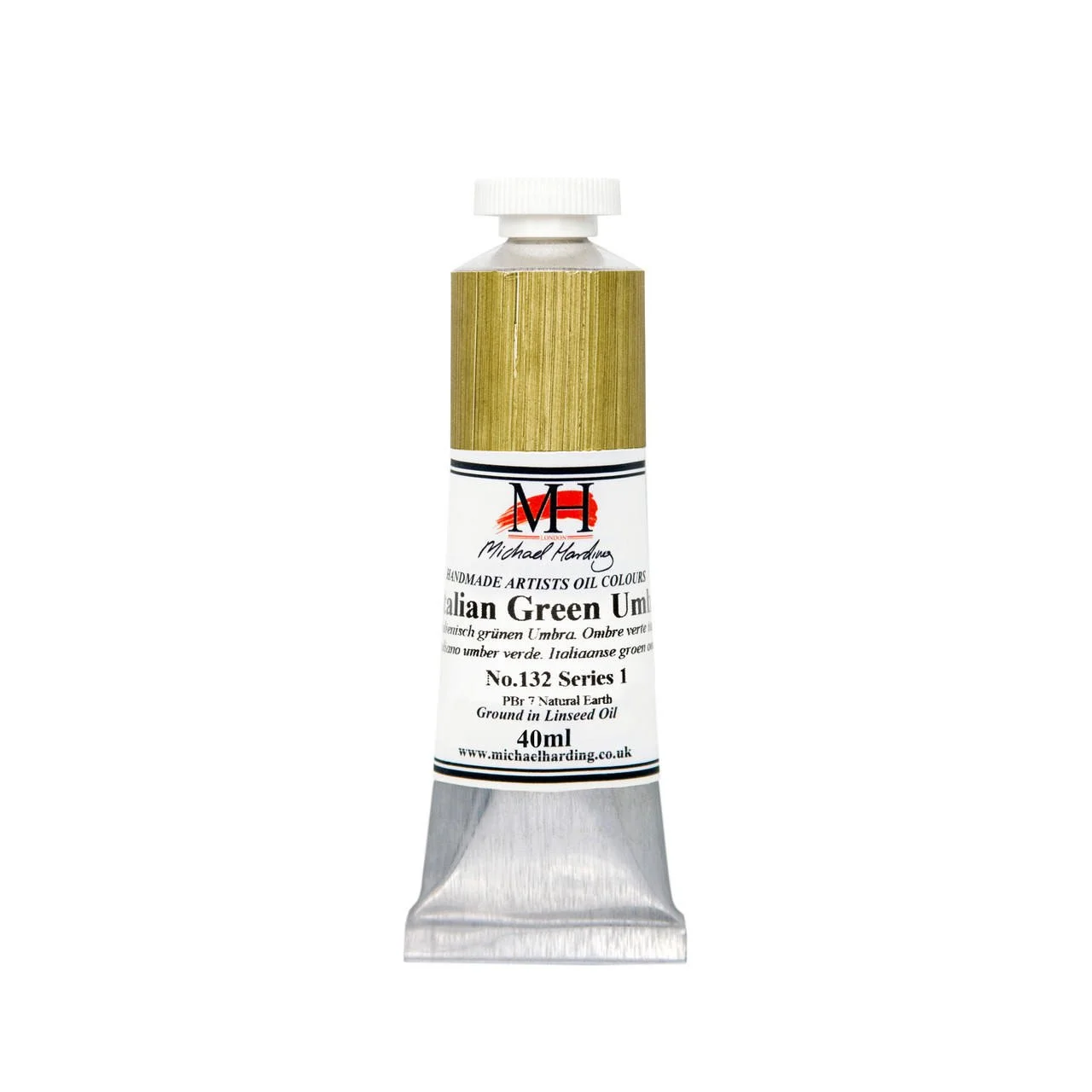
Ⓥ VEGAN
Inorganic, Natural Earth – This lovely Italian Green Umber is a romantic, earthy colour ground in linseed oil. It’s an inorganic pigment especially chosen for its deep, green, warm, and semitransparent undertone. It’s ideal for plein air painters to create rich, earthy greens in their landscapes; portrait artists will appreciate the paint’s ability to help an artist achieve effects like shadows; and No. 132 also proves useful in tonal drawings at the start of a painting. The handling of the paint is smooth and consistent, but you might consider adding a couple of drops of stand oil to enhance its rich moss colour. Please consider Michael’s Italian Green Umber for its tremendous beauty. He’s quite proud of it.

Ⓥ VEGAN
Inorganic – For landscape, portrait, and non-figurative painters, this is a delicious, vivid colour! Introduced into the range for its incomparable colour, handling, and coverage, No. 513 is a staple for artists who discover the range of colours and values they can create when mixing and applying.

Ⓥ VEGAN
Michael Harding is proud to be the first oil paint maker to manufacture this shade of Perylene Violet in oil. This truly unique colour is often found in watercolour ranges but not oil. Perylene Violet is a smoky mauve violet with an unusual character. When combined with rich yellows, such as Indian Yellow, the combined colours produce amazing browns and deep, gingery shades. This is a subtle colour that may not leap off the palette and dazzle in the way quinacridone does, but it is a marvellous addition! MH Perylene Violet has an atmospheric quality. Use it in mixes to create a beautiful, fleshy base tone. It’s also quite useful when mixed with white to cool whites, especially when painting fabrics. Artists will also enjoy mixing it with transparent colours. And as an additional benefit, Perylene Violet helps keep chroma under control.
Ⓥ VEGAN Imperial Purple combines the depth of Ultramarine with the brilliance of Quinacridone Violet to create a colour of remarkable elegance and versatility. Transparent and atmospheric, it moves effortlessly from rich shadow to passages of vibrant colour, making it an invaluable addition to the painter's palette.

Ⓥ VEGAN
Organic, Natural Earth – Raw Umber is one of the fundamental Earths used as an imprimatura pigment to draw out compositions as a ground, as many Rubens sketches prove. Depending on the degree of transparency, it exhibits greenish undertones.
Made with PBr25 (Benzimidazolone Brown), this transparent, reddish-brown delivers deep, warm earth tones with very good lightfastness. It has a high oil content and dries quickly, making it ideal for rich, lasting glazes. As a stable, non-toxic organic pigment with high tinting strength, Permanent Brown offers smooth handling and depth in layering.
Ⓥ VEGAN
Neutral Grey N7 (No. 140) is designed to be to assist artists with tonal values. A lean colour with a relatively low oil content, Neutral Grey N7 is useful as a base ground colour with high covering power. For the more experienced artist, Neutral Grey N7 is a workhorse grey that can be tinted into.

Ⓥ VEGAN
Inorganic, Natural Earth – Raw Sienna is powerful to use as a ground tone and for underpainting. Its origins date back to the 17th century, and it’s one of the indispensable Earth Iron Oxides! As the name suggests, the best grade comes from central Italy, where I acquire my pigment.

Organic, Natural Earth – An impure, amorphous Carbon in Calcium Phosphate, Ivory Black is no longer made from burnt ivory scraps but from charred animal bones. It is denser in shade and cooler than Lamp Black, with stronger tint power. Ivory Black, the blackest of the blacks, is the most frequently used black in the range.
Oil Colours
Throughout the Renaissance, artists worked with combinations of tree resins, thickened vegetable oils, waxes, and balsams. The exact organisation of these raw materials is open to speculation and likely differed from one artist to the next - even within the practice of an individual artist.