
Nancy Guzik
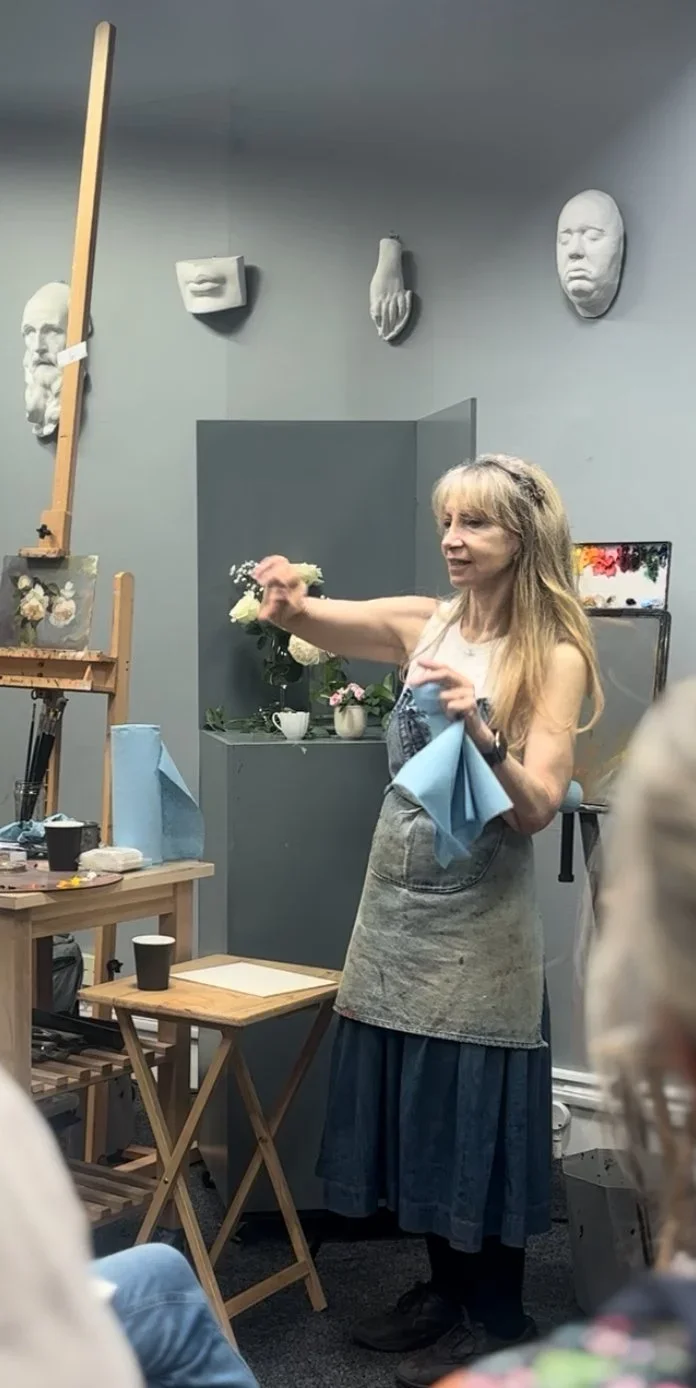
After graduating from the American Academy of Art in Chicago, Nancy continued her studies at the Palette & Chisel Academy and completed her schooling at the Lyme Academy of Fine Arts in Connecticut studying anatomy and sculpture with the late Dean Keller. Nancy met master artist and author Richard Schmid at the Palette and Chisel Academy, who became her mentor. Richard helped to develop her innate talents, which opened the doors to the Grand Manner style of painting. (Richard describes the Grand Manner as a certain mingling of virtuosity and unrestrained joy in Art.) "We would question everything" Nancy states, "ourselves, our paintings and this amazing miracle we are all a part of. He taught me to identify and understand what I am passionate about and then paint it."
Nancy is widely known for her mastery and originality in still life and people painting. When asked why she loves to paint children from life, Nancy smiles, “There is something that all children are born with that I connect with. As my painting begins to unfold, the child and I are drawn together into a magical process of creativity. Meeting on this creative level, we journey together into the realm of imagination -- and into the world of art we go.”
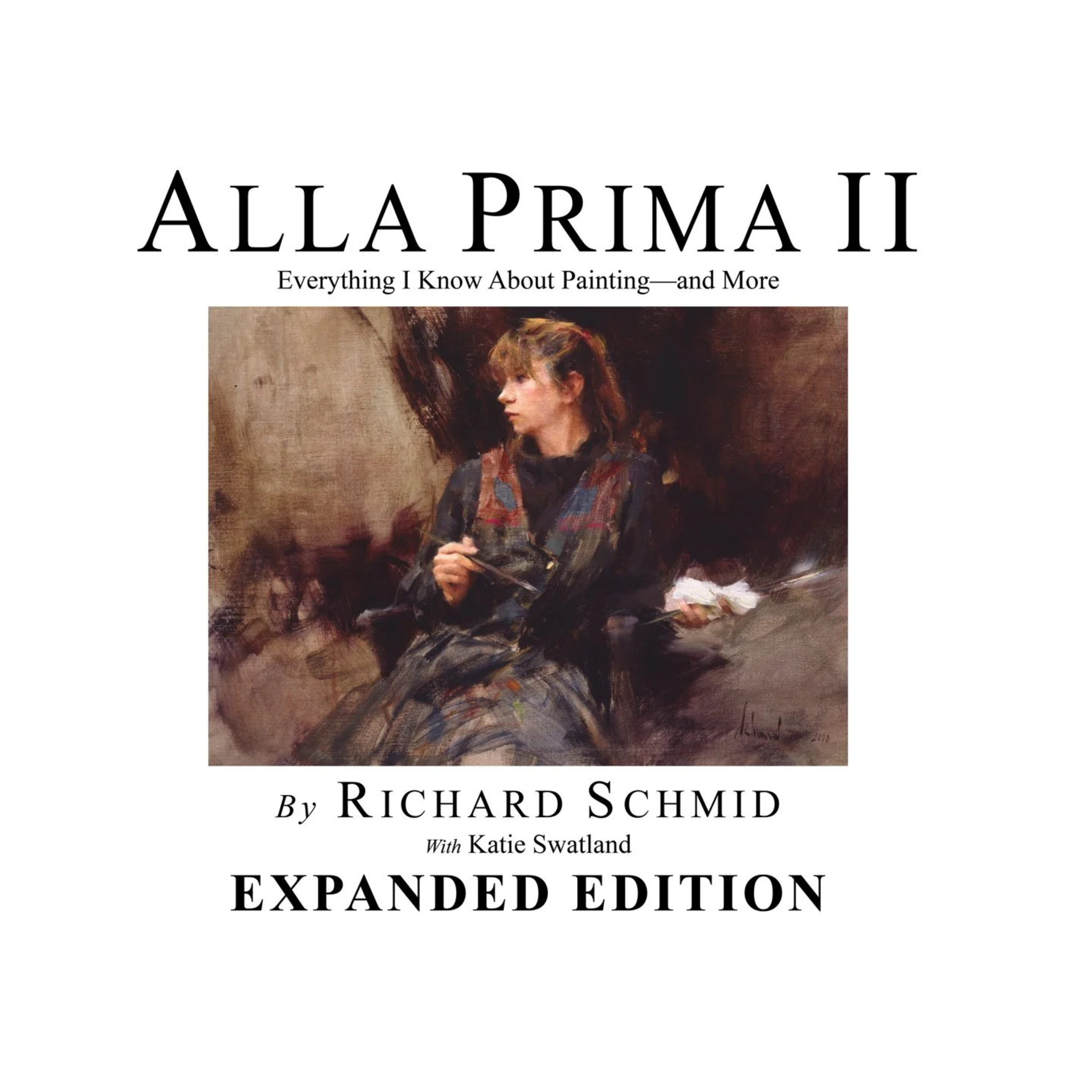
ALLA PRIMA II - Expanded Edition
Everything I Know About Painting — and More
By Richard Schmid
328 pages, 262 images

Ⓥ VEGAN
Inorganic – My Cadmium Red is a powerful, orange shade red with the usual cadmium characteristics of high tint power and opacity. This red presents warm, almost fiery hues when mixed with a more transparent white.

Ⓥ VEGAN
Inorganic – This is a strong, deep orange with high tint power and opacity, yielding surprisingly pinky hues in mixes with Titanium Whites.

Ⓥ VEGAN
Inorganic – Viridian is about the fastest curing colour in my entire range, along with Stack Lead White. This hydrated variant of Chromium Hydroxide, introduced in the mid-19th century, is a valued support colour used for influencing greys in underpainting. The vivid blue undertones apparent in thin layers are soon eclipsed in thicker applications. Landscapists and some portraitists still prefer it to the more brutal power of the Phthalo Greens. When combined with reds, an interesting range of blue-greys results. Placing it as local colour in the proximity of vermilion can also produce some interesting complementary effects.
A genuine best seller!
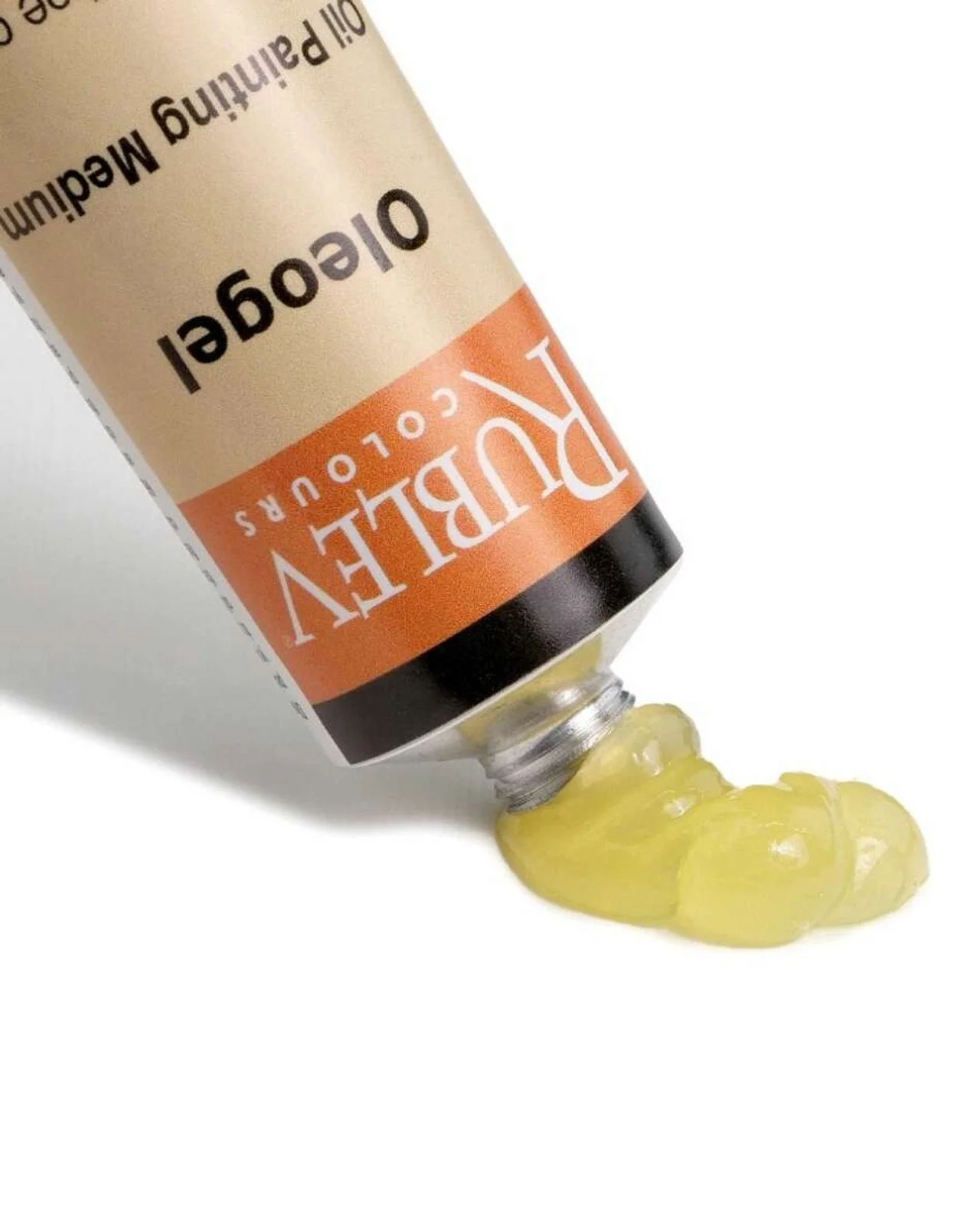
Oleogel is a thixotropic painting medium made with linseed oil and pyrogenic silica. Thixotropic!? This means a substance which is relatively firm and as you work it, it becomes mores viscous and liquid like, much the same if you stamp up and down in the same place on wet sand on a beach.
Oleogel is a clear pale amber gel that adds transparency and thixotropic body to oil, resin-oil or alkyd paint. Add directly to your paint to give it transparency without thinning its consistency. Add pigments or extenders to thicken it for creating impasto effects that do not sink in.
Oleogel does not contain driers, so it is safe to use in oil painting without worry of cracking. When mixed with colours, Oleogel does not slow the drying time.
Oleogel adds transparency without losing the body of the paint.
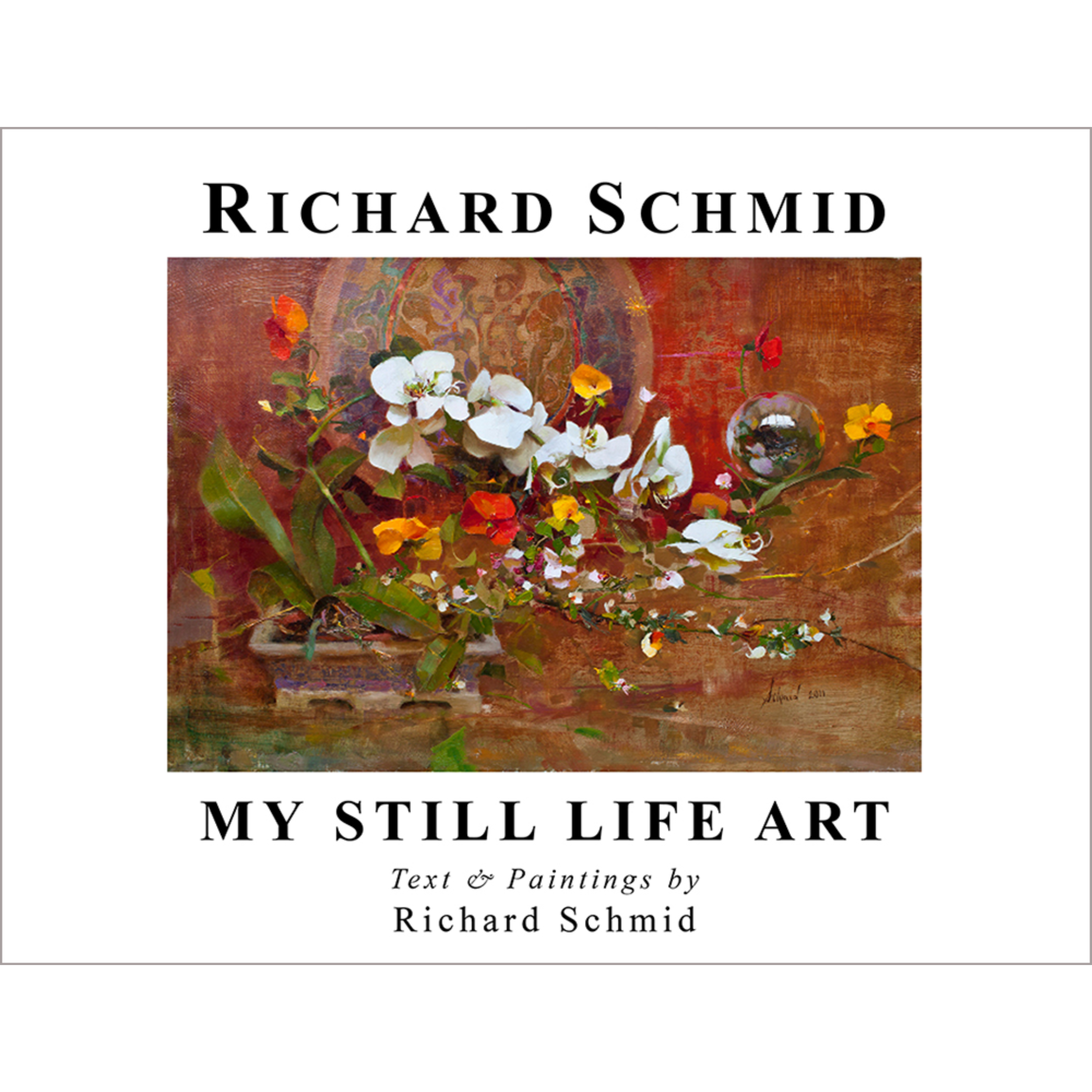
MY STILL LIFE ART
By Richard Schmid
Pages, 300 images

Ⓥ VEGAN
Inorganic – Cadmium Sulphide is a ‘tangy’, bright, high-tint power yellow. It’s an inorganic pigment that lightens and increases the opacity of warm mixes without overthrowing them. The Cadmium range of pigments was introduced into production between 1840 and 1890, as costs permitted, and it has proved the most artistically reliable of all the metal compounds discovered in the 19th-century.

Ⓥ VEGAN
Inorganic – No. 113 is an obviously beautiful mid-blue. The discovery in the 1820s of a Sodium Sulphosilicate compound, which had appeared as a mysterious blue deposit on soda-ash furnaces, was a liberating moment for financially challenged artists everywhere. Up to then the only available version of this compound was the often-unobtainable Lapis Lazuli ore, mined in Afghanistan. Ultramarine has a high tint power, and our chosen shade produces strong green shade blue hues and makes wonderful violets with Magenta and the red Lake colours. It is also useful in greens and greys. The only chemical weakness is a recorded sensitivity to atmospherically borne acids, which can bleach it out. Ultramarine Blue is one of the more difficult paints to make, as it forms an intractable runny syrup when first ground into oil, which must then be stabilized with a small amount of wax.

Ⓥ VEGAN
Titanium White No. 1 is the most brilliant white in my range, suitable for crisp, cool, opaque, light shades. If you want a powerful mixer that lightens , then this is it. Although not subtle, this white is the most suitable for a bright, fresh palette. It forms a strong and durable film when cured. PW6 is an inorganic pigment.
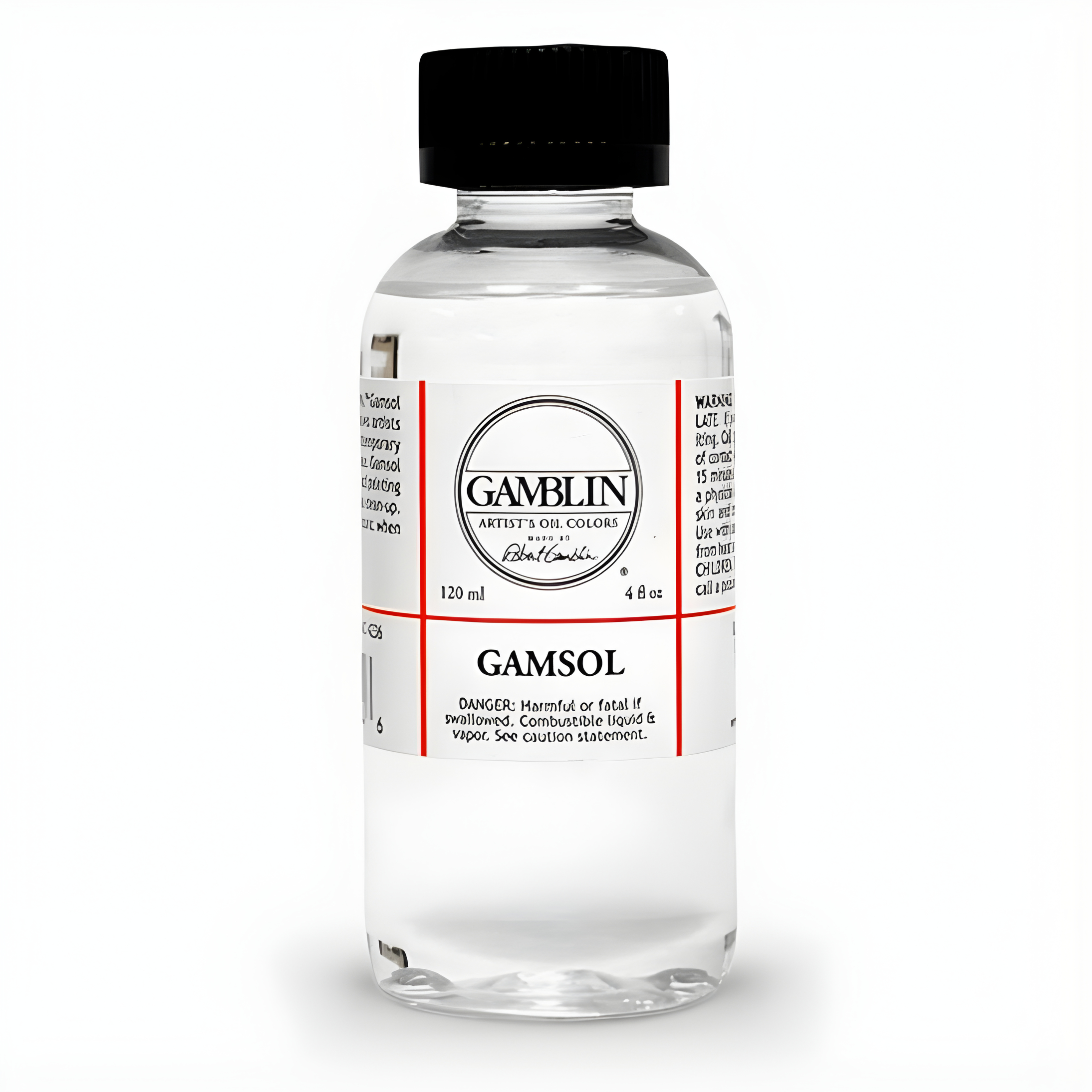
Gamsol is the safest solvent that allows oil painters to utilise all traditional painting techniques without compromise.
Primary Uses for Gamsol:
Thinning oil colours. A little goes a long way; stiff oil colours relax immediately when a little Gamsol is added. Be careful not to thin oil colours too much with solvent alone, this can compromise the ability of the paint to form a paint film.
Modifying painting mediums. Gamblin's Galkyd line of painting mediums is formulated with Gamsol, so they readily accept Gamsol as a thinning agent. Note: Gamsol should not be added to painting mediums made with natural resins (dammar, copal, mastic). They require strong solvents such as turpentine.
Studio clean up: brushes, palettes, palette knives, etc.
How does Gamsol achieve this level of performance and safety? Most solvents available to artists come from the industrial paint industry where solvent power and cheapness is prized. Gamsol is special: it is made for products and processes that come into more intimate contact with the body such as cosmetics, hand cleaners, and cleaning food service equipment.
Gamsol is a petroleum distillate but all the aromatic solvents have been refined out of it, less than .005% remains. Aromatic solvents are the most harmful types of petroleum solvents.
These facts are detailed in the MSDS for Gamsol, this document shows that it has an Exposure Limit Value higher than most solvents available to artists.
All of these factors have lead to Gamsol being used widely in oil painting classrooms; in those classes there are no solvent odours, only the wonderful smell of oil colours.
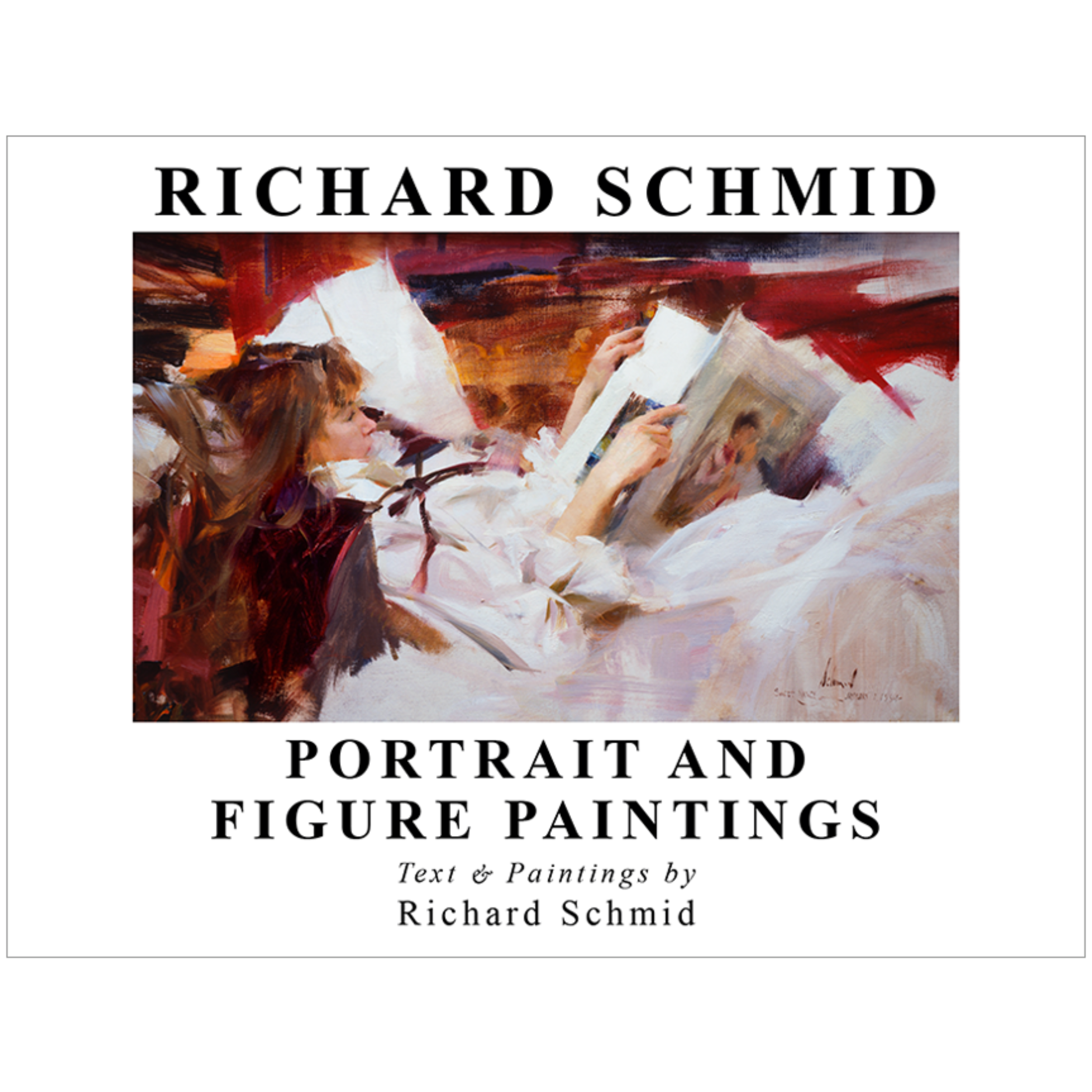
PORTRAIT AND FIGURE PAINTINGS
By Richard Schmid
288 pages, 379 paintings and drawings, 46 photographs

Ⓥ VEGAN
Inorganic – Cadmium Sulphide is a dense, lean, mid-shade warm yellow, indispensable as a foundation colour for warm mixes of all kinds.

Ⓥ VEGAN
Inorganic – This Iron Oxide has been used as a wood dye, and I realised that its capacity to enrich the grain of hardwood made it a wonderful candidate for paint making. Michael’s Transparent Red Oxide is an Iron Oxide manufactured to such a small pigment particle size that like its yellow counterpart, it possesses Lake-like characteristics. No. 220 has terrific tint power that produces wonderful results in mixes with yellows and brings gravity to mid-red tones. Mix it with phthalocyanine blue for an interesting surprise!

Ⓥ VEGAN
Organic Pigment – Green Gold is a pigment Michael has admired for many years, although it’s essentially a modern colour. As a standalone pigment it brings your painting a unique green that has its own elegance. However, when mixed, it’s ‘weird’! When you first look at it as a single colour, it’s interesting. But when Green Gold is mixed with other transparent colours, such as Alizarin Claret or Magenta, it does extraordinary things. You’ll wonder where the ‘third’ colour came from because it will seem so magical. Green Gold’s bewitching qualities give it a high tint power, and because it has only a single organic pigment, it’s both lightfast and transparent. And because it’s transparent, it possesses wonderful glazing properties and power.
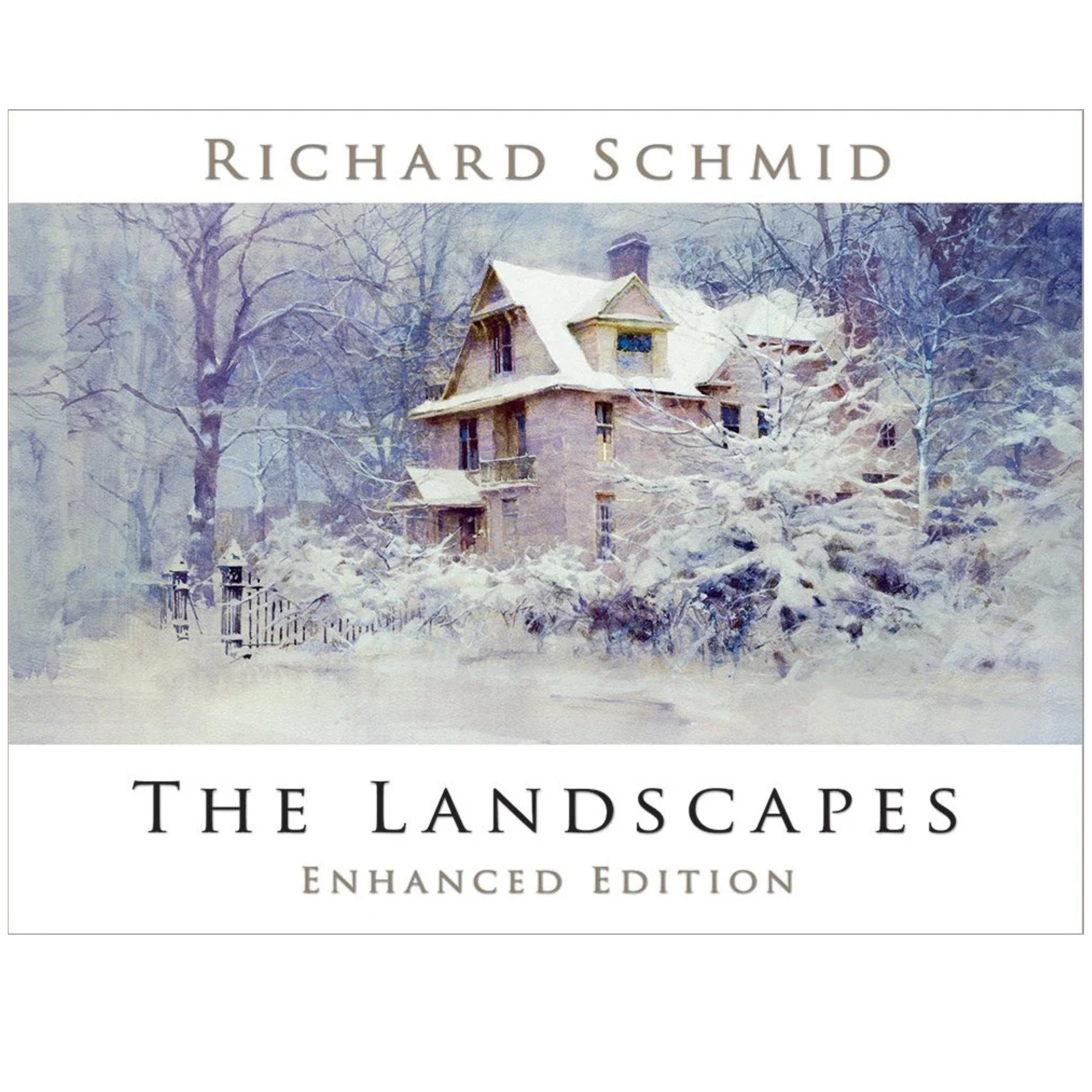
THE LANDSCAPES - Enhanced Edition
By Richard Schmid
Forward by Historian Richard Ormond - Grandnephew of John Singer Sargent
280 pages, 300 images

Ⓥ VEGAN
Inorganic – This oil paint is a warmer version of Cadmium Yellow Golden, giving a transitional colour more powerful, vivid colour than those obtained by mixing Cadmium Reds and Yellows. Cadmium Yellow Deep is often used to warm the mid-tones and lights of some flesh painting.

Ⓥ VEGAN
Inorganic – This is a fantastic colour with an incredibly small pigment particle size that gives it great, clean transparency, ideal for glazing. Transparent Oxide Brown is one of my favourite colours for all-around use in my paintings.
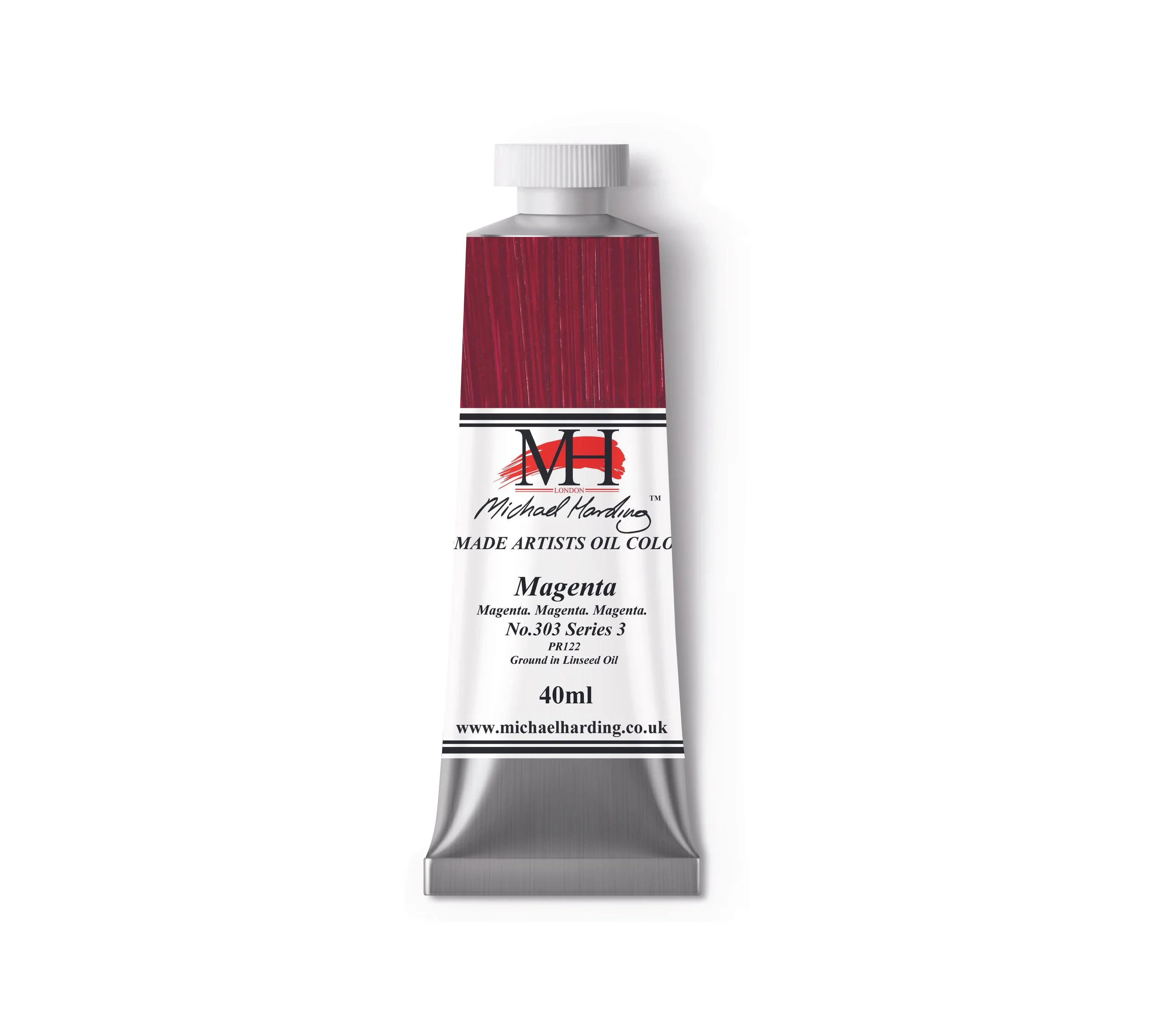
Ⓥ VEGAN
Organic – Magenta is a lightfast organic pigment with strong bluish overtones that shine through as if it is used as a glaze. When made into hues, it presents a wonderful range of decadent, strong, cool pinks evocative of rich satins. In mixes with Yellow Lakes, the results are ranges of strikingly warm, gingery oranges, or mixed with transparent oxide red, it mimics the unique shades of alizarin. To make gorgeous purples, mix Magenta with Ultramarine Blue.